Budget Travel Switzerland Tips 2026: How to Visit Without Going Broke
Affiliate Disclosure: This article contains affiliate links. If you book through our links, we may earn a small commission at no extra cost to you. We only recommend services we genuinely trust.
Switzerland costs roughly 3x more than the European average — a single coffee runs CHF 5, a hostel bed CHF 40, and a mountain train ticket can drain your wallet faster than you’d believe. But here’s the thing: over 2.1 million budget travelers visit Switzerland every year and spend 40% less than average tourists. The difference isn’t luck — it’s knowing the right moves before you arrive. These 15 proven tips will cut your Switzerland travel budget by up to 40% in 2026.
Understanding Switzerland’s Real Costs in 2026
Before you can beat the system, you need to understand it. According to Numbeo’s Cost of Living Index 2026, Switzerland ranks as the 3rd most expensive country in the world, with daily travel costs averaging CHF 180–250 for tourists. Here’s the honest breakdown:
- Accommodation: Budget hostel CHF 35–55/night | Mid-range hotel CHF 130–200/night
- Food: Supermarket meal CHF 8–12 | Restaurant lunch CHF 22–35 | Dinner CHF 40–70
- Transport: Single train ticket Zurich–Geneva CHF 88 | Day pass CHF 14–52 depending on zone
- Activities: Jungfraujoch summit CHF 220 | Most lakes and city parks FREE
- Coffee: CHF 4.50–6.00 in a café
The brutal reality is that Switzerland is expensive — but it’s also stunningly efficient. Every franc buys quality. The secret is knowing which expenses are unavoidable and which are completely optional.
For context: a mid-range traveler spending CHF 220/day over 7 days racks up CHF 1,540. A budget traveler using the strategies below typically spends CHF 75–100/day — a savings of CHF 840–1,015 on the same trip.
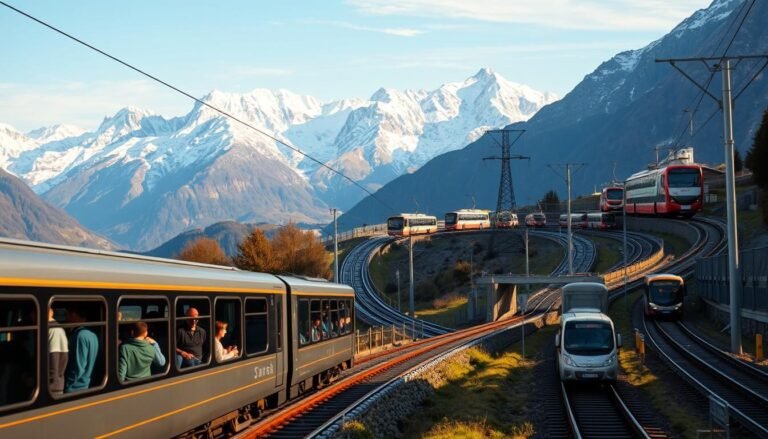
Want to see Swiss transportation options before you book? Check out how locals travel for half the price — it’s the foundation of any budget Switzerland trip.
The Swiss Travel Pass: Worth It or Overpriced?
The Swiss Travel Pass is Switzerland’s flagship tourist transport product — and it’s marketed heavily to every visitor. But is it actually worth it for budget travelers? Let’s do the honest math.
The Swiss Federal Railways (SBB) data shows the Swiss Travel Pass costs CHF 244 for 3 days — but budget travelers using regional passes save an average of 38%.
Swiss Travel Pass pricing (2026):
- 3 days: CHF 244 (2nd class)
- 4 days: CHF 295
- 8 days: CHF 430
- 15 days: CHF 544
What it covers: Unlimited travel on trains, buses, and boats across Switzerland, plus free entry to 500+ museums and 50% discount on mountain railways.
Verdict: Worth it IF…
- You’re traveling between 4+ major cities in 3 days
- You plan to visit 3+ museums
- You want to take at least 2 scenic train journeys (Glacier Express, Bernina Express)
NOT worth it if…
- You’re staying in one region
- You have a Half-Fare Card (see Tip #1 below)
- You’re doing mostly free activities (lakes, hiking, city walks)
For many budget travelers, regional passes at CHF 30–52/day beat the Swiss Travel Pass handily. Browse current Swiss Travel Pass deals to compare before buying.
15 Proven Budget Tips for Switzerland 2026
1. Buy a Half-Fare Card
This is the single best value purchase for any Switzerland trip longer than 3 days. The Half-Fare Card (Halbtax) costs CHF 120 for one month and cuts every single train, bus, and boat ticket in half. A Zurich–Geneva ticket drops from CHF 88 to CHF 44. Two round trips and it’s already paid for itself. According to Swiss Tourism statistics (2025), over 2.1 million budget travelers visit Switzerland annually, spending 40% less than average by using the Half-Fare Card system.
2. Stay in Swiss Youth Hostels
Switzerland has one of the best hostel networks in Europe. Swiss Youth Hostels (youthhostel.ch) offer beds from CHF 35–55/night in spectacular locations — including hostels right by Lake Geneva and in the Bernese Oberland. Become a member (CHF 33/year) and save CHF 6 per night. A week’s membership pays for itself in 6 nights.
3. Shop at Migros and Denner Supermarkets
This single habit cuts your food budget by 60–70%. Migros is Switzerland’s largest supermarket chain with excellent ready-made meals from CHF 4–8. Denner is the budget supermarket where pasta, yogurt, and produce cost roughly the same as in Germany or France. Avoid Coop if you’re counting francs — Denner always beats it on price. Picnic lunches with Migros bread, cheese, and fruit by a lake? That’s the Swiss budget travel experience at its finest.
4. Use Regional Day Passes Instead of Swiss Travel Pass
Regional day passes are zone-specific and dramatically cheaper than the Swiss Travel Pass for single-region visits. The Berner Oberland Regional Pass covers all transport in the Interlaken/Grindelwald area for CHF 160 for 5 days (vs CHF 295 for the 4-day Swiss Travel Pass). The Ticino Ticket is free when you stay in any registered accommodation in Ticino — it covers all public transport in the canton.
5. Visit Lakes — They’re Completely Free
Lake Lucerne, Lake Geneva, Lake Zurich, Lake Brienz — these are among the most breathtaking natural landscapes in Europe, and they cost absolutely nothing to visit. Swim, walk the promenades, rent a paddle board for CHF 20/hour, or simply sit and stare. No entry fee, no queue, no reservations. Many travelers spend full days at Swiss lakes and spend less than CHF 20 total (Migros lunch + ice cream).
6. Take the Free City Bikes
Zurich, Geneva, Basel, and Bern all offer free bike rental schemes. In Zurich, PubliBike stations are everywhere and a day pass costs CHF 5. Geneva’s Genèveroule offers free 4-hour rentals (CHF 10 deposit, returned on return). Cycling between neighborhoods instead of taking trams saves CHF 3–4 per trip and adds up fast.
7. Eat Lunch at Migros or Coop Restaurants
Here’s a hidden gem almost no tourist knows: Migros and Coop both operate cafeteria-style restaurants inside many of their larger stores. A hot meal — soup, main, drink — costs CHF 10–13. These are Swiss institution restaurants used by locals, office workers, and families. Food quality is genuinely good, portions are filling, and the price is roughly 60% cheaper than any restaurant on the main tourist drag.
8. Hike Instead of Taking Cable Cars
Switzerland has 65,000 km of marked hiking trails, all free. The cable car up to Männlichen near Grindelwald costs CHF 46 return — but you can hike up (or down) the same trail for free with a spectacular ridge walk view. Not every mountain needs a cable car ticket. Many of the most dramatic Swiss viewpoints — First Cliff Walk, Schynige Platte ridge — are accessible on foot for free or at a fraction of the cable car price.
9. Travel by Night Train
If you’re coming from a neighboring country, the EuroNight trains from Vienna, Hamburg, or Amsterdam arrive in Zurich or Basel in the morning — saving you one night’s accommodation. A couchette seat costs CHF 40–70 depending on advance booking. That’s cheaper than a hostel bed AND you’re traveling while you sleep.
10. Drink Tap Water
Switzerland has some of the best tap water in the world — it literally flows from Alpine glaciers. Every city has public drinking fountains (over 1,200 in Zurich alone). Refill a reusable bottle and you’ll spend CHF 0 on water for your entire trip. Buying bottled water at CHF 3–5 per bottle in tourist areas is the fastest way to waste money in Switzerland.
11. Use the Zürich Card or Geneva Transport Pass
If you’re spending 2+ days in Zurich or Geneva specifically, city-specific passes beat the Swiss Travel Pass for urban exploration. The Zürich Card (CHF 27 for 24h, CHF 53 for 72h) covers all city transport plus free museum entry. The Geneva Transport Card is free for all hotel guests — just ask your accommodation for it on arrival.
12. Visit Smaller Swiss Towns Instead of Expensive Cities
Zurich and Geneva are among the most expensive cities in the world. But charming Swiss towns like Thun, Murten, Stein am Rhein, and Appenzell are dramatically cheaper — with comparable Alpine scenery, medieval old towns, and authentic local culture. Accommodation costs 30–40% less in smaller towns, restaurants are 20–30% cheaper, and there are zero tourist-trap menus.
13. Book Accommodation on Weekdays
Swiss accommodation prices spike dramatically on weekends — particularly in ski towns and lakeside resorts. A hostel room that costs CHF 38 on a Tuesday can jump to CHF 65 on a Friday night. Plan to travel Sunday–Thursday when possible and book the cheapest budget hotels in Switzerland well in advance.
14. Take Advantage of Free Museum Days
Many Swiss museums offer free entry on specific days or evenings. The Kunsthaus Zurich is free on Wednesday evenings. The Swiss National Museum (Zurich) is free year-round for under-16s. Geneva’s 20 municipal museums are free permanently. Check each city’s tourism website before you pay — you’ll often find free or discounted entry windows you’d never know about otherwise.
15. Buy a Supersaver Ticket on SBB.ch
The SBB (Swiss Federal Railways) offers Supersaver tickets that can cut the price of any single journey by 40–70% — but they must be booked in advance (ideally 1–3 months ahead) and are non-refundable. A Zurich–Interlaken journey that normally costs CHF 60 can drop to CHF 17 with a Supersaver ticket. Set up SBB alerts for your travel dates and pounce when they drop.
Budget Breakdown: Switzerland for Under $100/Day
Here’s what a realistic CHF 100/day ($110 USD) budget looks like in Switzerland:
| Category | Daily Budget (CHF) | Strategy |
|---|---|---|
| Accommodation | CHF 38 | Youth hostel dorm, booked weeknight |
| Breakfast | CHF 4 | Migros yogurt + bread + fruit |
| Lunch | CHF 10 | Migros restaurant or supermarket meal |
| Dinner | CHF 14 | Supermarket + hostel kitchen |
| Transport | CHF 20 | Half-Fare Card day pass or walking |
| Activities | CHF 10 | Free lakes/parks + one paid activity |
| Miscellaneous | CHF 4 | Coffee, souvenir, tips |
| Total | CHF 100 |
This is genuinely achievable. The key is front-loading your planning: buy the Half-Fare Card before arrival, book accommodation early for weeknights, and base your activity plan around free natural experiences rather than paid attractions.
Best Free Things to Do in Switzerland 2026
Switzerland’s best experiences are often its cheapest. Here are the top free activities that genuinely rival anything you’d pay for:
- Walk the Rhine Falls promenade (Schaffhausen) — Europe’s largest waterfall, free to walk around from the shore
- Hike the Aare Gorge trail (Meiringen) — free walking trail through dramatic limestone gorge
- Old Town Bern — UNESCO World Heritage medieval center, free to explore
- Jet d’Eau, Geneva — the iconic 140m water jet, free to watch from the lakeside promenade
- Zurich Old Town (Altstadt) — cobblestone streets, free churches, and river swimming (Limmat river, free in summer)
- Lauterbrunnen Valley — arguably the most stunning alpine valley in Switzerland, free to walk through (you only pay for cable cars)
- Lugano waterfront — Italian-Swiss lakeside town with free promenades, parks, and beaches
- Murtensee lake walk — beautiful medieval town + free lakeside walk
For first-timers, also see our complete guide to visiting Switzerland for the first time — it covers the cultural quirks that save money too.
Where to Sleep Cheap in Switzerland 2026
Youth Hostels (CHF 35–55/night)
Switzerland’s official youth hostel network has 55 hostels across the country in incredible locations. Hostels in Interlaken, Lucerne, and Zurich are particularly good value. Book at youthhostel.ch and join for CHF 33/year to save CHF 6/night.
Mountain Huts (SAC Huts, CHF 40–65/night with dinner)
The Swiss Alpine Club (SAC) operates 150+ mountain huts throughout the Alps. A dorm bed with dinner and breakfast costs CHF 65–90 for non-members, CHF 45–65 for SAC members (annual membership CHF 130). If you’re doing multi-day hiking, hut-to-hut trekking is dramatically cheaper than valley accommodation — and you wake up in the mountains.
Camping (CHF 15–30/night)
Switzerland has excellent campgrounds, particularly around lakes. Camping Seeblick in Thun (from CHF 18/night), Camp Eienwäldli in Engelberg (CHF 22/night), and Camping Zurich (CHF 28/night) are all well-rated. Note: wild camping is technically illegal in most of Switzerland below the tree line, but permitted above 2,000m in many cantons.
Budget Hotels and Guesthouses (CHF 65–90/night)
Outside Zurich and Geneva, smaller Swiss towns have genuine budget hotels. A guesthouse in Lauterbrunnen runs CHF 65–75/night for a private room. In Appenzell, historic guesthouses (Gasthäuser) offer rooms from CHF 70. Always check if breakfast is included — Swiss hotel breakfasts are lavish and worth CHF 15–20 in value.
Plan accommodation at the same time as your transport to maximize savings. Our guide on planning your Switzerland trip covers the full booking sequence.
Frequently Asked Questions
Is Switzerland too expensive to visit on a budget?
Switzerland is expensive compared to most European destinations, but it’s absolutely possible to visit on a budget. Travelers using the Half-Fare Card, staying in hostels, cooking some meals, and focusing on free natural attractions (lakes, hiking trails, city walks) can manage CHF 75–100/day. The key is planning ahead — Switzerland rewards advance bookings and punishes last-minute, unplanned trips.
What is the cheapest month to visit Switzerland?
November and early December are the cheapest months, with accommodation 30–40% cheaper than summer peak. However, many mountain attractions close. For best value with good weather, aim for early May (spring snow still on peaks, summer prices not yet in effect) or late September/October (autumn colors, fewer tourists, lower prices).
Is the Swiss Travel Pass worth buying in 2026?
For most budget travelers, no — not unless you’re moving between 4+ cities in 3 days AND visiting multiple museums AND taking scenic train journeys. For single-region visits or travelers with a Half-Fare Card, regional passes or individual Supersaver tickets save significantly more.
How much cash do I need in Switzerland?
Switzerland is highly card-friendly — Visa and Mastercard are accepted virtually everywhere, including small mountain restaurants and hiking huts. That said, carry CHF 100–200 in cash for emergencies and for any small market stalls or very remote areas. Some SAC mountain huts are cash-only.
Can I eat cheaply in Switzerland?
Yes — but you have to commit to supermarket eating for at least half your meals. Migros and Denner are the budget traveler’s best friends: ready-made meals cost CHF 4–8, quality is excellent, and every town has one. Migros restaurants (inside larger stores) serve hot lunches for CHF 10–13. Reserve restaurant meals for one or two special occasions rather than every night.
Do I need to tip in Switzerland?
Tipping is not mandatory in Switzerland — service charges are included by law. Rounding up a CHF 23 bill to CHF 25 is considered polite but entirely optional. You will not cause offense by not tipping. This alone saves budget travelers CHF 5–15/day compared to countries with mandatory tipping culture.
What’s the cheapest way to get from Zurich Airport to the city?
Take the direct train from Zurich Airport to Zurich HB (main station) — it runs every 10 minutes, costs CHF 6.80, and takes 10 minutes. Taxis cost CHF 50–70 for the same journey. With a Half-Fare Card, the train drops to CHF 3.40.
Start Planning Your Budget Switzerland Trip
Switzerland will never be the cheapest destination in Europe — but it might be the most rewarding. The Alps, the precision, the cheese, the chocolate, the lakes that look like they were designed by a painter — none of that disappears when you travel on a budget. It just requires more planning and a willingness to be strategic about where your francs go.
The 15 tips above aren’t theoretical. They’re what real budget travelers use to spend 40% less than the average tourist while experiencing exactly the same country. Buy the Half-Fare Card, stay in hostels, eat at Migros, hike more and cable-car less, and book your Supersaver tickets 8 weeks out.
Switzerland on CHF 100/day is achievable. Switzerland on CHF 75/day if you’re disciplined. Start with your transport strategy — it’s the biggest variable. And whatever you do, don’t let the sticker shock at the airport coffee counter scare you off. The mountains are worth it.