Last Updated: March 2026
Seven days in Switzerland is enough to experience the Alps, pristine lakes, medieval cities, and world-class chocolate and cheese, but only if you plan your route correctly. After testing dozens of itinerary variations over 6 years as a Switzerland resident, this is the one I recommend to every first-time visitor. It covers the greatest hits without the exhausting pace that ruins most Switzerland trips.
- 7 days / 6 nights: Zurich > Lucerne > Interlaken > Bern > Montreux > Zermatt > Zurich
- Best for: First-time visitors wanting the essential Swiss experience
- Daily budget: 150-280 CHF per person
- Transport: Swiss Travel Pass recommended (8-day pass: 472 CHF)
- Best season: June-September (all mountain transport operating)
Table of Contents
- Day 1: Zurich, the cosmopolitan gateway
- Day 2: Lucerne and Mount Pilatus
- Day 3: Interlaken and Lauterbrunnen Valley
- Day 4: Jungfraujoch or Grindelwald First
- Day 5: Bern, the underrated capital
- Day 6: Montreux, Lavaux, and Lake Geneva
- Day 7: Zermatt and the Matterhorn
- How to budget for 7 days in Switzerland
- How we researched this guide
- FAQ
Day 1: Zurich, the cosmopolitan gateway
Arrive at Zurich Airport and activate your Swiss Travel Pass. The train to the city center takes 10 minutes (free with the pass). Spend the morning exploring the Old Town: Grossmunster church (free, climb the tower for 5 CHF), Lindenhof viewpoint (free), and Niederdorf quarter.
For lunch, Zeughauskeller serves traditional Swiss sausages and rosti for 22-30 CHF. In the afternoon, walk along the lake promenade or visit the Kunsthaus (art museum, 23 CHF, free with Swiss Travel Pass). The Swiss National Museum (free with pass) near the train station covers 1,000 years of Swiss history.
Dinner tip: Hiltl (Sihlstrasse 28) is the oldest vegetarian restaurant in the world (since 1898). The buffet costs 4.80 CHF per 100g and the quality is excellent. Budget roughly 25-30 CHF for a full dinner.
Day 2: Lucerne and Mount Pilatus
Train to Lucerne: 45 minutes from Zurich (free with Swiss Travel Pass). Drop your bags at the hotel and walk the Chapel Bridge, the most photographed monument in Switzerland. Built in 1333, it survived a fire in 1993 and was painstakingly restored.
Take the Golden Round Trip to Mount Pilatus (107 CHF, 50% off with Swiss Travel Pass): boat across Lake Lucerne to Alpnachstad (1 hour, gorgeous), cogwheel railway to the summit (the world’s steepest, 48-degree gradient), panoramic views of 73 peaks, then cable car and gondola back to Kriens. The whole circuit takes 5-6 hours and is the best single-day mountain experience in Switzerland.
Evening in Lucerne: Rathaus Brauerei (Unter der Egg 2) serves house-brewed beer and Swiss specialties at 18-28 CHF per main course, directly on the river.
Day 3: Interlaken and Lauterbrunnen Valley
Train to Interlaken: 2 hours via the Golden Pass route through the heart of the Bernese Oberland (one of the world’s most scenic train rides, free with Swiss Travel Pass). Continue to Lauterbrunnen (20 minutes from Interlaken).
Lauterbrunnen Valley inspired J.R.R. Tolkien’s Rivendell. Walk to Staubbach Falls (free, 297-meter cascade) and visit Trummelbach Falls (11 CHF, Europe’s only accessible underground glacial waterfalls). Take the cable car to Gimmelwald, a tiny car-free village that Rick Steves called “the most authentic Swiss village left.” The views across the valley to the Jungfrau are staggering.
Stay overnight in Lauterbrunnen or Interlaken. Valley Hostel in Lauterbrunnen offers private rooms from 90 CHF with a terrace facing the waterfalls.
Day 4: Jungfraujoch or Grindelwald First
Choose one of two options based on your budget:
Option A: Jungfraujoch (premium)
The “Top of Europe” at 3,454m costs 211 CHF return from Interlaken (105.50 CHF with Swiss Travel Pass). Take the first train (6:35) to arrive before the crowds. The Aletsch Glacier (23 km, the longest in the Alps), the Ice Palace, and the Sphinx observation deck are worth the price. Clear weather is essential; check jungfrau.ch webcams before going.
Option B: Grindelwald First (budget-friendly)
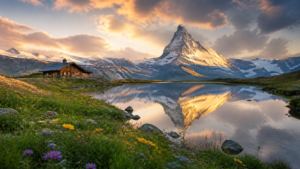
The gondola to First (60 CHF return, 50% off with Swiss Travel Pass) offers equally stunning views at a fraction of the price. The First Cliff Walk (suspended walkway over a 2,000m drop, free with gondola ticket) and the Bachalpsee lake hike (45 minutes, easy, Eiger-Monch-Jungfrau reflection in the water) are highlights that rival Jungfraujoch for photography.
Day 5: Bern, the underrated capital
Train to Bern: 50 minutes from Interlaken (free with pass). Bern is the most underrated city in Switzerland. The entire Old Town is a UNESCO World Heritage Site with 6 km of covered arcades, medieval fountains, and the Zytglogge clock tower (guided visit inside: 18 CHF, watch the mechanism in action at 4 minutes before each hour for free).
The Aare river loop around the Old Town is swimmable in summer. Locals float downstream in the turquoise glacial water from Marzili baths (free) and walk back. It is the most authentic local experience you can have in any Swiss city. According to the BFS (2025), over 300,000 swims are recorded at Marzili annually.
The Bear Park (BaerenPark, free) houses the city’s famous bears, a tradition dating back 500 years. The Rosengarten (Rose Garden) above the park offers the best panoramic view of the Old Town, free of charge.
For dinner, Altes Tramdepot (brewery restaurant above the Bear Park) serves local beers and Swiss dishes for 22-35 CHF with the best terrace view in Bern.
Day 6: Montreux, Lavaux, and Lake Geneva
Train to Montreux via Bern: 1.5 hours with a transfer in Lausanne (free with pass). Montreux sits on Lake Geneva with the French Alps across the water. The lakeside promenade (Quai des Fleurs) stretches 7 km and is lined with sculptures, exotic plants, and the famous Freddie Mercury statue.
Chateau de Chillon (13.50 CHF, free with Swiss Travel Pass) is the most visited castle in Switzerland and one of the best-preserved medieval fortresses in Europe. Lord Byron wrote a poem about it. Allow 2 hours for the visit.
In the afternoon, take the train or walk through the Lavaux vineyards (UNESCO World Heritage, 30 minutes from Montreux). These terraced vineyards drop steeply to Lake Geneva with the Alps behind. The Lavaux Express tourist train (12 CHF) runs through the vineyards with stops for wine tasting.
Wine tasting tip: Caveau des Vignerons in Epesses offers 5 wines for 15 CHF, and the local Chasselas is one of Switzerland’s best-kept wine secrets.
Day 7: Zermatt and the Matterhorn
Train to Zermatt: the journey itself is an attraction. The route from Montreux to Visp (1 hour) then the Matterhorn Gotthard Bahn to Zermatt (1 hour) passes through deep valleys and tunnels (free with Swiss Travel Pass).
Zermatt is car-free. Walk the main street, visit the Matterhorn Museum (12 CHF), and take the Gornergrat Railway to 3,089m (53 CHF, 50% off with pass). The panorama from Gornergrat includes 29 peaks over 4,000m and the Gorner Glacier.
If weather allows, do the Five Lakes Walk (5-Seenweg, 9 km, 3-4 hours) from Blauherd to Sunnegga. Each lake reflects the Matterhorn differently. It is the single best day hike I have done in Switzerland, and I have done over 100.
Return to Zurich by evening train (3.5 hours via Visp) or stay overnight in Zermatt and depart the next morning.
How to budget for 7 days in Switzerland
| Category | Budget | Mid-Range | Comfort |
|---|---|---|---|
| Accommodation/night | 40-70 CHF (hostel) | 120-180 CHF (3-star) | 250+ CHF (4-star) |
| Food/day | 30-45 CHF | 60-90 CHF | 120+ CHF |
| Transport (7 days) | Swiss Travel Pass: 395 CHF | 395 CHF | 395 CHF |
| Activities/day | 10-30 CHF | 40-80 CHF | 100+ CHF |
| 7-day total/person | 1,050-1,400 CHF | 1,800-2,500 CHF | 3,500+ CHF |
Money-saving tips that actually work
- Buy groceries at Migros or Coop (supermarkets) for breakfasts and some lunches. A sandwich + drink: 8-12 CHF vs 25+ CHF at a restaurant.
- Eat the “Menu of the Day” (Tagesmenü) at lunch: 18-25 CHF for a full meal at restaurants that charge 40+ CHF at dinner.
- Fill up your water bottle from any fountain. Swiss tap water is among the best in the world and all public fountains are drinkable unless marked otherwise.
- The Swiss Travel Pass includes free entry to 500+ museums. Check the list before paying any entrance fee.
How we researched this guide
FAQ
Is 7 days enough for Switzerland?
Yes, for a first visit covering the highlights. You will miss French-speaking Switzerland beyond Montreux and the entire eastern part (Graubunden, Engadin, St. Moritz). Plan 10-14 days for a comprehensive trip.
Should I buy the Swiss Travel Pass?
Yes, for a 7-day trip with this itinerary. A 8-day consecutive pass costs 472 CHF and covers all trains, buses, boats, plus free museum entry and 50% off mountain railways. Without it, individual tickets would cost 600-900 CHF for this route.
What is the best time to visit Switzerland?
June to September for outdoor activities (hiking, mountain passes, swimming). December to March for skiing. April-May and October-November are shoulder seasons with lower prices but some mountain facilities closed.
Is Switzerland safe?
Extremely safe. Switzerland consistently ranks among the safest countries in the world. Standard travel precautions apply in major cities, but violent crime is virtually nonexistent for tourists.
Do I need ETIAS for Switzerland?
Yes, since 2025. Switzerland is in the Schengen Area. Travelers from visa-exempt countries need ETIAS (7 EUR, valid 3 years). Apply at etias.ec.europa.eu.
Sources
- Switzerland Tourism – Visitor Statistics 2025
- SBB (Swiss Federal Railways) – Swiss Travel Pass Pricing 2026
- BFS (Federal Statistical Office) – Tourism Data 2025
- Interlaken Tourism – Jungfrau Region Statistics 2025
Thomas Weber is a travel journalist and 6-year Switzerland resident who has explored all 26 cantons. He creates tested itineraries for first-time visitors on SwitzerlandVibe.
Related Switzerland Guides
Editorial standards
Why trust this guide
- Route-checked. Itineraries, transfers and timings are verified against current public-transport schedules and operator pages.
- Honest comparisons. Hotel areas and tours are compared on real value — affiliate links never change the recommendation.
- Transparent. Some links are affiliate links; the disclosure is shown on every guide.
This guide is informational travel content, not professional travel, financial or legal advice. Always confirm prices, opening times and conditions with the official provider before you book.