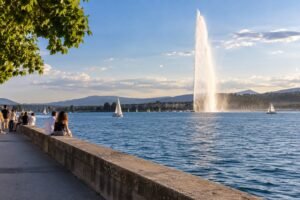
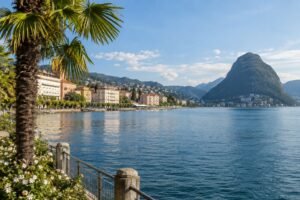
This Switzerland 10-day itinerary is a proposed rail-oriented journey from Geneva to Zurich, with stays in Montreux, Interlaken and Lucerne along the way. It is designed for travellers who prefer a usable sequence of bases over a checklist of every famous Swiss destination. Each day below has a main focus and an alternative way to use the time.
This article contains affiliate links. We may earn a commission if you book through them.
The day allocations and overnight pattern are editorial suggestions, not an operator package or a promise that a particular service runs on your dates. Check your arrival and departure times, transport schedules, accommodation availability and activity conditions before booking. This route deliberately leaves Zermatt and Ticino for another trip.
Switzerland 10-day itinerary: the proposed route
This is an editorial allocation of ten calendar days and nine nights. It assumes that your arrival leaves some usable time in Geneva and that your departure is from Zurich. If either assumption is wrong, adjust the start or finish before adding activities. A late arrival is not an invitation to recover lost sightseeing after dark.
| Days | Suggested overnight base | Editorial focus |
|---|---|---|
| 1 | Geneva | Arrival and an introductory city walk |
| 2–3 | Montreux | Lakeside time without a daily hotel change |
| 4–6 | Interlaken | A Lauterbrunnen outing and a flexible regional day |
| 7–8 | Lucerne | Old-town and lake-focused time |
| 9 | Zurich | A final city stay |
| 10 | None assumed | Departure, with optional local time |
Before you reserve the route
Price the journeys for your travel dates using the official transport booking tools, then compare those results with the pass products you are eligible to buy. Do not assume that frequent travel makes a pass the cheapest choice. Write down your intended excursions separately so their fares and reservations do not disappear inside a vague “transport budget.”
For every hotel, check the route from your arrival station, luggage arrangements and check-in terms. Look at accessibility requirements across the full journey, including transfers and the room itself. The itinerary is only useful if its ordinary logistics work for your party.
Keep mountain plans conditional until you have checked the relevant operator’s information. If an excursion is the main reason for visiting, read its cancellation rules before locking in the surrounding accommodation. Avoid buying a non-refundable activity simply to make the itinerary feel complete.
Day 1: arrive in Geneva and keep the plan modest
Geneva Tourism describes the Old Town as a network of cobbled streets and narrow alleyways. Use that district as the proposed focus for your first city outing, rather than trying to combine several neighbourhoods immediately after arrival.
Leave your bags according to the hotel’s arrangements and decide how much walking feels sensible. Choose somewhere to eat before you become tired and hungry. If your arrival is late, drop the sightseeing entirely and begin the trip with a meal and sleep.
Alternative: use the available time for orientation around your accommodation. Confirm the next day’s departure details and keep the evening unbooked. You do not need an attraction on every calendar day to have a complete itinerary.
Day 2: transfer to Montreux, then take a lakeside walk
Make the transfer the main logistical task of the day. Choose a departure that allows an unhurried hotel checkout and check the actual connection before leaving. Do not plan a timed admission immediately after your expected arrival.
The Montreux Riviera tourism office describes the town’s quays along Lake Geneva, with flowers, palm trees and plant sculptures. Our suggested arrival activity is a walk along a section of that lakeside setting, with no obligation to cover the entire promenade.
Alternative: if the weather or your energy is unhelpful, settle into the hotel and choose a nearby meal. Save the outdoor time for tomorrow rather than forcing it into the transfer day.
Day 3: visit Chillon Castle, then return to the Montreux lakeside
Make Chillon Castle the main visit rather than another transfer. The castle’s self-guided tour information describes exploring its rooms with a map and brochure, including a weapons room in the keep and medieval-silhouette projections in the crypt. Choose this outing if you want interiors and history after yesterday’s promenade; leave the afternoon in Montreux rather than adding another overnight base.
Use the castle’s visitor information to arrange the journey and admission before leaving. Our suggested order is the castle first, then lunch and whatever lakeside time you still want. Do not purchase a cruise merely as a way to reach the castle unless its actual calls and return fit your visit. A self-guided visit lets you choose your interests; it is not a reason to ignore the closing arrangements.
Alternative: skip the paid interior and return to the Montreux quays. Look at the flower planting and plant sculptures described by the tourism office, then choose a lakeside café by its posted menu. This is the outdoor branch, not a wet-weather substitute. If shelter is the priority, keep the castle as the main plan and shorten the promenade.
Day 4: travel to Interlaken and organise the regional stay
Move to your proposed Interlaken base. Choose the rail journey on its actual schedule and reservation conditions, not because a particular train name appears on a bucket list. Allow room for finding the hotel and dealing with luggage before committing to more travel.
Interlaken Tourism identifies Lake Thun and Lake Brienz as the region’s lakes. Our editorial allocation gives this base time for a valley outing and another day whose focus you can decide locally.
Alternative: spend the afternoon planning rather than departing on another excursion. Check the next day’s operator updates, identify the correct stations for your journeys and agree on an outing that suits everyone’s mobility and energy.
Day 5: make Lauterbrunnen the main outing
The Jungfrau operator’s Lauterbrunnen guide describes a setting between giant rock faces. It also gives arrival directions by rail via Interlaken-Ost, changing to the Berner Oberland-Bahn for Lauterbrunnen. Check the day’s timetable rather than relying on an assumed departure pattern.
Our suggestion is to begin with the village and valley setting. Decide on any further transport only after checking what is operating and whether the proposed activity suits your party. Do not combine a valley visit, multiple mountain rides and an ambitious walk simply because they appear close on a map.
Alternative: return to your base without adding a mountain excursion. A deliberately shorter outing leaves room for dinner and the following day; it is not an unfinished version of the trip.
Day 6: choose Lake Thun or a seasonal Lake Brienz sailing
Use this Interlaken-based day for a BLS lake outing rather than another summit. The BLS timetable search lists Interlaken West among Lake Thun stops and Interlaken Ost among Lake Brienz stops. Our first choice is a Lake Thun sailing towards Thun, selecting the actual boarding and return combination before buying. West and Ost are not interchangeable departure points: use the lake-specific search rather than just asking for “the Interlaken boat”.
For a shorter outing, select a nearer landing such as Spiez from the same Lake Thun search and make that the turnaround. Decide whether the cruise itself or time ashore is the priority; an ambitious shore visit can consume the return you intended to catch. Keep this as a lake day instead of adding another paid mountain ride afterwards.
Alternative: choose Lake Brienz from Interlaken Ost if that lake interests you more and the service is running. BLS explains the seasonal difference: Lake Thun boats run year-round, while Lake Brienz cruises pause during winter. That does not mean every Lake Thun stop is served on every winter sailing. Open the dated timetable for your chosen landing rather than carrying the summer plan into a winter visit.
Day 7: transfer to Lucerne and explore the old town
Travel to Lucerne and make the hotel arrival your first task. Lucerne Tourism highlights Lake Lucerne, the old town and Chapel Bridge. Use the old-town setting as the proposed afternoon focus, keeping tomorrow available for a different pace.
Plan a walk around your comfort level rather than a fixed chain of attractions. Decide where to stop for a meal, then leave room to browse or sit. There is no need to add a mountain trip to the same day as an intercity transfer.
Alternative: postpone the longer walk and use the afternoon for a nearby indoor activity whose opening arrangements you have confirmed. Keep the evening flexible if you arrived later than intended.
Day 8: take a Lake Lucerne outing or visit the Transport Museum
Choose the lake branch if you want a boat day without moving hotels. The navigation company’s Lucerne pier guide assigns sailings towards Weggis, Vitznau, Brunnen and Flüelen to Pier 1. Our suggestion is to investigate a Vitznau outing, then select the outward and return sailing that suits your day. The pier guide identifies where to look; it is not a timetable or a promise of a particular departure.
Make the shore stop and a meal the purpose of that outing, rather than automatically attaching a mountain railway. Keep the boat ticket, any proposed mountain ticket and dinner plans separate until you know which parts you want. If lake scenery is enough, returning to Lucerne without a summit is a complete choice, not a missed upgrade.
Indoor alternative: make the Swiss Museum of Transport the main visit. Its subject areas include rail transport, road transport, aviation and space travel, navigation and energy. Choose the sections that interest your group rather than treating the complex as a quick stop between sailings. Check the ticket product for any additional experiences you select. This branch stays focused on Lucerne and gives a transport enthusiast a specific alternative to another outdoor excursion.
Day 9: move to Zurich for the final night
Switzerland Tourism’s Zurich guide highlights historic old-town buildings and Lake Zurich. After checking in, choose either an old-town visit or lake time as the main focus rather than trying to complete a city guide before dinner.
Read our Zurich planning guide if you intend to extend the stay. For this route, the final night is primarily a chance to finish without another major transfer on departure morning.
Alternative: if your flight is particularly early, choose accommodation according to the verified airport journey rather than the sightseeing plan. Repack, check travel documents and make the departure practical.
Day 10: depart, with sightseeing only if time permits
Work backwards from your airline’s required airport arrival time and your confirmed transport connection. Include hotel checkout and luggage collection in that calculation. Do not use a generic airport-transfer estimate to justify a final excursion.
If you have usable time, stay local and choose something you can leave without a reservation penalty. If you do not, make breakfast and departure the whole plan. The ten-day structure includes getting home; it does not assume ten full sightseeing days.
Transport and booking decisions
Compare your complete transport basket before buying a pass: intercity journeys, local travel, excursions and any required reservations. Our Switzerland budget guide can help frame the categories, but obtain current prices for your own dates.
For accommodation research, compare providers and read the cancellation terms. Compare flights through Aviasales. Check final prices, baggage and change conditions before making a purchase; no booking link establishes a lowest-price guarantee.
Adapt the route instead of adding more stops
If you prefer fewer hotel changes, remove a base and redistribute its days. If you have less time, consult the seven-day Switzerland itinerary rather than squeezing this whole route into a shorter trip. For a couples’ holiday, the romantic getaway comparison offers a different way to choose a base.
Treat every optional outing as optional. Keep the overnight sequence clear, check the actual services and allow your interests to decide what fills the days.
Editorial standards
Why trust this guide
- Route-checked. Itineraries, transfers and timings are verified against current public-transport schedules and operator pages.
- Honest comparisons. Hotel areas and tours are compared on real value — affiliate links never change the recommendation.
- Transparent. Some links are affiliate links; the disclosure is shown on every guide.
This guide is informational travel content, not professional travel, financial or legal advice. Always confirm prices, opening times and conditions with the official provider before you book.