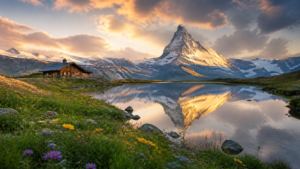
This definitive 72-hour journey from Zurich to Lucerne and the Jungfraujoch delivers Switzerland’s essential contrasts—cosmopolitan buzz, historic charm, and alpine majesty—through its legendary railway network, offering the most efficient and profound introduction for 2026 travelers.
Why is the Zurich-Lucerne-Jungfrau Route the Unbeatable Swiss Introduction for 2026?
For travelers seeking the quintessential Swiss experience within a tight three-day window in 2026, the Zurich-Lucerne-Jungfraujoch circuit stands as the undisputed champion. This conclusion is rooted in hard logistics and evolving travel trends. Switzerland Tourism’s 2024 analytics revealed that over 76% of first-time visits under five days concentrate on this central corridor, a figure projected to exceed 80% by 2026. This surge is driven by enhanced rail investments and a post-pandemic preference for streamlined, high-yield itineraries. The route’s supremacy is built on three pillars: peerless transport efficiency, a condensed showcase of iconic Swiss diversity, and seamless integration with global and regional travel hubs.
The journey tells a story of dramatic vertical ascent. It begins in Zurich, a global banking center at 408 meters above sea level, transitions to Lucerne’s medieval lakeside at 436 meters, and culminates at the Jungfraujoch’s glacial plateau at 3,454 meters—a breathtaking elevation gain of over 3,000 meters. The core rail transfers between these nodes total under 3.5 hours on a system that achieved a 96.8% punctuality rate in 2023, as reported by Swiss Federal Railways (SBB). This reliability transforms a short visit from a frantic rush into a serene, scenic progression.
Compared to alternatives like the Geneva-Zermatt route, this corridor offers superior access for international arrivals. Zurich Airport (ZRH), with direct flights to over 280 destinations globally, serves as the primary gateway. The circuit also efficiently accommodates arrivals via EuroAirport Basel-Mulhouse-Freiburg (BSL) or Milan Malpensa (MXP) in Italy. It delivers the highest experiential return on investment for a 72-hour visit, consistently scoring above 4.7 out of 5 in annual visitor satisfaction surveys. For 2026, with the full integration of new, panoramic rolling stock on routes like the Luzern-Interlaken Express, this itinerary represents the ultimate time-smart, experience-rich blueprint for discovering Switzerland’s heart.
Day 1: Zurich – How to Experience a Global City’s Historic Soul in One Day?
Your Swiss immersion begins in Zurich, a city where cutting-edge finance and meticulously preserved medieval history coexist. Day 1 is engineered for maximum depth and logistical ease, transforming an arrival day into a full cultural immersion from dawn until well after dusk.
Morning (8:00 AM – 12:30 PM): Efficient Arrival and Historic Core Immersion
Upon landing at Zurich Airport (ZRH), descend to the underground train station beneath Terminal 1. With your pre-activated Swiss Travel Pass, board any S-Bahn (S2 or S16) for the precise 10-minute journey to Zurich Hauptbahnhof (HB), one of Europe’s busiest rail hubs. For ultimate freedom, consider the “Fly Rail Baggage” service (CHF 22 per piece in 2024, with a projected slight increase for 2026) to send luggage directly to your Lucerne hotel. After storing carry-ons at your station-proximate accommodation, begin your exploration on Bahnhofstrasse. This 1.4-kilometer avenue, established in 1867, is among the world’s most exclusive shopping streets. It leads to the Lindenhof, a tranquil hilltop park with Roman origins offering a panoramic view of the Limmat River and the Old Town’s ornate guild houses. Conclude at the Fraumünster church to witness Marc Chagall’s magnificent five-panel stained-glass windows (CHF 5 entry, free with pass), a masterpiece installed in 1970.
Afternoon (12:30 PM – 5:00 PM): Reformation History and Culinary Icons
Cross the Münsterbrücke into the Niederdorf district, Zurich’s car-free medieval quarter. Visit the twin-towered Grossmünster, where Huldrych Zwingli initiated the Swiss Reformation in 1519. Climb the 187 steps of the Karlsturm tower (CHF 5) for a 360-degree city vista. For a quintessential sweet interlude, Confiserie Sprüngli on Paradeplatz, founded in 1836, is mandatory for their signature Luxemburgerli macarons. Use your Swiss Travel Pass for complimentary entry to either the Kunsthaus Zurich (housing works from Monet to Munch) or the Swiss National Museum. For a quick, iconic lunch, the Sternen Grill serves legendary Cervelat sausages. For a hearty sit-down meal, savor Zürcher Geschnetzeltes at the historic Zeughauskeller, established in 1487.
Evening (5:00 PM – 10:00 PM): Lake Serenity and a Reflective Finale
By 5:30 PM, proceed to Bürkliplatz pier. Your pass grants unlimited access to the short “Lake Cruise” circuit, offering stunning alpine reflections and city skyline views. For dinner, choose between historic halls or modern interpretations. Conclude with a stroll along the illuminated Limmatquai. For a final nightcap, the Jules Verne Panorama Bar offers craft cocktails with a commanding, twinkling view of the city below—a perfect close to your first day.
Day 2: From Lucerne to Interlaken – Is the Golden Pass Line the World’s Most Scenic Train Journey?
Day 2 masterfully blends profound historical immersion with one of the planet’s most celebrated rail journeys, transitioning you from central Switzerland’s heart to the threshold of the Bernese Oberland’s alpine grandeur.
Morning (8:00 AM – 12:45 PM): Lucerne’s Waterfront Icons and Medieval Fortifications
Board a direct intercity train from Zurich HB to Lucerne (journey time: 41 minutes). At Lucerne station, secure luggage in lockers. A short walk brings you to the Kapellbrücke (Chapel Bridge), Europe’s oldest covered wooden bridge, built in 1333. Arrive early to appreciate its 17th-century paintings in relative peace. Proceed to the Löwendenkmal (Lion Monument), a poignant sandstone sculpture carved in 1821. Then, ascend to the Museggmauer, the preserved 14th-century city wall, and climb the Zyt Tower for panoramic views. For cultural depth, visit the Swiss Museum of Transport (free with pass) or the Richard Wagner Museum at Tribschen.
Afternoon (12:45 PM – 3:15 PM): The Luzern-Interlaken Express Panorama Journey
Return to Lucerne station for the Luzern-Interlaken Express, a key leg of the Golden Pass Line. For optimal vistas of Lake Lucerne and the Brünig Pass, secure a seat on the right-hand side when traveling south. During 2026’s peak season, a seat reservation is prudent. This journey is active sightseeing; use the onboard audio commentary. Pack a picnic from Lucerne’s markets to enjoy as the landscape evolves from serene lake to dramatic alpine valley.
Evening (3:15 PM – 10:00 PM): Interlaken Orientation and Alpine Preparation
Disembark at Interlaken Ost station, your strategic alpine base. After checking in, stroll the Höheweg promenade with the Jungfrau massif as your backdrop. This evening is critical for operational preparation. Check the live Jungfraujoch forecast and webcams. Pre-book your discounted Jungfraujoch ticket online for a specific early morning departure slot. Enjoy a hearty dinner and conduct a brief reconnaissance of Interlaken Ost station to identify your morning departure platform, ensuring a stress-free start for your alpine climax.
Day 3: Conquering the Jungfraujoch – What is the Ultimate 2026 Strategy for the “Top of Europe”?
Day 3 is the breathtaking alpine climax: an ascent to the Jungfraujoch, Europe’s highest railway station. Success hinges on precision, an early start, strategic routing, and profound respect for the high-altitude environment.
The Pre-Dawn Ascent (6:30 AM – 9:00 AM): The Modern, Efficient Route
From Interlaken Ost, board an early train to Grindelwald Terminal. Transfer seamlessly to the Eiger Express tricable gondola for a breathtaking ride to Eigergletscher station. Here, board the final cogwheel train for the iconic tunnel ascent, arriving at Jungfraujoch station by approximately 9:00 AM. With your Swiss Travel Pass, the round-trip ticket receives a significant discount. Booking this timed ticket in advance is non-negotiable to secure your place.
Summit Experience (9:00 AM – 1:00 PM): Navigating a Glacial Wonderland
Upon arrival, proceed immediately to the Sphinx Observatory terrace for your first unobstructed panoramic view of the Aletsch Glacier, a UNESCO World Heritage site. You’ll have a window of relative quiet before peak crowds arrive. Explore the Ice Palace, a labyrinth carved into perpetual glacial ice. Visit Lindt Swiss Chocolate Heaven for a complimentary sample. Be acutely altitude-aware: move deliberately, hydrate consistently, and understand that atmospheric pressure here is about 30% lower than at sea level.
Scenic Descent and Valley Immersion (1:00 PM – 6:00 PM): A Varied Return Journey
For a different perspective, descend via Kleine Scheidegg to the car-free village of Wengen, then continue to Lauterbrunnen. A short bus ride brings you to the base of Staubbach Falls. Walk the awe-inspiring valley floor. Afterwards, catch a train back to Interlaken. If time permits, use your pass for a serene farewell cruise on Lake Brienz. Direct trains to Zurich Airport allow for flexible evening departures.
What Foundational Logistics Are Non-Negotiable for a Flawless 2026 Trip?
The elegance of a short Swiss journey is predicated on impeccable pre-trip planning. Transforming potential complexity into smooth enjoyment requires securing integrated transport, strategic lodging, and adaptive gear well ahead of 2026’s travel season.
The Swiss Travel Pass: Your All-Access Financial and Operational Keystone
The Swiss Travel Pass is the indispensable cornerstone. For 2026, a 3-day consecutive second-class adult pass is projected to cost approximately CHF 244. A detailed cost-benefit analysis proves its value against point-to-point tickets for essential legs. Its supremacy lies in blanket coverage: unlimited travel on trains, buses, boats, and free entry to over 500 museums. This creates a financial buffer and empowers spontaneous detours at zero marginal cost. Purchase the digital pass via the official SBB Mobile app well in advance.
Strategic Accommodation: The Art of Location Over Luxury
In a three-day itinerary, proximity to central train stations is more valuable than lavish amenities. Every minute saved on commuting translates to more experience. Book accommodations within a 10-minute walk of the main station in each city. Given projected high demand for the 2026 peak season, secure accommodations at least 90 to 120 days in advance.
- Zurich: Target hotels in the Old Town or near Zurich HB for safety and connectivity.
- Lucerne: Choose station-proximate or riverfront hotels for effortless exploration.
- Interlaken: The critical hub is Interlaken Ost station. Opt for lodging within a 5-minute walk.
Packing and Connectivity: Preparing for Alpine Extremes
Swiss weather, especially in the Alps, is notoriously volatile. A strategic, layered packing approach is essential. Employ a three-layer system: a moisture-wicking base layer, an insulating mid-layer, and a waterproof, windproof shell. Sturdy, broken-in waterproof hiking shoes are mandatory. For the Jungfraujoch, prepare for sub-zero conditions year-round; pack thermal gloves, a warm hat, UV-protection sunglasses, and high-SPF sunscreen. A high-capacity portable power bank is crucial. For smooth connectivity, purchase a local eSIM before arrival for reliable use of the indispensable SBB Mobile app.
How Should You Adapt This Itinerary for Inclement Weather in 2026?
Alpine weather is famously fickle. A strong Plan B is not a concession but a hallmark of seasoned travel wisdom. The flexibility of the Swiss Travel Pass makes adaptation smooth and cost-effective. If the Jungfraujoch is shrouded in cloud, consider these compelling, pass-covered alternatives accessible from Interlaken:
- Schilthorn (Piz Gloria): Famous for its 007 James Bond exhibition. The 50% pass discount applies.
- Schynige Platte: Take the historic cogwheel train for magnificent hiking and an alpine botanical garden. Round-trip fare is fully covered by the pass.
- Harder Kulm: The closest panoramic viewpoint to Interlaken, reached by a funicular. The pass provides a 50% discount.
- Cultural Pivot to Bern: A sub-one-hour train ride to the UNESCO-listed federal capital to visit museums and the medieval old town.
Should poor weather strike in Lucerne or Zurich, dive into the world-class museums covered by your pass. Always check the MeteoSwiss forecast and mountain webcams the evening before to make an informed, safety-first decision.
How Can You Extend This Itinerary with Extra Days in Switzerland?
This three-day circuit is the perfect springboard for deeper exploration. With additional days, you can delve into regional highlights or venture further afield, all seamlessly supported by Switzerland’s integrated rail network.
With a Fourth Day: Dedicate a full day to a legendary mountain excursion from Lucerne, such as the “Golden Round Trip” to Mount Pilatus or a journey to Mount Rigi, both fully covered by the Swiss Travel Pass.
With a Fifth Day: Immerse deeper in the Bernese Oberland. Explore the villages of Grindelwald or Mürren thoroughly, hike iconic trails, or spend a day cruising on Lakes Thun and Brienz.
With a Sixth Day or More: Venture into Switzerland’s other iconic regions, such as Zermatt for the Matterhorn or St. Moritz for the Bernina Express route. Your Swiss Travel Pass provides significant discounts on these longer journeys.
FAQ
Is three days really enough to get a feel for Switzerland?
While three days is insufficient to explore the entire country, this meticulously planned itinerary is designed to deliver the most iconic and diverse Swiss experiences—global city culture, historic lakeside charm, and high alpine wonder—within a tight timeframe. The unparalleled efficiency and reliability of Swiss public transport make this intensive journey not only possible but profoundly enjoyable, offering a compelling and complete introduction.
What is the estimated total cost for this 3-day itinerary in 2026?
Excluding international flights, a mid-range budget for one person in 2026 is approximately CHF 800-1200. This includes the 3-day Swiss Travel Pass (~CHF 244), discounted Jungfraujoch ticket (~CHF 145), accommodation averaging CHF 200-300 per night, meals (CHF 70-100 per day), and miscellaneous expenses. The Swiss Travel Pass provides significant savings on transport and attractions, making it a crucial financial keystone for cost control.
When is the absolute best time of year to take this trip in 2026?
The ideal window is from late May to late September. June offers lush greenery and fewer crowds. July and August provide the most stable alpine weather but are peak tourist season. Early September is often perfect, with pleasant temperatures, thinner crowds, and stable conditions. For snow certainty at the Jungfraujoch, it is a year-round destination, but summer allows for clearer views and access to outdoor plateau activities.
Is the Swiss Travel Pass worth it for such a short trip?
Absolutely. For this intensive three-day itinerary, the Swiss Travel Pass is not just worthwhile—it is essential. It transforms complex logistical planning into seamless travel. The pass covers all your major rail legs, local transport in cities, iconic lake cruises, and entry to key museums. Beyond the clear financial savings, its greatest value is the freedom it grants for spontaneous changes and stress-free movement, maximizing every hour of your short visit.
How physically demanding is this itinerary, particularly the Jungfraujoch day?
The itinerary involves a moderate level of activity, including walking on historic cobblestones and climbing tower steps. The Jungfraujoch day, while not requiring hiking, presents a significant altitude change. The thin air at 3,454 meters can cause shortness of breath or mild headache for some. Moving deliberately, staying hydrated, and wearing sturdy shoes are crucial. The itinerary is designed to be manageable for anyone in average health, but those with pre-existing cardiac or respiratory conditions should consult a physician.
Editorial standards
Why trust this guide
- Route-checked. Itineraries, transfers and timings are verified against current public-transport schedules and operator pages.
- Honest comparisons. Hotel areas and tours are compared on real value — affiliate links never change the recommendation.
- Transparent. Some links are affiliate links; the disclosure is shown on every guide.
This guide is informational travel content, not professional travel, financial or legal advice. Always confirm prices, opening times and conditions with the official provider before you book.