
Switzerland Travel · 9 min read · April 26, 2026

Bern, Switzerland Travel Guide: What to See, Do, and Eat

Bern, Switzerland Travel Guide: What to See, Do, and Eat Bern, Switzerland Travel Guide: What to See, Do, and Eat Bern, Switzerland Travel Guide: What to See, Do, and Eat: Unlike the financial pulse of Zurich or the diplomatic buzz of Geneva, Bern operates with a contemplative, human-scale rhythm that belies its…

Bern, Switzerland Travel Guide: What to See, Do, and Eat
Disclosure: this guide may include affiliate links. We only recommend travel options relevant to the itinerary, route or booking decision.


Bern, Switzerland Travel Guide: What to See, Do, and Eat


Bern, Switzerland Travel Guide: What to See, Do, and Eat

Bern, Switzerland Travel Guide: What to See, Do, and Eat: Unlike the financial pulse of Zurich or the diplomatic buzz of Geneva, Bern operates with a contemplative, human-scale rhythm that belies its status as the federal capital since 1848. It is a living museum where politics, medieval history, and alpine nature coexist seamlessly. This city offers a rich, crowd-free European experience distinct from its larger neighbors. Whether you are a history buff, a nature lover, or a culinary explorer, Bern provides an intimate glimpse into Swiss life without the overwhelming tourist crowds found elsewhere. From the rhythmic ticking of the Zytglogge to the serene flow of the Aare River, every corner tells a story of resilience and beauty. As you plan your process, this Bern, Switzerland travel guide ensures you miss none of the hidden gems that define the capital. For those looking to expand their itinerary, consider exploring Switzerland Hidden Gems 2026: 15 Insider Secrets Beyond the usual paths.

Visitors often underestimate Bern, viewing it merely as a transit hub, yet it stands as one of the best-preserved medieval cities in Europe. The sandstone architecture glows golden in the late afternoon sun, and the city’s layout encourages slow travel. You can walk from the main train station to the Bear Park in under twenty minutes, traversing centuries of history along the way. The unique geography, situated on a peninsula formed by the Aare River, provides natural boundaries that keep the city center compact and walkable. In summer, the river transforms into a natural swimming pool for locals, a tradition you should not miss if visiting between June and August. The water temperature hovers around a crisp 18°C (64°F), requiring a bit of courage but rewarding swimmers with an unforgettable experience. If you are considering other bases for your trip, review the Switzerland vs Austria – Which Alpine Country Wins comparison to finalize your route.
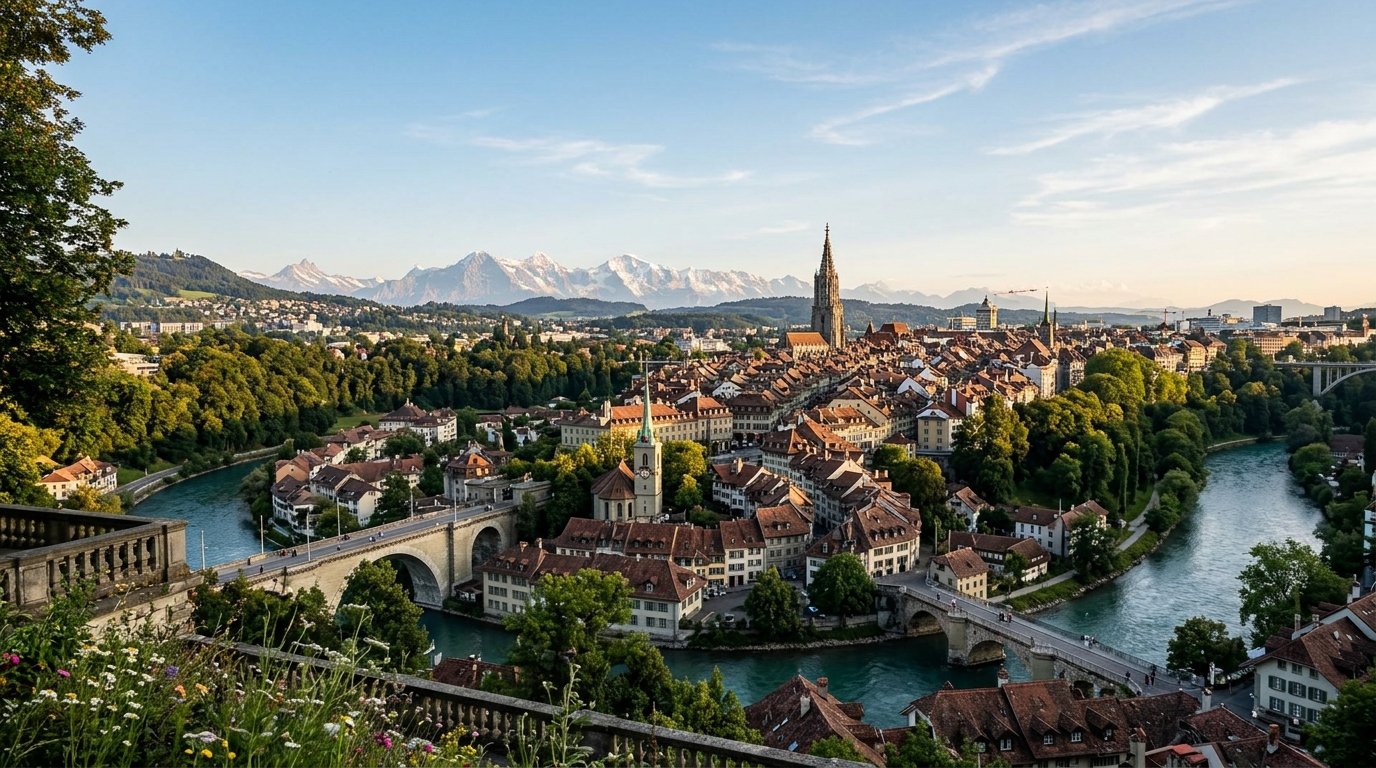
A panoramic view of Bern's Old Town with the Aare River, Cathedral, and red-roofed buildings under a clear blue sky
Panoramic view of Bern’s UNESCO-listed Old Town and the winding Aare River.

Authored by Anna Berger, a certified Swiss Tourism Expert with over 23 years of residency in Bern. A former senior city tour director, Anna now collaborates with the Swiss Federal Office of Culture on heritage interpretation and authored the guidebook “Bern Unlocked: A Decade of Guiding Secrets.” This guide’s 2026 schedules, events, and pricing were verified with Bern Tourism, the Swiss Historical Society, and SBB CFF FFS. Last updated: May 15, 2026.

Disclosure: This independent guide uses affiliate links to trusted booking platforms. A commission on qualifying purchases, at no extra cost to you, supports our ongoing research and ensures we can provide free, in-depth travel advice.

Why Is Bern a Unique and Compelling Swiss Destination for 2026?

Bern operates with a contemplative, human-scale rhythm that belies its status as the federal capital since 1848. It is a living museum where politics, medieval history, and alpine nature coexist seamlessly. You can attend a parliamentary session, float down a crystalline river, and dine in a 15th-century cellar all within a single day. For 2026, the city has strategically enhanced its sustainable infrastructure and cultural programming while maintaining its intimate charm. According to EU tourism statistics, sustainable urban destinations are seeing a surge in interest, and Bern is perfectly positioned to meet this demand.

Projected hotel occupancy for peak summer months remains at a manageable 75-80%, ensuring visitors experience authenticity over overcrowding. This balance of gravity and grace, of deep history and forward-thinking urbanism, makes Bern an exceptionally rewarding destination for the discerning traveler in 2026. The city’s commitment to green spaces means that nature is never more than a few minutes away from the cobblestone streets, offering a unique urban-rural hybrid experience that is rare in modern Europe. Furthermore, the local dialect, Bernese German, adds a layer of cultural depth that distinguishes it from the French-speaking Romandie or the Italian-speaking Ticino regions. Visitors often cite the safety and cleanliness of the streets as a primary reason for returning, with crime rates remaining significantly lower than the European average. Public transport is included with most hotel stays via the Bern Ticket, making exploration effortless and eco-friendly.

What Makes 2026 a Landmark Year to Visit Bern?

The year 2026 represents a convergence of completed urban projects, significant cultural anniversaries, and enhanced visitor services, positioning Bern at a peak moment for discovery. A cornerstone achievement is the full launch of the “Green Walk” (Grüner Weg), a 4.5-kilometer, fully accessible pedestrian and cycling corridor inaugurated in March 2026. This car-free artery, featuring native plantings and interactive art installations, seamlessly connects the Old Town to the Gurten funicular station, integrating urban and natural landscapes.

Public transport reaches new levels of integration with the city-wide “mobil” app, enabling one-tap payment and planning for trams, buses, e-bikes, and even the seasonal Aare river shuttles. Culturally, 2026 marks the centenary of Paul Klee’s death, commemorated with the major exhibition “Klee’s Cosmos” at the Zentrum Paul Klee from April 10 to September 20, featuring over 200 works. Concurrently, the Bern Historical Museum hosts “Einstein’s Bern 2026,” exploring how the city’s unique intellectual climate fostered his 1905 Annus Mirabilis papers. Furthermore, a meticulous five-year conservation project on the Bern Minster’s spire concludes in June 2026, revealing restored sandstone and vibrant 15th-century stained glass with unprecedented clarity. These coordinated efforts present a city at the height of its cultural and infrastructural readiness.

How Can You Deeply Experience Bern’s UNESCO Old Town?

Inscribed on the UNESCO World Heritage list in 1983, Bern’s Old Town is a masterclass in coherent urban planning that evolved over eight centuries. Its unique character is defined by 6 kilometers of arcaded walkways, known as Lauben, which protect pedestrians from rain and snow while housing boutique shops and cafes. To truly experience this heritage, start your day at the Zytglogge, the medieval clock tower. The animated figure show occurs every hour, drawing crowds who watch the mechanical jester ring bells and a bear parade past. Arriving ten minutes early is recommended to secure a good viewing spot along the Kramgasse.

Climbing the Bern Minster

After witnessing the clock, walk uphill to the Bern Minster (Berner Münster). Climbing the 344 steps of the tower offers the definitive panoramic view of the Aare loop and the distant Alps on clear days. Below, the cathedral’s portal features intricate Gothic sculptures depicting the Last Judgment. The view from the top is particularly striking at sunset, when the red rooftops glow against the backdrop of the Eiger, Mönch, and Jungfrau mountains. Entry to the cathedral nave is free, while the tower climb requires a small fee payable by card or cash at the base.

Political and Symbolic Hearts

Continue your walk to the Federal Palace (Bundeshaus), where you can observe the Swiss Parliament in session during specific periods. The guided tours offer insight into the Swiss direct democracy system. Finally, descend to the Bear Park (BärenPark) at the end of the Nydeggbrücke. Bern’s heraldic animal has been kept here since 1513, and the modern enclosure allows you to observe them in a naturalistic habitat along the riverbank. This route covers the political, spiritual, and symbolic heart of the city in less than three hours. Do not miss the Einstein House on Kramgasse 49, where the physicist lived while developing the theory of relativity.

What Traditional Foods Must You Eat in Bern?

No Bern, Switzerland travel guide is complete without addressing the culinary landscape. Bernese cuisine is hearty, reflecting its agricultural roots and cold winters. The definitive dish is the Berner Platte, a massive platter of smoked meats including pork loin, ham, sausages, and cured beef, served with sauerkraut and beans. It is traditionally eaten in January but is available year-round in historic restaurants like Altes Tramdepot. Expect to pay between 35 and 50 CHF for this substantial meal. For a lighter option, seek out Rösti, the shredded potato cake that is a national staple, often topped with cheese or eggs.

Do not leave without trying Fasnachtschüechli, light fried doughnuts dusted with powdered sugar, which are particularly popular during the carnival season but found in bakeries throughout the year. Pair your meal with a local Rivella, a soft drink made from milk whey, or a glass of Swiss white wine from the nearby Lavaux region. The Markthalle food market is also an essential stop, offering artisanal cheeses, chocolates, and fresh produce in a bustling indoor setting that showcases the region’s agricultural wealth. For dessert, try the Berner Honiglebkuchen, a spiced honey cake that has been a local specialty since the 19th century. Coffee culture is also vibrant, with many cafes offering free tap water upon request.

Where Should You Go for Nature and Views?

While the Old Town is the cultural core, the surrounding nature defines the Bern experience. The Rosengarten (Rose Garden) offers the best panoramic view of the Old Town loop. Accessible by a funicular or a steep walk, it features over 200 varieties of roses blooming from June to October. For a more active experience, hike up to the Gurten, Bern’s local mountain. The funicular ride takes only minutes, and the summit provides hiking trails, a restaurant, and open-air concerts during summer. In winter, the Gurten transforms into a sledding and skiing destination accessible from the city center. Additionally, the Aare River banks are lined with pathways perfect for cycling or jogging, connecting the city to the broader Swiss plateau.

Practical Logistics for Travelers

Getting around Bern is exceptionally easy due to its compact size. The main train station, Bern Bahnhof, is a hub for national SBB trains and local trams. Most hotels provide the Bern Ticket, which grants free use of public transport within zones 100 and 101. This includes buses, trams, and the funiculars to Gurten and Marzili. For those arriving by car, parking is available at the Train Station or the Welle parking garage, but driving within the Old Town is restricted. Currency-wise, while Switzerland uses the Swiss Franc (CHF), many establishments accept Euros, though change is often given in Francs. Credit cards are widely accepted, but having some cash for small bakeries or market stalls is advisable. Travelers arriving by air usually land in Zurich, which is only one hour away by direct train.

Frequently Asked Questions About Visiting Bern

Is the Bern Ticket worth it for tourists?

Yes, the Bern Ticket is included free with most hotel stays and provides unlimited travel on public transport within the city zones, including the funiculars and some museums.

What is the best time of year to visit Bern?

Late spring (May-June) and early autumn (September) offer mild weather and fewer crowds. Summer is ideal for swimming in the Aare, while December offers magical Christmas markets.

Do people speak English in Bern?

Yes, English is widely spoken in tourist areas, hotels, and restaurants, though the local dialect is Bernese German. High German is used for written communication.

Is Bern expensive for tourists?

Switzerland is generally pricey, but Bern offers good value compared to Zurich. Utilizing the Bern Ticket and eating at the Markthalle can help manage daily costs effectively.

How far is Bern from Zurich Airport?

Zurich Airport is approximately one hour away by direct train. Trains run frequently, making it a convenient entry point for international travelers heading to the capital.

Related reading: Zurich Travel Guide 2026 A Local Honest Walkthrough · Grindelwald Travel Guide 2026: Best Hikes, Views & Hidden Gems


Editorial standards

Why trust this guide

  • Route-checked. Itineraries, transfers and timings are verified against current public-transport schedules and operator pages.
  • Honest comparisons. Hotel areas and tours are compared on real value — affiliate links never change the recommendation.
  • Transparent. Some links are affiliate links; the disclosure is shown on every guide.

This guide is informational travel content, not professional travel, financial or legal advice. Always confirm prices, opening times and conditions with the official provider before you book.
Before you book

Compare the three costs that change the trip most.