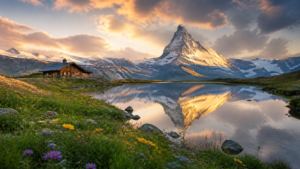
Spending 72 hours in St. Moritz in 2026 offers a perfectly paced blend of alpine majesty, cultural depth, and sustainable luxury, whether under winter snow or summer sun, ensuring an unforgettable Engadin experience.
Why Is 2026 a Transformative Year for St. Moritz?
The year 2026 represents a historic inflection point for St. Moritz, merging its storied past with a progressive future. It marks the 162nd anniversary of the “invention” of winter tourism in 1864, when hotelier Johannes Badrutt invited British guests to experience the Engadin winter, birthing the modern alpine resort. Beyond commemorating this legacy, 2026 is defined by St. Moritz’s accelerated commitment to environmental leadership. The destination aims to become a global benchmark for sustainable luxury, with over 70% of local businesses targeted to hold the “Swiss Sustainable Destination” certification by year’s end, up from 65% in 2025. This is powered by 100% local hydropower, which has already reduced regional CO2 emissions by an estimated 15,000 tons annually since 2015.
The 2026 events calendar is unparalleled, designed to showcase this ethos. Winter highlights include the Snow Polo World Cup on frozen Lake St. Moritz (January 19-25, 2026), attracting over 12,000 spectators daily, and the White Turf horse races featuring skijöring (February 1, 8, and 15, 2026). Summer 2026 bursts with activity, from the St. Moritz Festival of the Arts throughout July—featuring eco-conscious installations—to the Engadin Bike Giro on September 7, 2026, where 3,000 cyclists will conquer 50+ kilometers of traffic-free alpine roads. Visiting in 2026 means participating in a destination consciously evolving, where every luxury experience is underpinned by tangible environmental stewardship.
How Do You Strategically Plan a 72-Hour St. Moritz Itinerary for 2026?
Efficiency in St. Moritz requires meticulous, data-informed planning due to high demand for premium services. Key reservations—for hotels, guided tours, and top restaurants—should be secured 6 to 8 months in advance, especially for periods around major events. Understanding the integrated transport system and distinct village characters is crucial to minimizing transit and maximizing immersion. The cornerstone of your planning must be the complimentary Engadin Guest Card, provided at most accommodations, which grants free access to local buses, regional trains between St. Moritz, Pontresina, and Celerina, and summer boats on Lake St. Moritz (June 15 – September 30, 2026), a benefit valued at over CHF 50 per person daily.
Mastering Your Arrival: The Optimal Routes to the Alps
The most scenic and sustainable entry is via Switzerland’s electrified rail network. From Zurich Airport (ZRH), the journey takes approximately 3 hours and 20 minutes via Chur onto the UNESCO-listed Rhaetian Railway (RhB). For the panoramic Bernina Express from Chur, a seat reservation (around CHF 16) is mandatory atop the estimated 2026 second-class fare of CHF 86. This rail travel reduces per-passenger carbon emissions by roughly 40% compared to private vehicles. Arriving from Milan Malpensa (MXP) involves a 4-hour, 50-minute cross-border route via Tirano, Italy. While car rental offers flexibility, daily parking in St. Moritz Dorf costs CHF 25-40, and the comprehensive Guest Card often renders a car redundant for core exploration.
Selecting Your 2026 Alpine Base: A Data-Driven Guide
Your neighborhood choice fundamentally shapes your experience. Here is a detailed analysis for 2026, incorporating projected rates and key advantages.
| Neighborhood / Village | 2026 Estimated Nightly Rate (3-Star) | Ideal For | Key Advantages & Considerations |
|---|---|---|---|
| St. Moritz Dorf | CHF 320 – 680 | First-time visitors, luxury shoppers, nightlife | Historic epicenter with Via Serlas boutiques (e.g., Cartier, Prada), direct Corviglia funicular access, and five Michelin-starred restaurants. Offers ultimate convenience but with a bustling, high-energy atmosphere. |
| St. Moritz Bad | CHF 260 – 540 | Wellness seekers, families, value-conscious travelers | Home to the Ovaverva spa complex and Kempinski Grand Hotel. Quieter than Dorf with excellent bus links. Thermal bath entry starts at CHF 38. |
| Celerina | CHF 230 – 490 | Active families, ski-in/ski-out convenience | Direct access to Corviglia ski area via Signalbahn cable car. Authentic Engadin charm. A 5-minute train to St. Moritz center. Average ski rentals: CHF 50 per day. |
| Pontresina | CHF 210 – 440 | Hikers, nature lovers, culture enthusiasts | Gateway to Bernina Valley and Morteratsch Glacier. Features historic Grand Hotels and traditional sgraffito art. Guided glacier walks start at CHF 95. |
The Essential 2026 Pre-Arrival Checklist
Maximize your time by completing these tasks before departure. Winter visitors should pre-purchase a 3-day Engadin Ski Pass online for early-bird discounts, estimated from CHF 189 in 2026. Summer travelers should secure the 3-day Summer Card (from CHF 129), covering 30+ mountain lifts and transport. Download the SBB Mobile app for real-time train schedules. Pack strategically: for winter, invest in technical thermal layers and waterproof outer gear; for summer, bring sturdy hiking boots, SPF 50+ sunscreen, and a light insulated jacket. Secure travel insurance covering alpine sports. Bookmark the Engadin St. Moritz tourism website for live webcams and the 2026 event calendar. Confirm dining reservations up to 60 days in advance for peak seasons.
Day 1: Alpine Immersion – What Are the Unmissable First-Day Experiences?
Your first day acclimates you to the altitude while delivering iconic panoramas and lakeside serenity, establishing a profound connection with the landscape. Begin by 8:30 AM to capture morning light and avoid crowds, utilizing your Engadin Guest Card for all local transport.
Morning (8:30 AM – 12:30 PM): Summit Ascent to Piz Nair for Sovereign Views
Start at the Corviglia funicular in St. Moritz Dorf (round-trip CHF 52, often included with Guest Card). At Chantarella (2,486m), transfer to the Piz Nair cable car (CHF 24 round-trip) to reach 3,056 meters. The 360-degree platform offers commanding vistas of the Bernina Massif, including the Morteratsch Glacier, which has retreated over 3 kilometers since 1850. From mid-June to October, hike the 1.5-hour round-trip path to the summit cross. In winter, this is the heart of Corviglia’s 88 kilometers of pistes. For thrill-seekers, pre-book a paragliding tandem flight from the summit (from CHF 180) for 15-20 minutes of silent flight. Arriving before 10 AM ensures optimal light and solitude, with visibility often exceeding 50 kilometers on clear days.
Afternoon (12:30 PM – 5:30 PM): Panoramic Lunch and Lakeside Leisure
Descend and take the 7-minute RhB train (free with Guest Card) to Punt Muragl. Board the historic 1907 Muottas Muragl funicular to 2,456 meters (combined ticket approx. CHF 52). The terrace at Restaurant Muottas Muragl frames the iconic “Engadine Dolomites” view across four lakes. Savor regional specialties like venison rösti (around CHF 48). Post-lunch, hike the 4.2 km Panorama Trail to Alp Languard (about 1.5 hours) or return via funicular. Back in St. Moritz, stroll the 2.1-kilometer lake promenade, passing the 12th-century Leaning Tower and chalybeate spring. In summer, paddleboard rentals start at CHF 25 per hour, while guided ecological boat tours (CHF 35) detail lake conservation efforts active since 2010.
Evening (7:30 PM – 10:30 PM): Authentic Engadine Dining and Alpine Atmosphere
For authentic regional cuisine, dine at Restaurant Engiadina in Pontresina (12-minute train) for Capuns (around CHF 36). In Dorf, Restaurant Acla at Badrutt’s Palace offers contemporary Swiss mains from CHF 52. Conclude with stargazing on the Segantini path; the high altitude and minimal light pollution can, on rare winter nights, yield Northern Lights sightings. For a nightcap, the legendary King’s Club at the Kulm Hotel or the Chesa Bar with over 200 whiskies provides fitting ambiance. Reservations are essential and should be booked up to two months ahead during major events.
Is the Bernina Express Experience Essential for a 2026 St. Moritz Visit?
Absolutely. The Bernina Express is a UNESCO World Heritage journey through geological history and alpine engineering marvels. Allocating a full day to this route from St. Moritz to Tirano, Italy, and back offers a profound cross-cultural narrative essential for understanding the region’s diversity. It is a cornerstone of any 2026 itinerary, and precision timing is key for a 72-hour schedule.
Morning (8:32 AM – 1:30 PM): The UNESCO Descent to Italy
Board the 8:32 AM Bernina Express panoramic train from St. Moritz station. A mandatory seat reservation costs approximately CHF 16 plus the estimated 2026 second-class fare of CHF 64. The 2-hour, 20-minute journey climbs to the Bernina Pass at 2,253 meters—the highest Alpine crossing for a non-cogwheel railway—before descending 1,824 meters into Italy’s Valtellina valley. Key vistas include the Morteratsch Glacier, turquoise Lago Bianco, the cliff-perched Alp Grüm station, and the circular Brusio Viaduct. Use the open observation platforms between carriages for unobstructed photography. Book tickets months in advance via the RhB website to secure a right-hand window seat for optimal glacier views during ascent.
Afternoon (1:30 PM – 7:30 PM): An Italian Interlude in Tirano
Disembark in Tirano (441m), where Mediterranean warmth contrasts with the alpine climate. For a traditional lunch, Trattoria Ambra serves local pizzoccheri pasta for CHF 24-38. Visit the UNESCO-listed Santuario della Madonna di Tirano, a Renaissance basilica consecrated in 1528. The return panoramic train departs at 3:23 PM, arriving back in St. Moritz by 5:45 PM. For deeper immersion, consider a Valtellina wine tasting at “Novecento” (from CHF 28) before catching a later regional train. If visiting on a Tuesday, explore the weekly market for local crafts and Bresaola air-dried beef.
Evening (7:30 PM – 10:30 PM): Rustic Alpine Reflection
Upon return, dine at Chesa Veglia, a 1658 farmhouse in Dorf, for classic cheese fondue (approx. CHF 54 per person). For more casual fare, Hotel Hauser offers hearty veal schnitzel with rösti for CHF 35-50. Reflect on the day’s geographical shift over a glass of Engadine apple cider. Conclude at the St. Moritz Casino, open from 5 PM to 2 AM, which enforces a formal dress code after 7 PM, embodying timeless luxury.
Day 3: How Do You Customize Your Final Day for Serenity or Adventure?
Your concluding day presents a quintessential Engadin choice: the serene, culturally rich lake district of Sils and Maloja, or the raw, high-alpine glacial adventure of Diavolezza. Both options offer a deep connection with nature but cater to different energy levels. Base your decision on weather and interest, as each highlights distinct ecological and cultural aspects.
Option A: The Tranquil Landscapes of Sils and Maloja
Take bus line 6 to Sils-Maria (20 minutes, free with Guest Card). Visit the Nietzsche House Museum (CHF 9 entry, open 2 PM to 6 PM June-October), where the philosopher spent seven summers. From June 15, cruise pristine Lake Sils on the historic “Silvana” paddle steamer (CHF 32 round-trip) or hike the 9-kilometer lakeside trail (about 2.5 hours). Continue to Maloja Pass (1,815m) to explore glacier potholes and visit the Segantini Museum, with views stretching towards Italy’s Lake Como. This option is contemplative and culturally rich, ideal for a slower pace. Pack a picnic featuring Engadine nut cake (around CHF 6 per slice) from Confiserie Hanselmann.
Option B: The Glacial Majesty of Diavolezza
Take the RhB train to Bernina-Diavolezza station (25 minutes). The cable car ascends to Diavolezza at 2,978 meters (CHF 62 round-trip). The viewing platform faces the Bernina Massif, including Piz Bernina (4,049m) and the Pers Glacier. In summer, hike well-marked trails like the 45-minute path to Berghaus Diavolezza. In winter, this is a premier advanced ski area. Visit the “Il Bagnaccio” ice cave (CHF 14, open December to April). Pre-book a guided glacier walk (from CHF 95) for expert-led exploration. Be prepared: summit temperatures average -5°C even in July. This option suits thrill-seekers and geology enthusiasts, with guides discussing glacial retreat up to 40 meters annually in some areas.
Afternoon (4:00 PM – 7:00 PM): A Wellness or Cultural Farewell
Unwind after your excursion at the Ovaverva Pool and Spa in St. Moritz Bad (entry CHF 38 for 3 hours), featuring a 25-meter indoor-outdoor pool with mountain views. Alternatively, visit the Segantini Museum in St. Moritz (CHF 15 entry) dedicated to Alpine painter Giovanni Segantini. Conclude your 72-hour journey with a final lakeside stroll and rich hot chocolate at Confiserie Hanselmann (CHF 8.50). For souvenirs, the Engadiner Museum shop offers traditional crafts like hand-carved wooden objects or locally made nut tart.
What Defines the Culinary and Cultural Soul of St. Moritz in 2026?
St. Moritz’s essence is expressed through its unique gastronomy and rich cultural heritage, enhanced in 2026 by a focus on sustainability, provenance, and innovation. Engaging with these elements provides a deeper understanding of the region’s identity and its intrinsic connection to the land.
A Culinary Exploration of Authentic Engadine Flavors
Engadine cuisine celebrates mountain terroir and tradition. Must-try dishes include Bündner Gerstensuppe (hearty barley soup, CHF 18-25), Capuns (Swiss chard rolls, CHF 30-40), and Pizokel (short pasta with cheese, CHF 28-35). Restaurant Engiadina and Chesa Veglia are quintessential for these classics. For Michelin-starred dining, Ecco St. Moritz at Giardino Mountain (two stars) offers a 7-course tasting menu for around CHF 280. Dal Mulin serves refined Italian cuisine (main courses CHF 40-60), and Badrutt’s Palace Grill features premium steaks and seafood (CHF 70-120). Sample the iconic Engadiner Nusstorte at Confiserie Hanselmann (CHF 6-8 per slice). Visit the St. Moritz Farmers’ Market every Wednesday (8:00 AM – 1:00 PM) for alpine cheeses, air-dried meats like Bündnerfleisch, and seasonal produce, directly supporting local sustainable producers.
Cultural Immersion: From Sgraffito to Starry Skies
Cultural heritage is etched into the landscape through sgraffito frescoes on 16th-century houses in villages like Zuoz. The Engadiner Museum (CHF 12 entry) explores over 400 years of regional life, architecture, and crafts. For contemporary art, the Grace of the Sun exhibition at the Kulm Hotel presents rotating installations. The high-altitude skies offer exceptional stargazing; join guided astronomy walks (around CHF 40 in winter) for constellation viewing with visibility often exceeding magnitude 6.5. The 2026 Festival of the Arts will incorporate eco-friendly performances, reflecting the region’s sustainability ethos.
FAQ
Is St. Moritz worth visiting in the summer of 2026?
Absolutely. Summer 2026 in St. Moritz offers a spectacular alternative to winter, with average temperatures of 18°C to 22°C, perfect for hiking over 300 kilometers of marked trails, sailing on Lake Silvaplana, mountain biking on dedicated paths, and golfing at Europe’s highest 18-hole course. Events like the Festival of the Arts and the Engadin Bike Giro add vibrant cultural and active dimensions. The alpine meadows bloom with wildflowers in July, providing a lush, visually stunning experience distinct from the winter season.
How can I align my trip with St. Moritz’s sustainability goals in 2026?
You can actively contribute by making sustainable choices: arrive via Switzerland’s electrified train network, use the complimentary Engadin Guest Card for local transport, select accommodations with the “Swiss Sustainable Destination” label, dine at restaurants prioritizing locally sourced ingredients, carry a reusable water bottle, stay on marked trails to protect flora, and join ecological tours like lake preservation walks that educate on conservation efforts ongoing since 2010.
What is the estimated budget for a 3-day trip to St. Moritz in 2026?
St. Moritz is a premium destination. For a mid-range experience excluding international flights, budget approximately CHF 350 to 700 per person per day. This covers a 3-star hotel (CHF 250-450 per night), meals (CHF 40-90 per main course), activities like ski passes or cable cars (CHF 50
Editorial standards
Why trust this guide
- Route-checked. Itineraries, transfers and timings are verified against current public-transport schedules and operator pages.
- Honest comparisons. Hotel areas and tours are compared on real value — affiliate links never change the recommendation.
- Transparent. Some links are affiliate links; the disclosure is shown on every guide.
This guide is informational travel content, not professional travel, financial or legal advice. Always confirm prices, opening times and conditions with the official provider before you book.