Budget Travel Switzerland Tips 2026
Budget Travel Switzerland Tips 2026
Switzerland is absolutely possible on a budget — but only if you know the system. This country, famous for luxury watches and private banks, actually boasts a remarkably well-structured network of passes, free hikes, hostel networks, and local tricks that can seriously cut your daily spend by 40–60% compared to someone who just shows up unprepared. Here’s what I’ll share: the actual numbers, the passes truly worth buying, and the habits that separate budget travelers who *really* enjoy Switzerland from those who blow their savings in just three days.
Disclosure: This article contains affiliate links. Booking flights or hotels through our links helps support SwitzerlandVibe at no extra cost to you.
The Real Cost of Switzerland in 2026: A Budget Breakdown by Category
You need baseline numbers before diving into tactics. The Swiss Federal Statistical Office confirms Switzerland held its spot as Europe’s priciest country for consumer goods, with prices roughly 60% above the EU average in 2025. But honestly, “expensive” is a relative term, isn’t it? Let’s break down what things *actually* cost:
| Category | Budget Option (CHF) | Mid-Range (CHF) | Splurge (CHF) |
|---|---|---|---|
| Accommodation (per night) | Hostel dorm: 35–55 | Budget hotel: 120–180 | 4-star hotel: 280–500+ |
| Breakfast | Self-catered: 3–6 | Café: 14–20 | Hotel breakfast: 25–40 |
| Lunch | Migros/Coop meal: 8–12 | Restaurant Tagesmenu: 18–25 | À la carte: 35–60 |
| Dinner | Self-cook or kebab: 8–15 | Restaurant: 25–40 | Fine dining: 80–150+ |
| City public transport | Day pass: 8–12 | Covered by Travel Pass | Taxi: 15–50/ride |
| Intercity train (e.g. Zurich–Bern) | Half Fare Card: 13 | Full price: 26 | 1st class: 45 |
| Mountain excursion | Free hike: 0 | Cable car: 25–60 | Jungfraujoch: 200+ |
| Museum entry | Free with Swiss Museum Pass: 0 | Standard: 12–22 | Top attractions: 25–35 |
Realistic daily budget total: For a disciplined budget traveler, you’re looking at CHF 85–120/day. If you want mid-range comfort, plan on CHF 180–280/day.
The Swiss Pass System: Which Card Saves You the Most Money?
Deciding on the right pass is *the* single most important choice for any trip to Switzerland. Switzerland’s public transport system is truly world-class, but without the right pass, it’s going to cost you a pretty penny.
Swiss Half Fare Card
Cost: CHF 120 (1 month) | Saves: 50% on all trains, buses, boats, and most cable cars
Best for: Travellers staying 1–2 weeks who plan to visit multiple cities. You’ll break even after spending just CHF 240 on transport — and trust me, that happens fast. For instance, a return trip from Zurich to Interlaken costs CHF 108 at full price; with the Half Fare Card, it’s only CHF 54. The card literally pays for itself in just two such trips.
Swiss Travel Pass
Cost: From CHF 244 (3 consecutive days) to CHF 500 (15 days) | Covers: Unlimited trains, trams, buses, boats, some mountain railways + 500 museums free
Best for: Travelers planning 4+ days of intense travel. I’ve found the 8-day pass (CHF 390) to be the sweet spot for a 10-day trip. Plus, it even includes free city transport in places like Zurich, Geneva, and Lausanne.
Regional Day Passes
Cost: CHF 30–52 per day | Covers: Unlimited travel within one region
Best for: Anyone spending a full day exploring a single area (think all the Bernese Oberland routes). These are often overlooked, but honestly, they offer excellent value when you’re based in one region.
You really need to plan your transport strategy *before* you book flights. Our guide, Swiss transportation secrets locals use, dives into a full pass comparison with real-world examples.
Accommodation Hacks: Sleep Well for Less in Switzerland
Swiss Youth Hostels (SJH) run over 50 hostels across Switzerland, offering dorm beds from CHF 35–55/night, and that usually includes breakfast. Grabbing an SJH membership card (CHF 22/year) knocks CHF 6 off every nightly rate — so it pays for itself after just 4 nights. Both the Zurich City hostel and Lucerne hostel are super central and offer fantastic value.
Other budget accommodation options:
- Airbnb private rooms: Expect to pay CHF 55–90/night in smaller towns (though they’re way more expensive in Zurich/Geneva)
- Camping: Swiss campsites typically cost CHF 20–45/night for a tent pitch. TCS Camping (a touring club) sites are always well-maintained and perfectly located near popular spots
- Sleep in a hay barn (Schlaf im Stroh): This is a uniquely Swiss experience! Farmers here offer hay barn sleeping for CHF 20–35/person, breakfast included. Over 200 farms are part of this national program
- Stay in the valleys, not the summits: You’ll find a room in Interlaken village costs CHF 40–60 less per night than a comparable room up in Grindelwald or Wengen
If you’re a first-timer, our first time in Switzerland guide helps you avoid those common accommodation mistakes.
Food Strategy: Eat Well in Switzerland Without Spending a Fortune
Food is where most tourists absolutely bleed money in Switzerland. Seriously, a sit-down dinner for two with wine can easily hit CHF 120–160. But don’t worry, here’s how you can eat really well for a fraction of that cost:
Supermarket Strategy
Migros and Coop are Switzerland’s two main supermarket chains. Both offer fantastic ready-made meals, fresh salads, hot deli counters, and bakery sections. You can grab a hot meal from the Coop deli counter for just CHF 8–12 — that same quality meal would set you back CHF 25–35 in a restaurant. One crucial thing to remember: Migros doesn’t sell alcohol (it’s actually part of their founding charter), so if you’re craving a beer with dinner, you’ll need to hit up Coop or Aldi instead.
Tagesmenu (Daily Menu)
Almost every Swiss restaurant offers a Tagesmenu (lunch menu) on weekdays: it’s a two-course meal for CHF 16–22 that would easily cost CHF 40–55 à la carte in the evening. This is how the Swiss themselves manage to eat out affordably. So, if you’re after a proper restaurant experience, do it at lunch!
Fondue and Raclette
Switzerland’s most iconic dishes are surprisingly affordable if you approach them right. You can pick up a fondue set from a supermarket for CHF 12–18 that easily serves two. Buy one, enjoy it in your accommodation, and you’ve got an authentically Swiss meal for just €10 per person — way cheaper than a fondue restaurant (which could be CHF 30–45/person).
Free and Low-Cost Activities in Switzerland 2026
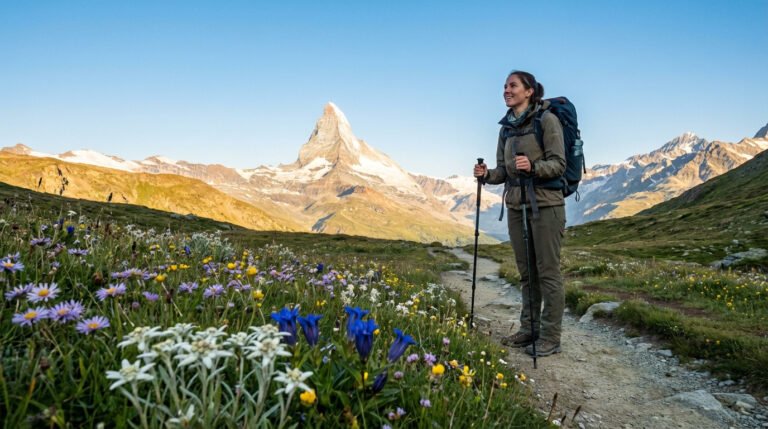
Good news: most of Switzerland’s incredible outdoor activities won’t cost you a dime. The country boasts over 65,000 kilometers of marked hiking trails, all meticulously maintained by SchweizMobil. The best part? This entire trail network is completely free to use — you literally pay nothing to hike from Männlichen to Kleine Scheidegg, soaking in those epic views of the Eiger, Mönch, and Jungfrau massif. Compare that to the CHF 100+ you’d shell out for the Jungfraujoch train to get a similar vista!
Top free activities by region:
- Bernese Oberland: Hike the Panoramaweg from Männlichen (free if you’ve got a Swiss Travel Pass for the cable car) to Kleine Scheidegg. It’s 4 hours of world-class alpine views.
- Lucerne: Stroll the medieval city walls (free), check out the Chapel Bridge (also free), or hike Mount Pilatus Kulm via the Tomlishorn trail (free if you hike, but pricey if you take the gondola)
- Zurich: Zurich’s Lindenhügel park, the banks of the Limmat River, the Old Town (Altstadt), and the Grossmünster exterior are all completely free
- Ticino: Swimming in Lake Lugano or Lake Maggiore is totally free, and the lake promenades are open to everyone
- Swiss Alps: The Via Alpina long-distance trail crosses Switzerland for free. Just note that hut-to-hut sections will run you CHF 35–55/night in SAC alpine huts
Interestingly, Swiss Tourism Board data shows that 78% of domestic Swiss holidaymakers prioritize hiking as their main outdoor activity — and guess what? They do it mostly for free!
Timing Your Trip: When Switzerland is Cheapest
| Season | Months | Accommodation Cost | Crowd Level | Weather |
|---|---|---|---|---|
| Peak Summer | Jul–Aug | High (+30%) | Very High | Warm, 20–28°C |
| Shoulder (spring) | May–Jun | Medium | Moderate | Cool, wildflowers |
| Shoulder (autumn) | Sep–Oct | Medium | Low–Moderate | Crisp, clear |
| Winter (ski season) | Dec–Mar | Very High in ski resorts | High in resorts | Snow, -5 to 5°C |
| Off-peak (best value) | Nov, Apr | Lowest (-20–40%) | Very Low | Variable, wet |
Best value month: Hands down, it’s October. The alpine colors are absolutely spectacular (think larch trees turning pure gold!), the crowds have thinned out, accommodation is a solid 20–30% cheaper than in August, and the weather usually stays reliably clear. Honestly, it’s the perfect sweet spot that most international tourists completely overlook. For a full month-by-month breakdown, check out our detailed best time to visit Switzerland guide.
Money-Saving Quick Tips for Switzerland 2026
- Always ask for tap water (Leitungswasser): Switzerland’s tap water is seriously some of the cleanest in the world (way better than most bottled stuff!). Always ask for it at restaurants — it’s usually free or super cheap (CHF 0–2).
- Avoid Zurich and Geneva for budget travel: Look, these are Switzerland’s two priciest cities. If you’re really aiming for budget travel, you’ll want to base yourself in Bern or Lucerne instead.
- CHF vs EUR: Switzerland runs on Swiss Francs. Sure, some tourist spots might take euros, but you’ll get a terrible exchange rate. Stick to CHF; just pull cash from ATMs using a fee-free card (Revolut, Wise, or N26 are all solid choices).
- Grocery shopping on discount days: Migros and Coop heavily mark down fresh food on Tuesday and Thursday evenings, especially items nearing their sell-by date. It’s a great chance to stock up for the next day’s picnic at a 30–50% discount!
- Free city public transport in many hotels: Many Swiss cities actually give guests of registered accommodations free public transport passes (like the “Zürich Card” for hotel guests). Always ask your hostel or hotel when you check in!
- Book trains 30 days in advance: SBB (Swiss Federal Railways) releases advance purchase tickets with big discounts 30 days ahead. Just a heads up, popular routes (think Zurich–Interlaken, Geneva–Zermatt) sell out fast in summer.
- Swiss Museum Pass: This costs CHF 166 per year and gets you free entry to 500 museums nationwide. It’s probably not worth it for a week-long trip, but it’s an excellent deal for longer stays or if you’re a repeat visitor.
Frequently Asked Questions About Budget Travel in Switzerland
How much does a budget trip to Switzerland cost per day in 2026?
A *truly* budget traveler in Switzerland can absolutely manage on CHF 80–120 per day (that’s roughly €85–€130). You’ll do this by staying in hostels, cooking your own food, and using the Swiss Half Fare Card for transport. For mid-range comfort, you should plan on CHF 180–280/day.
Is the Swiss Half Fare Card worth it for budget travellers?
Yes, it absolutely is. The Swiss Half Fare Card costs CHF 120 for one month and slashes 50% off all trains, buses, boats, and most cable cars. If you spend more than CHF 240 on transport in a month — which, believe me, is super easy to do — it pays for itself. Most budget travelers will recoup the cost within just 2–3 travel days.
What is the cheapest way to get around Switzerland?
The cheapest way to get around is by combining the Swiss Half Fare Card with point-to-point tickets. If you’re looking for unlimited travel, the Swiss Travel Pass (starting from CHF 244 for 3 days) is a better bet. Whatever you do, completely avoid taxis — a 5-minute taxi ride in Zurich can easily run you CHF 30+!
Which Swiss cities are cheapest to visit?
Bern (the capital, and less touristy than Zurich), Lucerne (smaller than Zurich), and the Bernese Oberland villages (like Grindelwald, Mürren) generally offer better value than Zurich or Geneva. Staying outside city centers and simply taking the train in can save you significant accommodation costs.
Can I visit famous Swiss mountains on a budget?
Yes, you absolutely can, but you’ll need a bit of planning. For example, the Jungfraujoch summit train costs a hefty CHF 200+ return. Budget travelers can skip that and instead hike to Männlichen or Schynige Platte for free (especially if you have a Swiss Travel Pass). Plenty of mountain viewpoints offer free or low-cost alternatives to those famous summit railways.
Are free camping or camping options available in Switzerland?
Wild camping (bivouacking) is technically legal in Switzerland above 2,000 meters altitude on public land, though local canton rules do vary. Formal campsites typically cost CHF 20–45/night for a tent pitch, which is a lot cheaper than city hostels. Just make sure to always check with local authorities before you wild camp.