Lugano Switzerland Travel Guide 2026: Lakes, Mountains, and Italian Charm
Lugano is the best place in Switzerland to experience Italian culture without crossing into Italy — and in 2026, it is more accessible, vibrant, and worth visiting than ever. Tucked into Switzerland’s southernmost canton, Ticino, Lugano sits on a crescent-shaped bay ringed by forested mountains, where palm trees grow alongside Swiss efficiency and espresso replaces coffee in every café. Whether you have three days or a full week, this guide covers everything: where to go, what it costs, which neighborhoods to stay in, and the local tips most travel sites skip entirely.
Why Lugano Should Be on Your 2026 Switzerland Itinerary
Lugano gives you something rare: Alpine scenery, a Mediterranean pace of life, and Swiss infrastructure — all in the same city. The average summer temperature sits around 26°C (79°F), the lake is warm enough to swim in from June through September, and the local food scene runs on risotto, polenta, and house-made pasta rather than fondue. Tourism Research Switzerland reported in 2024 that Ticino receives over 3 million overnight stays annually, yet Lugano still feels far less crowded than Lucerne or Interlaken. If you are planning a Switzerland trip in 2026, Lugano is the underrated anchor that makes the rest of your route more interesting.
Flights into Lugano Airport (LUG) cover a handful of European cities directly, but most travelers fly into Zurich (ZRH) or Milan Malpensa (MXP) and reach Lugano by train in under two hours. Searching for the best-priced flights is straightforward via Aviasales, which aggregates fares across dozens of carriers and consistently surfaces the cheapest combinations into either hub airport.
The Best Things to Do in Lugano in 2026
Lugano’s top activities divide into three categories: mountain excursions, lake experiences, and city culture. You need at least three full days to do each justice.
Monte San Salvatore: The Rigi of Lugano
Monte San Salvatore (912 m) rises directly above the suburb of Paradiso and offers the most dramatic 360-degree view of the entire region. A red funicular departs from Paradiso roughly every 30 minutes and reaches the summit in about 12 minutes. At the top, walk the summit trail in under an hour, visit the small church dedicated to Sant’Anna, and eat at the restaurant with the best terrace view in the canton. The round-trip funicular ticket costs approximately CHF 33 per adult; the Swiss Travel Pass covers it fully.
The trail down on foot takes about 90 minutes through mixed forest and deposits you in Carona, a quiet hillside village with a 16th-century church and almost no other tourists. From Carona, take the bus back to Lugano centre.
Monte Brè: Lugano’s Sunniest Peak
Monte Brè (933 m) is officially the sunniest mountain in Switzerland, according to MeteoSwiss data. The funicular departs from the Cassarate neighborhood on Lugano’s eastern edge and climbs through the picturesque village of Brè, which is one of the best-preserved stone-house villages in Ticino. Many visitors do not realize you can exit mid-way at Brè village and walk the final stretch to the summit, passing artists’ studios and flower-filled terraces. The summit offers views east toward Como and south toward the Po Valley on clear days. Round trip is around CHF 27 for adults.
Lake Lugano Boat Trips
The lake is the centerpiece of the city, and the best way to understand its geography is from the water. The Società Navigazione del Lago di Lugano (SNL) operates a network of scheduled ferries connecting Lugano with Gandria, Morcote, Campione d’Italia, and Capolago. The full lake tour runs approximately 3.5 hours and costs around CHF 42; individual sector tickets let you combine boat and bus into a loop itinerary.
Morcote, voted one of Switzerland’s most beautiful villages multiple times, is a 40-minute boat ride from Lugano’s central pier. Its arcaded alleyways, terracotta rooftops, and lakeside cemetery are genuinely photogenic. Gandria is even smaller — a cluster of pastel houses stacked directly on the hillside above the water — and the boat stops right at the village dock. Both are worth a half-day each. The evening panoramic boat departs Lugano at 7 pm on Friday nights in July and August and includes a live musician on board; book at the SNL ticket office the morning of your visit.
Old Town (Città Vecchia) and the Lakeside Promenade
Lugano’s historic centre is compact enough to explore in two hours but rich enough to fill an entire morning. The main piazza, Piazza della Riforma, is lined with café terraces and hosts an outdoor market every Tuesday and Friday morning where local farmers sell Ticino cheeses, cured meats, honey, and seasonal produce. The Cathedral of San Lorenzo, a 15-minute walk uphill from the piazza, contains Renaissance frescoes that rival what you find in many Italian churches.
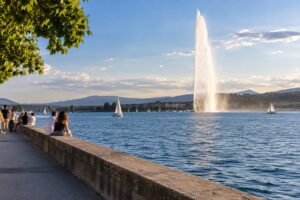
The lakeside promenade — Lungolago — stretches for nearly 3 km along the bay and is free, flat, and lined with public art installations and flower gardens. It connects the old town to the Parco Civico, Lugano’s main public park, where peacocks roam freely among Mediterranean trees and the Villa Ciani hosts rotating art exhibitions.
Lugano’s Italian-Swiss Culture: What to Expect
Lugano operates in Italian. The language on the street, in shops, and at restaurant tables is Italian, not German or French. Swiss-Italian culture combines northern Italian warmth and culinary tradition with Swiss punctuality and organization.
Food in Lugano is strongly regional. Risotto with local fish from the lake (perch, whitefish), polenta with braised meat, and luganighe (a coarse-ground pork sausage the city is named after) are the foundations of the local menu. Wine is predominantly local: Ticino produces Merlot that outperforms its reputation, particularly from producers in the Mendrisiotto region. Order a carafe of local Merlot at any traditional grotto (a rustic hillside tavern) and you will spend less than CHF 20 for a liter.
The grotto culture is one of Lugano’s best-kept secrets. These stone-built taverns dot the hillsides above the city and typically open only in warm months, serving simple seasonal menus at tables set under pergolas. Grotto dei Pescatori in Castagnola and Grotto Figini above Carona are two that consistently draw regulars back every season.
Best Neighborhoods to Stay in Lugano
- Centro (City Centre): The most convenient location. You walk to everything — the lake, the old town, the LAC, and multiple restaurant streets. Hotels here are mid-range to luxury. Best for first-time visitors who want zero logistics.
- Paradiso: South of the centre along the lakefront, Paradiso is quieter, slightly more affordable, and directly below Monte San Salvatore’s funicular. Excellent if you plan to hike and want the lake view without paying centro prices.
- Castagnola: East of the city, bordered by the Villa Favorita gardens and the Monte Brè funicular base. Very residential, very quiet, and a good fit for longer stays or repeat visitors.
- Lugano-Cornaredo: Near the train station and convention center, this area offers the best-value hotels including several three-star business properties that drop prices on weekends.
For booking accommodation, Booking.com consistently shows the widest selection of Lugano properties from boutique lakeside hotels to budget guesthouses. Alternatively, Trip.com often undercuts standard rates on the same hotels, particularly for stays of three nights or more.
When to Visit Lugano in 2026
- May–June: Ideal. Temperatures reach 20–24°C, crowds are thin, accommodation prices are at their shoulder-season low, and the lake warms up enough for swimming by mid-June.
- July–August: Peak season. The city fills with Italian and German tourists, hotels charge peak rates, and the lakefront cafés require patience. All mountain lifts operate and outdoor concerts fill the calendar.
- September–October: The second-best window. Crowds thin considerably after the first week of September, temperatures remain comfortable (18–22°C in September), and the Ticino vineyards go through harvest.
- November–April: Lugano does not close down in winter, but the lake-focused activities are limited. The Christmas market on Piazza della Riforma (late November to late December) is genuinely good and far less commercialized than Zurich’s.
Day Trips from Lugano
Bellinzona (30 minutes by train)
Bellinzona, Ticino’s cantonal capital, contains three medieval castles (Castelgrande, Montebello, and Sasso Corbaro) that earned UNESCO World Heritage status in 2000. The Saturday market below Castelgrande is one of the best food markets in Switzerland. Entry to all three castles costs CHF 15 combined.
Locarno and Lake Maggiore (45 minutes by train)
Locarno sits on the northern shore of Lake Maggiore and hosts the world-famous open-air film festival every August. The Santuario della Madonna del Sasso funicular, the old town, and the boat connections to the Borromean Islands make it a full day easily.
Como, Italy (45 minutes by train)
Cross the border into Italy and reach Como in under an hour from Lugano. Como’s silk museum, lakefront gardens, and cathedral are the main draws. The Italian side of the lake is noticeably cheaper for lunch and dinner. Your Swiss Travel Pass is not valid in Italy — buy a separate ticket at Lugano train station for around CHF 12 each way.
For exploring the Ticino region beyond train routes, renting a car opens a completely different layer. GetRentacar compares rental rates across local and international agencies at Lugano and Bellinzona stations. A compact car is strongly recommended over anything larger — roads in Ticino are well-maintained but often narrow.
Budget Tips for Lugano 2026
- Eat at the market: The Tuesday and Friday market on Piazza della Riforma sells cheese, salumi, bread, and seasonal fruit at prices close to Italian levels. A full market lunch for two costs under CHF 20.
- Use the Swiss Travel Pass: If Lugano is part of a broader Switzerland trip, the Swiss Travel Pass covers all SNL boats, both mountain funiculars, and all trains in the region. Even a 4-day pass pays for itself in Lugano alone.
- Stay in Paradiso or Cornaredo: Both neighborhoods offer significantly cheaper rates than centro, with easy bus or walking access to everything.
- Cross into Italy for dinner: The border is 15 minutes by bus from Lugano centre. A sit-down dinner at a Como or Chiasso restaurant costs roughly 40% less than an equivalent meal in Lugano.
- Drink grotto wine: Local Ticino Merlot sold by the carafe at grottos runs CHF 12–18 per liter.
- Book accommodation early for July and August: Lugano hotels in peak season sell out by March. Booking three to four months ahead via Booking.com with free cancellation locks in rates while keeping flexibility.
Hidden Gems: What Most Tourists Miss in Lugano
Parco degli Ulivi, Gandria
The olive grove trail — Parco degli Ulivi — runs along the cliff above the water between Lugano and Gandria and can be walked in about 90 minutes one-way. The path passes through groves of centuries-old olive trees (the northernmost in Europe), stone terraces, and lookout points with views that never appear in tourist brochures. Start from the Cassarate side and take the boat back from Gandria.
Campione d’Italia
Campione d’Italia is an Italian municipality physically surrounded by Swiss territory — an anomaly that survived every European border treaty since 1797. Accessible by boat from Lugano, the short visit is genuinely interesting for anyone curious about geopolitical oddities.
Practical Information for Lugano 2026
- Currency: Swiss Franc (CHF). Credit cards accepted almost everywhere, but grottos and market vendors often prefer cash.
- Language: Italian is the primary language. English is widely spoken in tourist areas, hotels, and restaurants.
- Getting around: The city bus network is efficient and covers all neighborhoods. A single ticket costs CHF 2 in Lugano’s compact zone.
- Safety: Lugano is one of the safest cities in Europe. The main caution is the lakefront at night in peak tourist season — keep bags on your lap rather than hanging from chairs.
- Tipping: Service is included by law in Swiss restaurant bills. Rounding up to the nearest franc is customary.
Frequently Asked Questions: Lugano Switzerland Travel Guide 2026
{
“@context”: “https://schema.org”,
“@type”: “FAQPage”,
“mainEntity”: [
{
“@type”: “Question”,
“name”: “How many days do you need in Lugano, Switzerland?”,
“acceptedAnswer”: {
“@type”: “Answer”,
“text”: “Three full days is the minimum to see Lugano properly: one day for Monte San Salvatore and Monte Brè, one day for a Lake Lugano boat trip to Morcote and Gandria, and one day for the city centre including the old town, LAC, and Lungolago promenade. A fourth day makes sense for a day trip to Bellinzona, Locarno, or Como.”
}
},
{
“@type”: “Question”,
“name”: “Is Lugano expensive compared to other Swiss cities?”,
“acceptedAnswer”: {
“@type”: “Answer”,
“text”: “Lugano is moderately expensive by Swiss standards, but noticeably cheaper than Zurich or Geneva for accommodation and some restaurant meals. A mid-range hotel costs CHF 150–220 per night in shoulder season. The proximity to Italy gives travelers a practical option: crossing into Como or Chiasso for dinner can cut food costs by 30–40% compared to equivalent meals in Lugano.”
}
},
{
“@type”: “Question”,
“name”: “What is the best time of year to visit Lugano?”,
“acceptedAnswer”: {
“@type”: “Answer”,
“text”: “May, June, and September are the best months to visit Lugano. Temperatures are warm (20–24°C), crowds are manageable, and accommodation prices are at their shoulder-season level. July and August are the peak months — hotter, busier, and more expensive, but perfect if you want to swim in the lake or attend outdoor festivals.”
}
},
{
“@type”: “Question”,
“name”: “Do I need to speak Italian to visit Lugano?”,
“acceptedAnswer”: {
“@type”: “Answer”,
“text”: “No. English is widely spoken in Lugano’s hotels, restaurants, museums, and tourist offices. Italian is the local language and makes interactions more personal, but it is not required. A few basic Italian phrases — buongiorno, grazie, un caffè per favore — go a long way and are always warmly received by locals.”
}
},
{
“@type”: “Question”,
“name”: “How do I get from Zurich Airport to Lugano?”,
“acceptedAnswer”: {
“@type”: “Answer”,
“text”: “The fastest connection from Zurich Airport (ZRH) to Lugano is by direct InterCity train, which takes approximately 2 hours and 45 minutes. Trains run roughly every hour and a standard ticket costs CHF 68–82 each way. The Swiss Travel Pass covers this journey in full. From Milan Malpensa (MXP), the train journey via Milan Centrale and the border at Chiasso takes about 2.5 hours.”
}
}
]
}
About the Author: Anna Berger
Anna Berger is a Swiss travel writer based in Bern, specializing in budget travel across the Alps and Italian Switzerland. She has covered Ticino, the Valais, and the Bernese Oberland for print and digital publications since 2019, and visits Lugano at least twice a year to keep her recommendations current.
Editorial standards
Why trust this guide
- Route-checked. Itineraries, transfers and timings are verified against current public-transport schedules and operator pages.
- Honest comparisons. Hotel areas and tours are compared on real value — affiliate links never change the recommendation.
- Transparent. Some links are affiliate links; the disclosure is shown on every guide.
This guide is informational travel content, not professional travel, financial or legal advice. Always confirm prices, opening times and conditions with the official provider before you book.