title: “Switzerland First Time Visitor Guide: Stop Making These Mistakes (2026)”
slug: “switzerland-first-time-visitor-guide-2026”
domain: “switzerlandvibe.com”
primary_keyword: “switzerland first time visitor guide”
date: 2026-08-11
word_count: 3050
status: draft
author: “Anna Berger”
schema:
– Article
– FAQPage
– Author
Affiliate disclosure: This article contains affiliate links. If you book through our recommended partners, we may earn a commission at no extra cost to you.
Switzerland First Time Visitor Guide: Stop Making These Mistakes (2026)
Switzerland costs more than France or Italy, but most first-time visitors who plan correctly spend far less than they feared. The ones who overpay are usually the ones who skip one document, buy the wrong train pass, or book accommodation without knowing what the region is actually worth.
This guide covers what to budget, when to go, how to move between cities efficiently, and the five mistakes that derail the most well-intentioned trips. Everything here is based on 2026 pricing from official Swiss sources.
When Is the Best Time to Visit Switzerland for First-Timers?
Switzerland has four genuinely distinct seasons, and the right time to visit depends on what you want to do.
June to September gives you alpine hiking, lake swimming, and reliable train panoramas. July and August are peak season: expect full hotels, higher prices, and the most predictable mountain weather. If you want the classic green-meadow Switzerland, this is when to go.
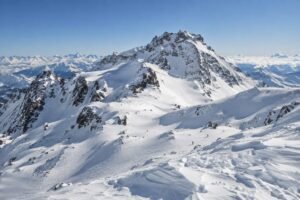
December to March is ski season. Resorts like Verbier, Zermatt, and Grindelwald operate at full capacity. If skiing or snowshoeing is on your list, our Switzerland skiing guide covering the best resorts for 2026 lays out which resorts suit which skill levels.
April to May and September to October are shoulder seasons. Prices drop by 20 to 30 percent, trails open up, and mountain huts are quieter. The Bernese Oberland in October is a specific recommendation: autumn colour, snow on peaks, and half the crowds of August.
The one catch with shoulder season: some mountain railways and cable cars close for maintenance in November and late April. Check the SBB website and the relevant resort websites before locking in dates.
What About Bad Weather?
The Alps create microclimates. A sunny forecast in Zurich can coincide with complete cloud cover on Schilthorn. Before paying for any summit cable car, check the webcam on that specific mountain’s official website and MeteoSwiss, Switzerland’s federal weather service. This single step saves considerable money and disappointment.
Switzerland First-Time Budget: What Does a Trip Actually Cost?
Switzerland ranks among the three most expensive countries in the world by cost of living in 2026 (Numbeo Cost of Living Index, 2026). The daily figures below are per person, excluding flights.
Daily Budget Breakdown (CHF per Person)
| Category | Value Traveller | Mid-Range | Comfort |
|---|---|---|---|
| Accommodation | CHF 45-65 (hostel/guesthouse) | CHF 130-200 (3-star hotel) | CHF 280-500 (4-5 star) |
| Food and drink | CHF 30-45 | CHF 60-90 | CHF 120-200 |
| Transport | CHF 35-55 (point-to-point) | CHF 55-75 (Swiss Travel Pass daily equiv.) | CHF 75-90 |
| Activities | CHF 0-25 (hiking, free) | CHF 40-80 (1-2 excursions) | CHF 80-150 |
| Daily total | CHF 110-190 | CHF 285-445 | CHF 555-940 |
The two biggest swing factors are accommodation and mountain excursions. A single ticket to Jungfraujoch costs CHF 231.80 for adults (Swiss Federal Railways, 2026). The Schilthorn is CHF 119.40. If you plan three major mountain excursions, that is CHF 500 or more before meals or hotels. Holding a Swiss Travel Pass cuts these costs with 25 to 50 percent discounts on most mountain railways.
Free hiking on maintained trails, on the other hand, is one of Switzerland’s genuine value offers. Over 65,000 kilometres of marked paths are publicly accessible at no charge (Switzerland Tourism, 2026).
How Much Money Should I Budget Total?
For a 7-night trip, plan:
– Value traveller: CHF 1,000-1,400 (not including flights)
– Mid-range: CHF 2,000-3,100
– Comfort: CHF 4,000-6,500
These are honest estimates, not the low-ball figures designed to attract readers who then feel misled. Switzerland rewards honest planning.
The Swiss Travel Pass: Do You Need It?
The Swiss Travel Pass is the single most common topic in first-time visitor planning, and the decision has more layers than most guides admit.
What It Covers
The pass gives unlimited travel on SBB trains, PostBuses, lake boats, and city trams in 90-plus towns. It includes free admission to over 500 museums and discounts of 25 to 50 percent on most mountain railways. Children under 16 travel free with a parent holding the pass (Swiss Family Card).
2026 Pricing (2nd Class)
| Duration | Adult Price |
|---|---|
| 3 days | CHF 254 |
| 4 days | CHF 310 |
| 6 days | CHF 399 |
| 8 days | CHF 475 |
| 15 days | CHF 599 |
Source: Swiss Federal Railways official pricing, 2026
When It Is Worth It
For first-time visitors covering three or more cities over five or more days, the Swiss Travel Pass is the right choice. The Zurich to Zermatt route alone costs CHF 93 one way as a point-to-point ticket. Add Zermatt to Interlaken (CHF 87) and Interlaken to Lucerne (CHF 46), and you are already at CHF 226 for three legs before counting any other travel.
The pass also removes daily friction: no need to queue or calculate route costs. That convenience has real value on a short trip.
When to Skip It
If you are staying in one city for most of your trip or only doing one long rail journey, the Half Fare Card (CHF 150) is often better. It gives you a 50 percent discount on all Swiss public transport for one month.
For scenic train rides such as the Glacier Express, check our full Glacier Express train guide for a precise cost comparison and booking advice.
How to Move Between Swiss Cities Efficiently
Switzerland’s public transport network is one of the most precise in the world. Trains run on minute schedules and connections are tight by design.
Download the SBB Mobile app before you arrive. It shows live schedules, platform numbers, and real-time delays. The app also allows ticket purchase and handles the GA and Swiss Travel Pass activation.
Five Core Routes for First-Timers
| Route | Duration | Frequency |
|---|---|---|
| Zurich to Lucerne | 45 minutes | 2 per hour |
| Lucerne to Interlaken East | 2 hours | 1 per hour |
| Interlaken to Bern | 55 minutes | 1 per hour |
| Bern to Geneva | 1 hour 55 minutes | 2 per hour |
| Zurich to Zermatt | 3 hours 15 minutes | 1 per hour |
All times from SBB timetable, 2026.
Is Car Rental Worth Considering?
For visits to the Italian-speaking canton of Ticino or the Valais wine region, a rental car opens routes not well served by trains. Smaller alpine valleys like the Bavona Valley or Klontal are genuinely hard to reach without your own transport. For everything else on a first visit, the train is faster and more direct. If you do want to add a driving day or regional loop, GetRentacar has good coverage for Swiss pick-up locations.
Where to Go: A Practical First-Time Itinerary
Most first-time visitors do a version of this loop. It is not original, but it works because it connects Switzerland’s most distinct landscapes efficiently.
Zurich (1-2 nights): Entry city for most international flights. The Altstadt (old town), Kunsthaus Zurich museum, and a lakeside walk are solid first-day activities. Skip the expensive waterfront restaurants; the Migros or Coop supermarket lunch is a legitimate local habit.
Lucerne (1-2 nights): The Chapel Bridge, Lion Monument, and Lake Lucerne boat rides. Mt. Pilatus or Mt. Rigi make good half-day excursions. Both have cable cars and cogwheel railways covered by Swiss Travel Pass discounts.
Interlaken and the Bernese Oberland (2-3 nights): This is Switzerland’s most iconic mountain region. Grindelwald, Murren, and Wengen are all within 30 to 60 minutes by train and cable car. If you go to one summit, Schilthorn gives the widest panorama. Jungfraujoch is the highest at 3,454 metres and worth it on a clear day.
Bern (1 night): Switzerland’s federal capital is frequently skipped, which is a mistake. The arcaded streets of the Zytglogge clock tower district, the Rose Garden with its view over the city, and the Bear Park are all worth a morning.
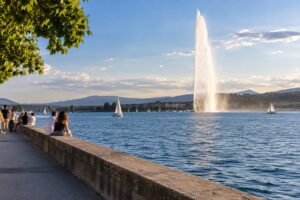
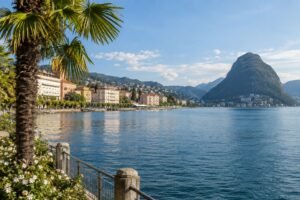
Lugano or Geneva (optional, 1-2 nights): Lugano gives you Italian-speaking Switzerland with Mediterranean light and palm trees beside the lake. Geneva is more cosmopolitan and more expensive. Both work well as trip exits if you are flying out of a different airport.
The 7 Mistakes First-Time Visitors Make in Switzerland
These are the specific errors that waste money or ruin days. They come up repeatedly in traveller forums and are easy to avoid with advance knowledge.
1. Going to a Mountain Summit on a Cloudy Day
As noted above: check the webcam and MeteoSwiss before spending CHF 120 or more on a cable car. Cloud cover at summit level turns a panoramic experience into an expensive fog walk. Summits in Switzerland are at 2,000 to 4,000 metres, and weather at that altitude changes independently from valleys below.
2. Buying Point-to-Point Train Tickets for a Multi-City Trip
If you are visiting three or more cities, running the numbers on a Swiss Travel Pass takes ten minutes and almost always saves money. The bigger hidden cost is time: point-to-point ticket queues and fare calculations slow you down on a tight schedule.
3. Ignoring the SBB Connection Times
Swiss trains are precise, but connections can be as tight as five minutes. If you miss a connection, the next train may be an hour away on rural routes. Build one buffer into your day, especially if arriving at a small mountain station for the first time.
4. Booking Accommodation Inside Popular Resort Towns
Hotels in Zermatt, Grindelwald, and Verbier charge 30 to 60 percent more than villages one valley away. Lauterbrunnen is 20 minutes from Grindelwald by train and significantly cheaper. Saas-Fee is an alternative to Zermatt that most first-timers never hear about.
5. Forgetting That Switzerland Has Four Language Regions
German is spoken in Zurich, Bern, Lucerne, and most of the country. French in Geneva, Lausanne, and the western cantons. Italian in Ticino. Romansh in parts of Graubunden. Signs change language as you cross cantonal borders. Most Swiss in tourist areas speak English, but knowing which language region you are in helps with basic courtesy and reading menus.
6. Assuming All Drinking Water Must Be Purchased
Switzerland’s tap water is among the cleanest in the world. Tap water in restaurants is legally required to be served free of charge on request. Street fountains marked “Trinkwasser” or with a simple running stream are safe to drink directly. Buying bottled water for a week adds CHF 50 to your budget for no reason.
7. Timing Airport Transfers Incorrectly
Zurich Airport is 10 minutes from the city centre by train, but the check-in and security process for international departures is slower than many airports. Allow at least two hours from city centre to gate, three hours for intercontinental flights. The airport train runs every few minutes and is covered by the Swiss Travel Pass.
How to Book Your Switzerland Trip: Best Pick
For first-time visitors booking hotels, trains, and activities across multiple Swiss cities, having everything in one place reduces planning overhead considerably.
Our top recommendation is Trip.com. It aggregates hotels, flights, and trains in one search interface and has strong coverage of Swiss properties including smaller boutique hotels and alpine lodges that are sometimes invisible on larger platforms. Filters by cancellation policy, distance to train station, and guest rating are practical for Swiss planning specifically, where being near a station matters for every day of the trip.
Trip.com also shows package deals that combine flights and accommodation, which can reduce total cost for visitors flying from North America or Asia.
Alternatives: For flights specifically, Aviasales is a strong flight aggregator with good coverage of European carriers including Swiss International Air Lines.
Practical Information Before You Go
Currency: Swiss Franc (CHF). Credit cards are accepted almost universally, including Visa and Mastercard. American Express has gaps at smaller establishments. Contactless payment works widely.
Tipping: Not mandatory. Service is included by law in Swiss restaurant pricing. Rounding up to the nearest franc is appreciated for good service; leaving cash on the table is the common way to do it.
ETIAS travel authorization: US and other non-EU visitors will need an ETIAS electronic travel authorization starting in late 2026. This is a separate step from a visa for stays under 90 days. Check the official EU ETIAS portal for current implementation dates before booking.
Power: Switzerland uses type J plugs (three-pin, specific to Switzerland). EU two-pin plugs do not fit without an adapter. Buy a type J adapter before departure.
SIM card: Swiss roaming can be expensive on non-EU plans. A prepaid SIM from Sunrise or Salt is available at Zurich Airport arrivals and covers the whole country including mountain areas.
Languages: Most Swiss in tourist areas speak English well. Learning “Merci” in German-speaking regions (yes, this is common), “Merci” or “Merci beaucoup” in French regions, and “Grazie” in Ticino takes 30 seconds and is appreciated.
Switzerland Visa and Entry Requirements (2026)
Citizens of the EU, US, Canada, Australia, New Zealand, and UK do not need a visa for stays under 90 days. Switzerland is part of the Schengen Area, so the 90-day Schengen limit applies across all Schengen countries, not just Switzerland.
From late 2026, US citizens will need an ETIAS travel authorization (expected cost: 7 EUR, valid for 3 years). This authorization is applied for online, not at a consulate. Official implementation dates are subject to revision; confirm at the Swiss Federal Office for Migration before finalising travel plans.
For stays over 90 days, a national visa is required. That is outside the scope of this guide.
FAQ: Switzerland First-Time Visitors
Is Switzerland too expensive for a first trip?
It is the most expensive destination in Europe by most measures. But “too expensive” depends on what you prioritize. Transport costs are high, but hiking is free. A supermarket lunch from Migros or Coop costs CHF 10 to 15. A coffee at a cafe is CHF 4 to 6. The main cost drivers are accommodation tier and mountain excursions. Plan those two categories carefully and the rest is manageable.
How many days do I need for Switzerland as a first-time visitor?
Seven days is the practical minimum for covering Zurich, Lucerne, the Bernese Oberland, Bern, and one more destination. Five days works if you skip one city. Fewer than four days means you will rush and miss the slow pleasures that make Switzerland genuinely worth the price.
Is the Swiss Travel Pass worth it for first-time visitors?
For a 5-to-8-day trip covering three or more cities, yes. The pass pays for itself on two or three long rail legs. The mountain railway discounts and free museum entry add further value. For a one-city trip or a mostly stationary stay, the Half Fare Card (CHF 150) is a better fit.
What is the best region of Switzerland for a first-time visitor?
The Bernese Oberland (Interlaken, Grindelwald, Lauterbrunnen) gives the most concentrated combination of alpine scenery, accessible summits, and efficient transport connections. It is the right region to prioritize if you have limited time. Add Lucerne as the easiest complement: one hour away by train and very different in character.
Can I visit Switzerland without speaking German or French?
Yes. English is widely spoken in hotels, restaurants, transport hubs, and most shops across all four language regions. The SBB app, train station signage, and major attractions all provide English. Basic courtesy phrases in the local language of each region are appreciated but not required.
Final Checklist Before You Depart
- Download the SBB Mobile app and set your travel dates
- Decide: Swiss Travel Pass or point-to-point tickets (run the numbers for your specific route)
- Check ETIAS requirements for your nationality if travelling after late 2026
- Confirm mountain webcam and MeteoSwiss forecast for any summit days
- Buy a type J power adapter before departure
- Book accommodation early for July and August (most desirable properties sell out 3 to 4 months ahead)
- Check whether the Glacier Express or another panoramic rail journey fits your itinerary
Switzerland is worth the cost when you know where the value is. The mistakes above are avoidable with one afternoon of planning. The train network does the heavy lifting once you are on the ground.
August 2026 Update: Switzerland for First Timers — What’s Changed
Switzerland in mid-2026 is adjusting to a few notable changes that first-time visitors should know about:
- SwissPass digital: The Swiss Travel Pass is now fully digital — you activate it via the SBB app rather than collecting a paper pass at the station. Download the SBB Mobile app before you arrive and register your pass number from home.
- Zurich airport fast track: The expanded Terminal E immigration hall has reduced average passport queue times to under 10 minutes for most arrivals, even during peak summer travel.
- EES at Swiss borders: Switzerland participates in the EU EES (Entry/Exit System). Non-EU/EEA visitors from the UK, US, Canada, Australia, and similar countries go through biometric registration on their first entry. Build an extra 10–15 minutes into your first Swiss border crossing.
- InterRail / Eurail for Switzerland: As of 2026, seat reservations on Swiss intercity trains are mandatory for Eurail pass holders on popular summer routes (Zurich–Interlaken, Geneva–Bern). Reserve in advance via the SBB website.
The Honest First-Timer Cost Breakdown for Switzerland 2026
Switzerland is expensive — but the gap between what tourists pay and what organized travelers pay is massive. Here’s a realistic daily budget by tier:
- Budget (hostel/Airbnb, self-catered lunches, 1 paid attraction): CHF 120–160/day
- Mid-range (3-star hotel, restaurant lunch + dinner, Swiss Travel Pass): CHF 280–380/day
- Comfortable (4-star, full board, scenic rail tickets): CHF 500–700/day
The biggest money-savers: bring your own picnic for mountain lunches (mountain restaurant prices are 40–60% higher), buy supermarket dinners from Migros or Coop on alternate evenings, and book your hotel 6–8 weeks ahead to avoid peak pricing. For flights into Zurich or Geneva, compare 2–3 weeks of departure dates on Aviasales — Tuesday/Wednesday departures are consistently 15–20% cheaper than weekends.
{
“@context”: “https://schema.org”,
“@type”: “FAQPage”,
“mainEntity”: [
{
“@type”: “Question”,
“name”: “What are the biggest mistakes first-time visitors make in Switzerland?”,
“acceptedAnswer”: {
“@type”: “Answer”,
“text”: “The top five: (1) Not buying a Swiss Travel Pass, paying full price on every train and mountain railway separately. (2) Booking hotels in city centers when smaller towns offer better value and atmosphere. (3) Eating every meal in tourist restaurants — Migros and Coop supermarkets have excellent hot food counters. (4) Trying to see too many cantons in one week. (5) Not reserving mountain experiences (Jungfraujoch, Gornergrat) far enough in advance in summer.”
}
},
{
“@type”: “Question”,
“name”: “Is the Swiss Travel Pass worth it for a first-time visitor?”,
“acceptedAnswer”: {
“@type”: “Answer”,
“text”: “Yes, for stays of 4 days or more. The Swiss Travel Pass covers unlimited travel on trains, boats, and most buses, plus free entry to 500+ museums and 50% reduction on mountain railways. At CHF 244 for 4 days (2026 pricing), it pays for itself on a single intercity day trip plus one museum.”
}
},
{
“@type”: “Question”,
“name”: “How many days do you need for a first visit to Switzerland?”,
“acceptedAnswer”: {
“@type”: “Answer”,
“text”: “A meaningful first visit requires at least 6–7 days: 2 days in Zurich or Bern (city base), 2–3 days in the Bernese Oberland (Interlaken, Grindelwald, or Lauterbrunnen), and 1–2 days for Geneva or Lucerne. 4-day visits work but force painful choices.”
}
},
{
“@type”: “Question”,
“name”: “What is the best Swiss city to base yourself as a first-time visitor?”,
“acceptedAnswer”: {
“@type”: “Answer”,
“text”: “Bern for Swiss culture and rail connectivity (it’s the federal capital and the geometric center of the rail network). Zurich for international flights and a lively urban scene. Interlaken for mountain access if outdoor activities are your priority. Avoid using Zurich as your only base — Bern gives you faster rail access to most of the country.”
}
},
{
“@type”: “Question”,
“name”: “Do I need to book mountain experiences in advance for summer 2026?”,
“acceptedAnswer”: {
“@type”: “Answer”,
“text”: “Yes for peak summer (mid-July to mid-August): Jungfraujoch, Titlis, Gornergrat, and Schilthorn have limited cable car and train capacity and sell out by 9am on clear summer days. Book tickets online at least 3–5 days ahead. For shoulder season (June, September), same-day booking is usually possible by arriving early.”
}
}
]
}
Editorial standards
Why trust this guide
- Route-checked. Itineraries, transfers and timings are verified against current public-transport schedules and operator pages.
- Honest comparisons. Hotel areas and tours are compared on real value — affiliate links never change the recommendation.
- Transparent. Some links are affiliate links; the disclosure is shown on every guide.
This guide is informational travel content, not professional travel, financial or legal advice. Always confirm prices, opening times and conditions with the official provider before you book.