Switzerland Skiing Guide: Best Ski Resorts in 2026 (From Beginner to Expert)
title: “Switzerland Skiing Guide: Best Ski Resorts in 2026 (From Beginner to Expert)”
slug: switzerland-skiing-guide-best-resorts-2026
meta_description: “Switzerland skiing guide 2026: compare 7 top ski resorts from Zermatt to Laax. Lift pass prices, insider tips, and expert advice from Anna Berger.”
keyword: switzerland skiing guide best resorts 2026
site: switzerlandvibe.com
author: Anna Berger
date: 2026-04-27
category: Ski Travel
Switzerland Skiing Guide: Best Ski Resorts in 2026 (From Beginner to Expert)
Quick Answer: For the 2026 season, Switzerland’s best ski resorts cater to all abilities. Beginners thrive in Saas-Fee and Grindelwald. Intermediates have endless options, with Verbier and Davos offering vast linked terrain. Experts seek challenges in Zermatt and Laax. St. Moritz remains the classic choice for luxury and variety. The Swiss season reliably runs from December to April, with day passes costing between CHF 60 and 120.
Written by Anna Berger, Swiss Tourism Specialist. Last updated: April 27, 2026.
Table of Contents
- What Makes Switzerland the World’s Best Skiing Destination?
- When Is the Best Time to Ski in Switzerland?
- The 7 Best Ski Resorts in Switzerland in 2026
- Switzerland Ski Resort Comparison Table
- How Much Does a Ski Trip to Switzerland Cost?
- Switzerland Skiing Tips for Beginners
- How to Get to Swiss Ski Resorts
- Frequently Asked Questions
- Conclusion
What Makes Switzerland the World’s Best Skiing Destination?
Switzerland’s reputation is built on a combination of factors that are difficult to match. The sheer scale and reliability of the Alps provide a consistent, high-altitude snowpack from early winter through spring. Beyond the physical terrain, it is the precision of the experience that defines Swiss skiing. The transport network — from cogwheel trains to modern gondolas — operates with a clockwork efficiency that minimizes queues and maximizes time on the slopes.
The diversity is also key. You can ski on a glacier in October, cruise down a sunny, tree-lined run above a traditional village, and then take a single lift to a rugged, high-alpine domain all in the same day. The infrastructure is mature and extensive, with over 600 lift systems and thousands of kilometers of meticulously groomed pistes. The apres-ski and hospitality culture is deeply ingrained, offering everything from rustic mountain huts serving rösti to five-star wellness hotels. It is this blend of natural grandeur, operational excellence, and cultural depth that sets Switzerland apart.
When Is the Best Time to Ski in Switzerland?
The Swiss ski season is long, but timing your visit depends on your priorities.
December (Early Season): Resort openings typically start in late November. Early December can offer quieter slopes and lower prices before the holiday rush, but snow coverage at lower altitudes can be variable. For guaranteed snow, focus on high-altitude resorts or glacier areas like Zermatt or Saas-Fee.
January – March (Peak Season): This is the most reliable period for snow conditions across all resorts. January, post-New Year, can be cold but wonderfully quiet. February is busy with European school holidays, so expect higher prices and more crowded slopes. March is often ideal, with longer days, warmer sun, and stable snowpack.
April (Late Season): Spring skiing is a delight. The snow is softer, the terraces are sunny, and the crowds thin out. Resorts above 2000m will maintain good conditions well into April. It is the perfect time for intermediates and those who enjoy a more relaxed atmosphere.
The 7 Best Ski Resorts in Switzerland in 2026
Zermatt
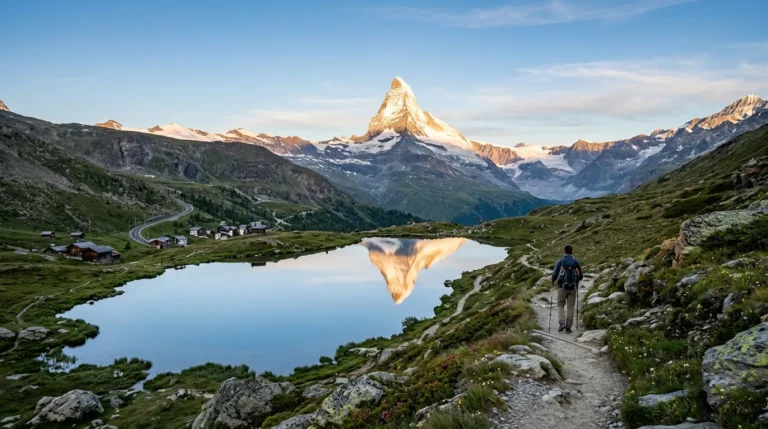
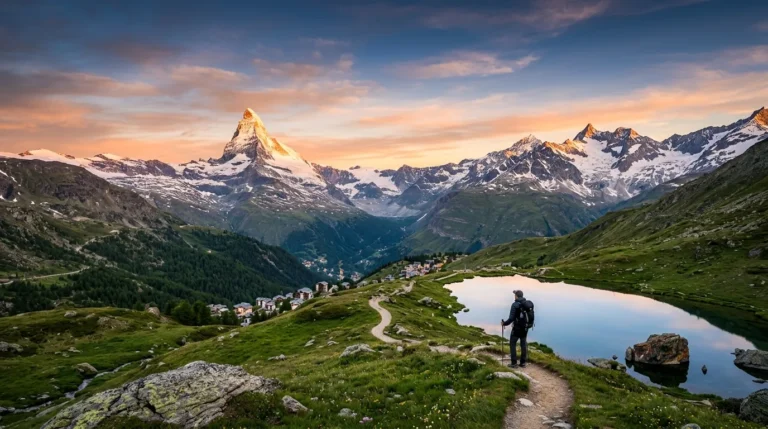
Zermatt is an icon, defined by the majestic Matterhorn and a vast, high-alpine ski area that connects to Cervinia, Italy.
Terrain: The domain offers 360 km of pistes. The Swiss side features long, demanding reds and blacks above 3000m. The Italian side provides broader, sunnier cruising slopes. The glacier ensures skiing 365 days a year.
Best For: Experts and confident intermediates seeking high-altitude, dramatic scenery.
Lift Pass Price 2026: A one-day international pass (Zermatt-Cervinia) runs approximately CHF 105-110. A local Zermatt-only pass is slightly less. Source: zermattholidays.com.
Insider Tips: Buy the international pass for the best variety. Start early and take the first lifts to the Italian side for quiet, sun-drenched runs. Carry your passport for the border crossing. To manage costs, consider staying in a chalet or apartment booked via Trip.com.
Verbier
Part of the massive 4 Vallées, Verbier is the beating heart of freeride and expert terrain in Switzerland, with an energetic, international vibe.
Terrain: The 4 Vallées network boasts 410 km of pistes. Verbier itself is famed for its off-piste and steep couloirs. It also features extensive, well-groomed intermediate runs across the linked valleys of Nendaz, Veysonnaz, and Thyon.
Best For: Advanced and expert skiers, off-piste enthusiasts, and a younger crowd seeking vibrant apres-ski.
Lift Pass Price 2026: A one-day pass for the full 4 Vallées is estimated at CHF 70-75. Source: seeverbier.com.
Insider Tips: The Savoleyres sector has wonderful, easier blues and reds with stunning views. Early January is a hidden gem for fresh snow and fewer people. Consider basing yourself in a neighboring valley like Nendaz for better value.
St. Moritz
Twice host of the Winter Olympics, St. Moritz is synonymous with luxury, sport, and a dazzling sunny plateau in the Engadin valley.
Terrain: 350 km of varied slopes across Corviglia, Corvatsch, and Diavolezza. The terrain suits everyone from beginners to experts, with the famous Lauberhorn downhill course nearby.
Best For: Discerning travelers who want world-class skiing combined with gourmet dining, high-end shopping, and activities like polo on ice.
Lift Pass Price 2026: A one-day Corviglia area pass is likely CHF 85-90. An Engadin-wide pass is higher.
Insider Tips: Take the train to Diavolezza for breathtaking glacier runs. Do not miss a slice of Engadiner Nusstorte (nut tart) in a mountain hut. The frozen lake transforms into a sporting and cultural venue in winter.
Saas-Fee
Known as the “Pearl of the Alps,” Saas-Fee is a car-free village surrounded by thirteen 4000m peaks, with a significant portion of skiing on the Feegletscher glacier.
Terrain: 145 km of pistes. The glacier area at 3500m provides guaranteed snow and wide, gentle slopes. Lower terrain offers wooded, varied red runs.
Best For: Beginners, families, and glacier skiing. Also a leading destination for summer skiing camps.
Lift Pass Price 2026: A one-day pass is expected in the range of CHF 65-70.
Insider Tips: The “Happy Ski” morning ticket offers good value if you finish by 1 PM. The Mittelallalin restaurant at 3500m is reachable by the world’s highest underground funicular. Saas-Fee is quieter than Zermatt but shares the same dramatic scenery.
Jungfrau Region (Grindelwald-Wengen)
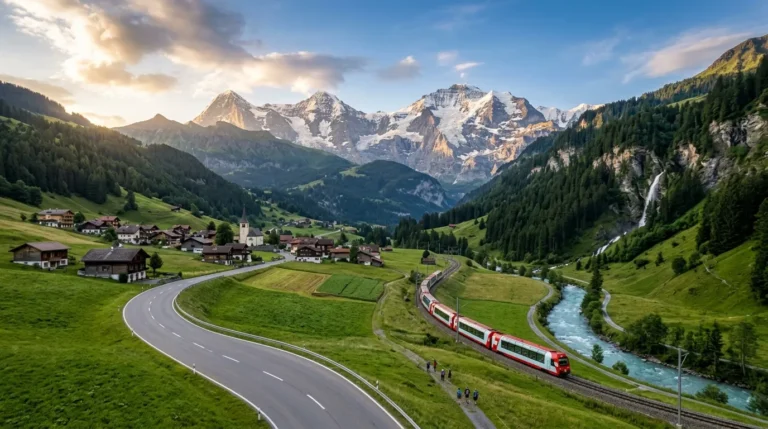
This is the quintessential Swiss postcard setting, with the Eiger, Mönch, and Jungfrau peaks presiding over two classic villages connected by train.
Terrain: Over 200 km of pistes. The Kleine Scheidegg/Männlichen area above Grindelwald and Wengen features long, scenic blue and red runs. The Schilthorn above Mürren offers one of the longest descents in Switzerland at 15 km.
Best For: Intermediates and scenery lovers. Outstanding for long, cruising runs with unbeatable views.
Lift Pass Price 2026: A one-day regional pass is projected at CHF 70-75.
Insider Tips: Stay in car-free Wengen or Mürren for a nostalgic, peaceful atmosphere accessible only by train. For the iconic long run, take the train from Wengen to Kleine Scheidegg and ski the blue down to Grindelwald Grund.
Davos Klosters
One of the largest connected ski areas in the Alps, offering serious terrain across five main mountains in a town known for its cosmopolitan atmosphere.
Terrain: 320 km of pistes. The Parsenn area between Davos and Klosters is legendary, offering wide, open slopes including the 12 km run from Weissfluhgipfel to Küblis.
Best For: Strong intermediates and experts who love mile-long descents. Davos also has a thriving park and pipe scene.
Lift Pass Price 2026: A one-day pass for the entire Davos Klosters area is estimated at CHF 68-72.
Insider Tips: Plan a long lunch in Klosters and ski back via the Gotschnabahn cable car for the steepest blacks. Davos is very spread out, so choose your accommodation based on your preferred mountain. Planning your car rental with GetRentacar can provide flexibility to explore the wider region.
Laax
Laax is the uncontested hub of Swiss freestyle and modern snowsports culture, with a futuristic base station and a strong commitment to sustainability.
Terrain: Part of the Weisse Arena with Flims and Falera, offering 235 km of groomed slopes. Globally famous for its four world-class snowparks and halfpipe. Also has excellent freeride zones and gentle slopes for beginners.
Best For: Snowboarders, freestyle skiers, and a younger trend-conscious crowd. Surprisingly good for families too.
Lift Pass Price 2026: A one-day pass is likely CHF 68-70.
Insider Tips: Even if you are not a park rider, the “No Name” run from the Vorab glacier is a spectacular, long red. Stay in Flims for a more traditional village feel with direct access to the same slopes.
Switzerland Ski Resort Comparison Table
| Resort | Best For | Pistes (km) | Day Pass CHF (2026 est.) | Difficulty | Season |
|---|---|---|---|---|---|
| Zermatt | Experts, Glacier, Scenery | 360 | 105-110 | Medium-Expert | Year-Round |
| Verbier | Experts, Off-Piste | 410 | 70-75 | Medium-Expert | Dec-Apr |
| St. Moritz | Luxury, Variety | 350 | 85-90 | Beginner-Expert | Dec-Apr |
| Saas-Fee | Beginners, Families | 145 | 65-70 | Beginner-Medium | Year-Round |
| Jungfrau Region | Intermediates, Scenery | 200+ | 70-75 | Beginner-Expert | Dec-Apr |
| Davos Klosters | Long Runs, Intermediates | 320 | 68-72 | Beginner-Expert | Dec-Apr |
| Laax | Freestyle, Snowboarders | 235 | 68-70 | Beginner-Expert | Dec-Apr |
How Much Does a Ski Trip to Switzerland Cost?
Switzerland is a premium destination, but costs can be managed with planning.
Lift Passes: Daily passes range from CHF 60 to 110. Multi-day passes offer better value, often dropping the daily rate by 15-20%.
Accommodation: A budget hotel or apartment runs CHF 120-200 per night for two. A 4-star hotel in a major resort can cost CHF 400-800. Consider staying in a nearby valley for better value.
Food: On-mountain lunch at a self-service restaurant is CHF 20-30 for a main course. A sit-down meal will be CHF 35-50+. Shopping at supermarkets for breakfasts and snacks saves considerably.
Equipment Rental: A standard ski or board package costs CHF 40-60 per day, with weekly rental discounts.
Travel: Train travel is efficient but can be costly. The Swiss Travel Pass offers good value for extensive rail use. For the best flight deals, check Aviasales to compare options from Zurich or Geneva airports.
A realistic mid-range budget for one person, excluding flights, is CHF 300-500 per day, covering a pass, mid-range lodging, meals, and local transport.
Switzerland Skiing Tips for Beginners
- Choose the Right Resort: Start in beginner-friendly areas like Saas-Fee, Grindelwald (First area), or Laax (Crap Sogn Gion). These have dedicated, gentle learning zones with magic carpets.
- Take Lessons: Invest in at least a few days of group or private lessons from a local ski school. It accelerates your learning and builds confidence quickly.
- Rent Equipment On-Site: Do not buy gear. Rental shops offer modern, well-maintained skis suited for beginners with correctly adjusted bindings.
- Dress in Layers: Use a moisture-wicking base layer, an insulating mid-layer, and waterproof jacket and pants. Don’t forget gloves, goggles, and a helmet.
- Start Slow: Focus on getting a feel for the equipment on flat areas before attempting gentle slopes. Mastering the snowplough stop is your first goal.
- Use the Right Lift: Stick to magic carpets and beginner drag lifts at first. Avoid T-bars until you’re confident loading and unloading. For preparation advice, see our guide on swiss winter packing essentials.
How to Get to Swiss Ski Resorts
Switzerland’s public transport system is the gold standard for reaching ski areas.
By Train: Most major resorts are directly served by Swiss Federal Railways (SBB). You can travel from Zurich or Geneva airports to stations like Zermatt, St. Moritz, or Interlaken Ost (for Jungfrau) with minimal changes. The final leg is often on a scenic cogwheel or narrow-gauge railway.
By Car: Driving offers flexibility, especially for Verbier or Laax. However, many villages like Zermatt, Saas-Fee, and Wengen are car-free, requiring you to park at a terminal and take a train in. Winter tires or chains are legally required in winter conditions.
By Air: Main international airports are Zurich (ZRH) and Geneva (GVA). From either, continue by train or rental car.
I recommend the train for a stress-free, scenic journey where you can relax from the moment you land.
Frequently Asked Questions
What is the most expensive ski resort in Switzerland?
St. Moritz and Gstaad are traditionally considered the most expensive, reflecting their luxury accommodations and exclusive clientele. Zermatt is also a premium destination due to its unique car-free location and international ski area.
Can I ski in Switzerland in November or May?
Yes, but only in specific locations. Glacier resorts like Zermatt, Saas-Fee, and Engelberg (Titlis) offer summer skiing on their high-altitude glaciers during these months.
Do I need to speak German or French to ski in Switzerland?
No. English is widely spoken in all major ski resorts at lift stations, ski schools, hotels, and restaurants. Staff across the tourism industry are accustomed to an international clientele.
Is it better to stay in one resort or do a ski safari?
For a first trip, staying in one resort allows you to explore its full area. A ski safari — moving between resorts — is a wonderful adventure for experienced skiers wanting variety, but involves more logistics.
What is the average cost of a ski pass for a week?
A 6-day pass typically costs between CHF 350 and 450 depending on the resort. Larger, linked areas offer more terrain per franc spent, and early-bird online discounts can save 10-15%.
Are Swiss ski resorts good for snowboarders?
Absolutely. All major resorts are fully accessible to snowboarders. Laax is specifically renowned as a snowboarder’s paradise with world-class parks and pipe culture.
How do I find the best snow conditions?
Check the official resort website for daily piste and snow condition reports. They provide detailed updates on open lifts, groomed runs, and snow depth at different altitudes. Snow Magazine also offers independent reviews.
What should I pack for a Swiss ski trip?
Beyond ski clothing, pack high SPF sunscreen and lip balm (mountain sun is strong at altitude), a swimsuit for hotel spas or heated outdoor pools, comfortable après-ski boots for the village, and a compact backpack. See our Holistic Healing: An Evidence-Informed Guide to Wellness Modalities in 2026 for more detail.
Conclusion
Choosing a ski resort in Switzerland is about matching the mountain to your personal style and ability. Whether you seek the off-piste extremes of Verbier, the reliable glacier slopes of Saas-Fee for your first turns, the endless cruising of Davos, or the stylish parks of Laax, the 2026 season promises the same unparalleled quality that defines Swiss skiing.
Plan according to your budget, prioritize efficient transport, and you are set for an exceptional winter experience. For inspiration on more winter activities, our Best Free Video Downloaders 2026: Top 7 Tested guide covers the best of the season.
Sources: Snow Magazine — Best Swiss Ski Resorts | Zermatt Ski Pass Prices 2026 | Verbier Ski Passes | Switzerland Ski Cost Guide