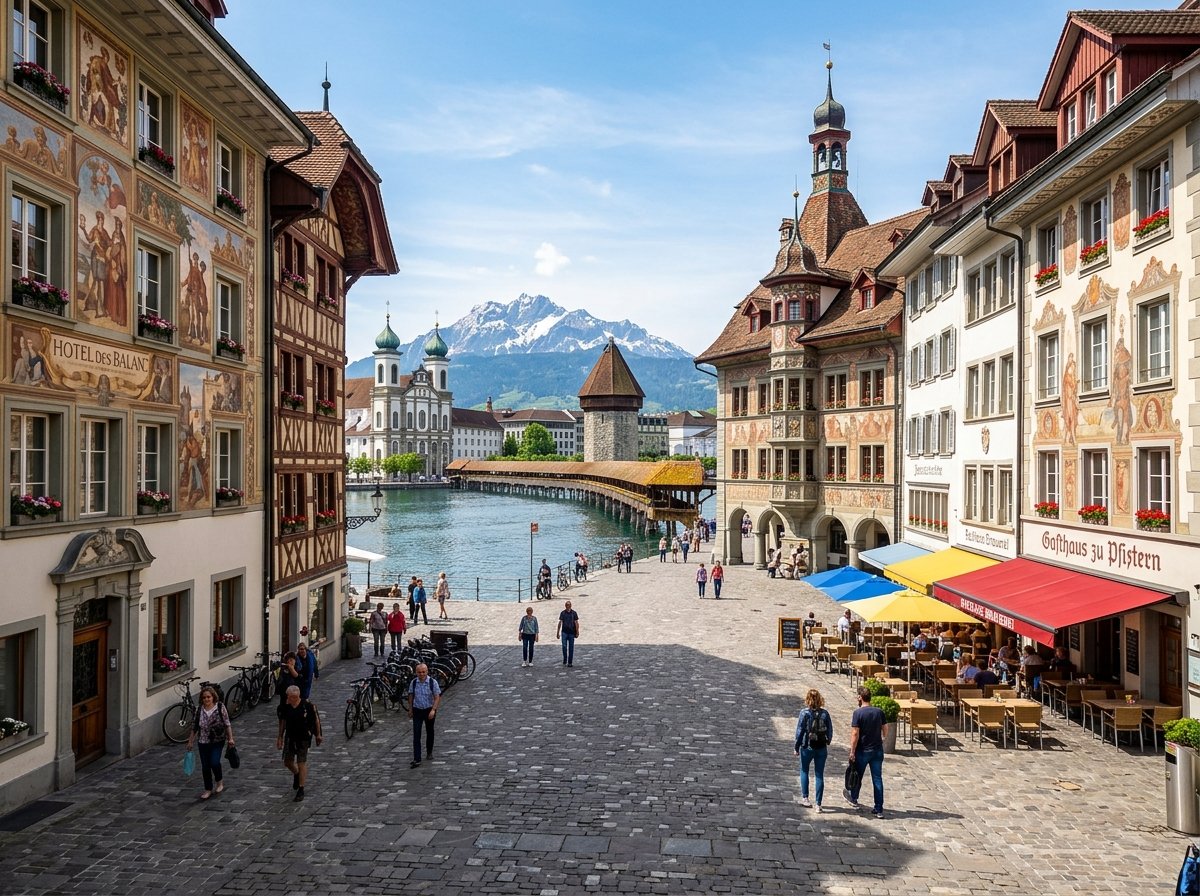
Lucerne Switzerland Chapel Bridge with Swiss Alps backdrop

Best Things to Do in Lucerne Switzerland 2026: The Insider Guide

This article contains affiliate links. We may earn a commission at no extra cost to you.

Best Things to Do in Lucerne Switzerland 2026: The Insider Guide

Quick Facts: Lucerne 2026

  • Best season: May–October (great for mountains) | February (Carnival time!)
  • Days needed: 2–4 days for the city, plus 1–2 for day trips
  • Budget/day: CHF 80–120 (think hostel + cooking your own meals) | CHF 200–350 (mid-range)
  • New in 2026: Lucerne Travel Pass (it’s replacing the Tell-Pass) + TITLIS Tower opening
  • Best pass: Swiss Travel Pass (covers trains, boats, & mountain discounts)

When you picture Switzerland, Lucerne is probably the city most first-time visitors imagine: a turquoise lake, a flower-covered wooden bridge, and snow-capped peaks in the background. That postcard image? It’s totally real, but honestly, the city rewards you even more when you look past just that. And in 2026, Lucerne’s actually in the middle of a big transformation. We’re talking a brand-new regional pass that just launched, a landmark mountain tower designed by the folks behind the Beijing National Stadium opening in May, and the city’s most famous music festival kicking off in August with a bold new director. So, here’s everything you’ll want to know before your trip.

1. Chapel Bridge & the Old Town — Free & Unmissable

The Kapellbrücke (Chapel Bridge) is the oldest surviving wooden covered bridge in Europe. Built way back in 1333, it stretches 170 metres across the Reuss River. What’s cool is that it’s decorated with 17th-century paintings right inside the rafters. Getting in is totally free, and you’ll probably spend about 20 minutes walking across and back. Of course, that’s longer if you stop to really check out the paintings.

Good news: the bridge is fully wheelchair accessible. Two hydraulic lifts on each side handle the steps, so it’s easy. Just collect a key at three designated points nearby with a refundable CHF 50 deposit.

Once you cross, the Old Town just fans out in both directions. Definitely spend an hour just wandering through squares like Weinmarkt, Kornmarkt, and Hirschenplatz. You’ll notice the painted facades; many of them date back to the 16th century, and what’s cool is most are genuine originals, not just restorations. Then there’s the Musegg Wall, a 870-metre stretch of medieval fortifications with nine towers. It runs along the north edge of the Old Town, and you can even go into three of the towers between April and November, totally free.

Head just west of the Old Town, and you’ll hit the Bruchquartier neighborhood. It’s really become Lucerne’s creative quarter over the last decade. You’ll find independent coffee shops, cool concept stores, and local restaurants all clustered along Bruchstrasse and Industriestrasse. It’s definitely quieter than the usual tourist spots and well worth an afternoon of your time.

2. Mount Pilatus — The Best Mountain Day Trip from Lucerne

At 2,132 metres, Pilatus is the mountain that defines Lucerne’s skyline. To get up, you’ll take the world’s steepest cogwheel railway (it hits a maximum gradient of 48%!) from Alpnachstad. Then, you’ll descend by gondola and cable car back to Kriens, where city bus line 1 whisks you back to Lucerne center in just 20 minutes. The whole round trip takes a full day, and at standard prices, it’ll cost CHF 84 per adult.

Good news if you have a Swiss Travel Pass: that cuts the cost to CHF 42 – a solid 50% discount. The new Lucerne Travel Pass, which launched April 1, 2026 and replaces the old Tell-Pass, also covers Pilatus with that same 50% discount. The three-day version costs CHF 240 (four days are CHF 265, and kids up to 16 pay a flat CHF 30). Honestly, it makes a lot of sense if you’re planning several excursions around the region.

Up at the summit, you’ll find two hotels, a restaurant boasting panoramic windows, and a short walking route along the ridge that doesn’t even need hiking gear. How easy is that? Just so you know, the cogwheel railway runs from May through November, weather permitting. In winter, you can only get up there by cable car.

3. Mount Titlis & the 2026 TITLIS Tower

Titlis, at 3,238 metres, is Central Switzerland’s highest accessible peak and the only year-round glacier experience in the region. The ascent from Engelberg (which is just 40 minutes by train from Lucerne) involves three stages. That includes the TITLIS Rotair – yep, the world’s first revolving cable car. Pretty cool, right?

Big news: in late May 2026, the summit’s getting a massive upgrade! The new TITLIS Tower, designed by those famous Swiss architects Herzog & de Meuron, is opening. This project includes a totally redesigned peak station, a panoramic restaurant, a bar, and get this – the world’s highest Rolex boutique, sitting at over 3,000 metres elevation! While they were building all this, the new TITLIS Connect cableway linked the Trübsee mid-station to the summit, making sure you had uninterrupted access throughout summer 2026.

A full-price summer ticket will run you CHF 102 return. But if you’ve got a Swiss Travel Pass or Half Fare Card, you’ll pay CHF 51 — that’s a 50% reduction. My advice? Book online in advance if you’re going in July or August. The cable car actually hits capacity pretty fast on clear summer weekends.

4. Swiss Museum of Transport — Most-Visited Museum in Switzerland

The Verkehrshaus der Schweiz records over one million admissions per year, making it the most-visited museum in Switzerland. It’s situated on the lake’s north shore, about 3 kilometers east of the Old Town (you can get there by bus or boat). What’s cool is it covers every single form of Swiss transport, from early railways all the way to space travel. Plus, there’s an IMAX cinema, a planetarium, and even a media world.

Adults pay CHF 34, but both the Swiss Museum Passport and Lucerne Travel Pass get you in for free. You’ll want to allow at least three hours, by the way. The museum’s café terrace overlooks the lake, and honestly, it’s a pretty reasonable spot for lunch without having to pay those Old Town prices.

5. Lake Lucerne by Boat

The Vierwaldstättersee (Lake of the Four Forest Cantons) is 38 kilometres long and reaches depths of 214 metres. The Lake Lucerne Navigation Company (SGV) runs scheduled paddle steamers and modern ferries. They connect Lucerne with charming lakeside villages like Weggis, Vitznau, Brunnen, and Flüelen.

A round trip to Weggis and back takes about two hours, and it gives you a fantastic clear view of Rigi, which everyone calls the “Queen of the Mountains.” From Vitznau, you can hop on the Rigi cogwheel railway; it climbs to 1,797 metres. It’s truly a classic Victorian-era excursion.

Fancy an evening cruise? They depart Lucerne from late spring right through to early autumn. The sunset dinner cruise, for example, runs about two hours and comes with a delicious three-course meal. Oh, and if you have a Swiss Travel Pass, you travel free on all SGV regular scheduled services. Nice!

6. Swiss Travel Pass vs Lucerne Travel Pass 2026 — Which One?

The question most visitors ask before arriving. Here’s the honest comparison, straight up:

PassPrice (3 days)What’s CoveredBest For
Swiss Travel PassCHF 232 (2nd class)All SBB trains, trams, buses, lake boats nationwide; 50% on most mountainsVisitors travelling to multiple Swiss cities
Lucerne Travel Pass 2026CHF 240 (3-day) / CHF 265 (4-day)Regional trains, buses, boats in the Lucerne area; 50% on Pilatus, Titlis, Rigi; free museum entryVisitors spending all their time in the Lucerne region only

Look, if you’re flying into Zurich or Geneva and planning to hit other cities, the Swiss Travel Pass is definitely your winner. But if Lucerne’s your only Swiss destination for 3–4 days, the new Lucerne Travel Pass (it launched April 1, 2026) covers everything you’ll need at a comparable price, and yes, that includes free museum entry.

You can snag both passes via SBB.ch or through Travelpayouts-affiliated booking partners.

7. Where to Stay in Lucerne by Budget

Budget (CHF 35–80/night): Backpackers Lucerne on Alpenquai and Youth Hostel Lucerne on Sedelstrasse both sit within 2 kilometres of the Old Town and include breakfast. Just a heads-up: book 4–6 weeks out if you’re planning a summer trip.

Mid-range (CHF 150–250/night): Hotel des Balances on the river in the Old Town occupies a 14th-century merchant’s house with views of the Chapel Bridge from front rooms. Or, there’s The Montana, perched on the hill above the train station. It offers stunning lake panoramas and gorgeous art deco interiors, all at similar price points.

Luxury (CHF 400+/night): The Palace Hotel Lucerne and the Bürgenstock Resort (17 minutes by boat from the city) are the two flagship properties. The Colonnade restaurant at the Palace even boasts two Michelin stars; Executive Chef Gilad Peled’s menus typically run CHF 185–240 per person.

You’ll find properties and experiences across all budget tiers on Booking.com and GetYourGuide. Make sure to use their filters to sort by proximity to the Old Town or lake access. Check current availability on Booking.com, but remember, prices can vary a lot depending on the season.

8. Budget Tips: Enjoying Lucerne Without Overpaying

Switzerland has a reputation for cost, justified in most areas. But here are some practical ways you can keep your spending in check while in Lucerne:

  • Eat at grocery stores for lunch. Migros and Coop both have really affordable hot food counters. A daily special (Mittagsmenu) at a mid-range restaurant typically runs CHF 18–24 and includes a main course, often with soup or salad. That same dish at dinner? It’ll be CHF 28–38.
  • Steer clear of mountain restaurants. Seriously, a coffee at Pilatus summit costs CHF 7, while the same coffee at a Lucerne café is just CHF 4. Pack a sandwich and grab water from a fountain – Lucerne’s tap water is perfectly clean drinking water everywhere in the city.
  • Hit the mountains during shoulder season. May, early June, September, and October mean shorter queues and better hotel rates. July and August are peak season; those are the busiest months, when tourist numbers surge and accommodation prices can climb 30–50%.
  • Rent city bikes. Lucerne has a flat lake promenade and really well-marked cycle routes. Bike rental starts at CHF 10/day from the train station kiosk.
  • Chapel Bridge and Old Town? Totally free. You can easily spend half a day sightseeing without spending a dime on admissions, just food and drink.

9. Getting Around Lucerne by Train & Boat

The SBB main station sits at the edge of the Old Town, 300 metres from the Chapel Bridge. From Zurich, trains run every 30 minutes, taking just 52 minutes. Coming from Geneva, the journey takes about 2 hours 45 minutes. Basel is only 1 hour away. And Bern? That’s 1 hour 10 minutes.

Within the city itself, trams and buses pretty much cover all the main sights. You’ll find lake boats departing right from the quay in front of the station. Honestly, the walk from the station to the Chapel Bridge takes under 5 minutes – it’s super close.

Planning day trips? Pilatus is about 1.5 hours (boat + cogwheel train), Titlis via Engelberg is 40 minutes by train, Rigi via Vitznau is 30 minutes by train plus a 45-minute cogwheel railway ride, and Bürgenstock is a quick 17 minutes by boat.

10. 3-Day Lucerne Itinerary

Day 1 — City & Lake: Morning walk along the Chapel Bridge and Musegg Wall. Then, an afternoon boat cruise to Weggis and back. Spend your evening in the Bruchquartier, grabbing dinner at one of its cool independent restaurants.

Day 2 — Mount Pilatus: Early start to Alpnachstad for the cogwheel railway (cogwheel season May–November). Enjoy a summit walk and lunch. Descend by cable car and gondola to Kriens. You’ll be back in Lucerne by 16:00, which leaves you just enough time for the Swiss Museum of Transport before it closes.

Day 3 — Mount Titlis: Train to Engelberg at 08:30. Ascend via the TITLIS Rotair to the glacier. From May 2026 onwards, the new TITLIS Tower will be open, so definitely allow yourself some extra time there. Return to Lucerne by 16:00. Then, enjoy a final evening stroll by the lakeside promenade.

If you have a 4th day: Take the train to Bern (1 hour 10 minutes) for a half-day, or hire a bike and cycle along the lake to Küssnacht.

Frequently Asked Questions

How many days do you need in Lucerne?

You’ll want two full days to cover the Old Town, one mountain, and a lake cruise. If you can swing three to four days, that allows for a second mountain excursion and a much more relaxed pace. Plus, add an extra day if you’re planning a day trip to Bern or Zurich from Lucerne.

What does a day in Lucerne cost?

Budget travelers can expect to spend around CHF 80–120 per day (that’s for a hostel, self-catering, and hitting up the free sights). Mid-range travelers should budget CHF 180–280, which includes a hotel and a restaurant lunch. Just remember, a mountain day trip (like Pilatus or Titlis) will add an extra CHF 42–102 per person, depending on which pass you hold.

Is the Swiss Travel Pass worth it for Lucerne?

Yes, it’s totally worth it if you’re also visiting other Swiss cities. A 3-day 2nd-class pass costs around CHF 232 and covers trains, trams, boats, plus 50% off mountains all across the country. But if Lucerne is your only stop, the new Lucerne Travel Pass 2026 (3 days for CHF 240, children CHF 30) gives you similar regional coverage and free museum entry at a comparable price. So, it really depends on your itinerary.

When is the best time to visit Lucerne?

May, June, September, and October offer a great balance of good weather, open mountain attractions, and smaller crowds. July and August are peak season, meaning everything’s open, but you should definitely expect queues and higher prices. If you’re into winter festivals, February brings the Lucerne Carnival (Fasnacht), which is one of Europe’s most atmospheric. And don’t forget the Lucerne Festival, which runs August 13 to September 13, 2026.

What’s new in Lucerne in 2026?

Well, there are two major changes! First, the Lucerne Travel Pass launched April 1, 2026 (it’s replacing the Tell-Pass). Second, the new TITLIS Tower, designed by Herzog & de Meuron, opens at the end of May 2026. Plus, the Lucerne Festival kicks off under new Executive and Artistic Director Sebastian Nordmann, with the theme “American Dreams” running August 13 to September 13.

Final Thoughts

Lucerne really shines for visitors who treat it as a base, not just a single sight. Sure, the Chapel Bridge is absolutely worth seeing, but the city’s true value, I think, lies in its strategic position: it’s just two hours from Zurich, a quick forty minutes from a year-round glacier, and surrounded by stunning lake and mountain routes that most visitors never even discover. With the new Lucerne Travel Pass and the TITLIS Tower opening in 2026, getting around and doing all this has genuinely gotten easier. My advice? Plan for at least three full days and definitely build in at least one mountain day. You won’t regret it.

Find and compare hotels in Lucerne on Booking.com | Book Lucerne tours & activities on GetYourGuide

About the Author
Sarah Müller is a Bern-based travel writer who’s been covering Switzerland for over eight years. She holds a certificate in Tourism Management from the Lucerne University of Applied Sciences and has personally visited every major Swiss mountain destination featured on SwitzerlandVibe. So, she knows her stuff!

Sources

  1. Lucerne Festival 2026 Programme — lucernefestival.ch
  2. TITLIS Project — New Tower & Cableway 2026 — titlis.ch
  3. Lucerne Official Guide — myswitzerland.com

Last updated: April 4, 2026. Prices in CHF. Mountain ticket prices subject to seasonal variation — verify at official operator websites before travel.


Similar Posts

Leave a Reply

Your email address will not be published. Required fields are marked *