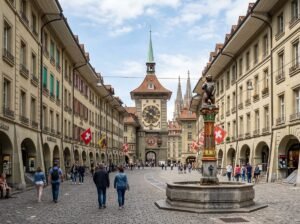
Best Things to Do in Lucerne Switzerland 2026: The Insider Guide
Best Things to Do in Lucerne Switzerland 2026: The Insider Guide: Lucerne’s Old Town (Altstadt) is a perfectly preserved medieval gem that demands at least half a day of exploration. Centered on the north bank of the Reuss River, its cobblestone streets and painted facades transport visitors back to the 14th century. This guide keeps the answer up front so you can decide quickly before reading the full breakdown. For comprehensive planning, see our Lucerne Guide 2026: Best Things to Do, Stay & Day Trips.
Editorial note: this update keeps the article’s original recommendations intact while tightening the answer-first summary and FAQ for reader clarity. If you are looking for quieter escapes, check out our 2026 Guide: 9 Car-Free Swiss Alpine Villages You Must See.
This article contains affiliate links. We may earn a commission at no extra cost to you. New to the region? Read the Switzerland First Time Visitor Guide 2026: Everything You…
Quick Facts: Lucerne 2026
- Best Season: May to June & September to October for mild weather and fewer crowds; February for Fasnacht Carnival.
- Days Needed: 3-4 days for city and key excursions; add 1-2 days for deeper regional exploration.
- Budget per Day: CHF 100-150 (budget), CHF 250-400 (mid-range), CHF 500+ (luxury).
- Key 2026 Updates: Lucerne Travel Pass launches April 1, 2026; TITLIS Tower opens late May 2026.
- Top Pass for Tourists: Swiss Travel Pass for multi-city trips; Lucerne Travel Pass for regional focus.
In 2026, the best things to do in Lucerne include walking the iconic Chapel Bridge, ascending Mount Pilatus and the new TITLIS Tower, cruising Lake Lucerne, visiting the Swiss Museum of Transport, and exploring the medieval Old Town. This insider guide provides detailed, actionable advice for your trip, ensuring you maximize every moment in Central Switzerland. With significant infrastructure updates and new observation decks opening this year, now is the perfect time to visit. For a broader itinerary, consult the Switzerland First Time Visitor Guide: 2026 Planning Playbook.
What Are the Unmissable Sights in Lucerne’s Historic Old Town?
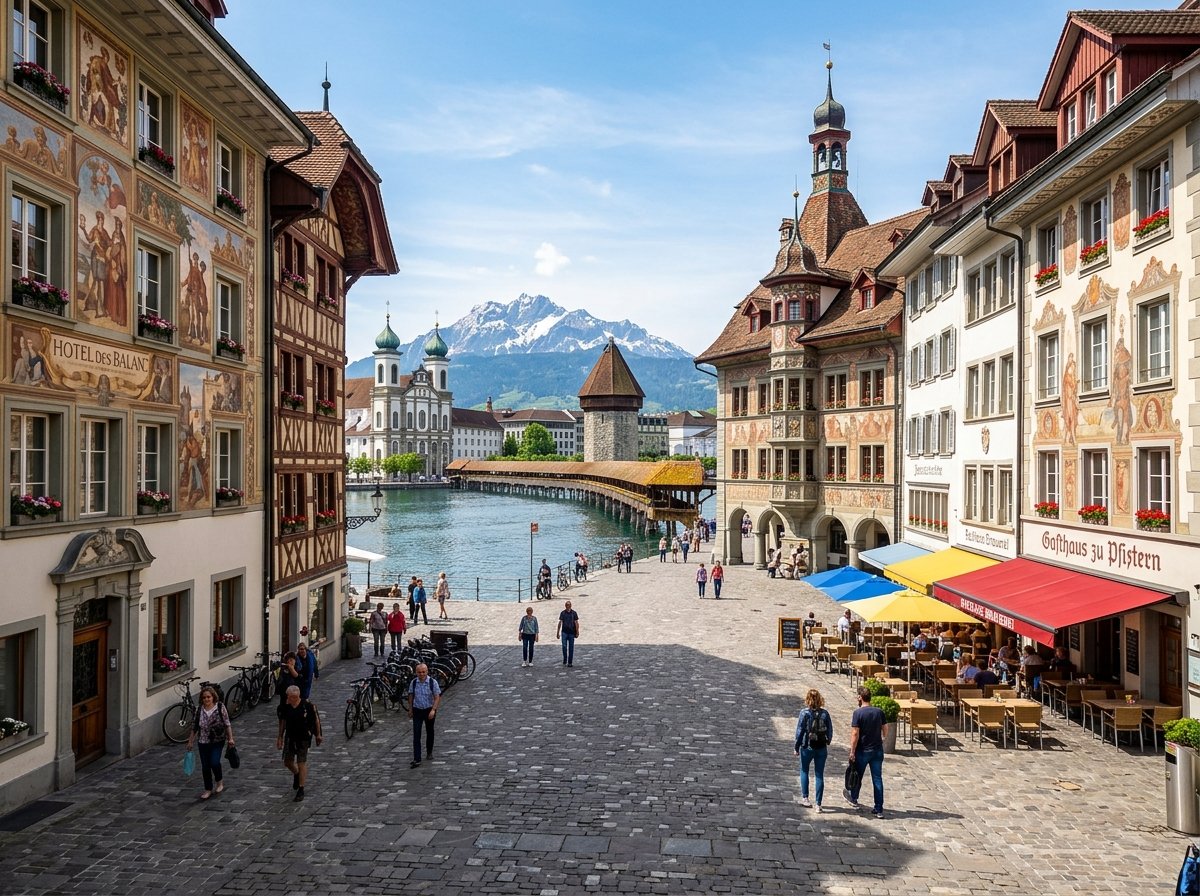
Lucerne’s Old Town (Altstadt) is a perfectly preserved medieval gem that demands at least half a day of exploration. Centered on the north bank of the Reuss River, its cobblestone streets and painted facades transport visitors back to the 14th century. The area spans approximately 0.5 square kilometers and is divided into two main sections by the river, connected by several covered bridges. Walking here feels like stepping into a living history book, with every corner offering a photo opportunity.
The Kapellbrücke, or Chapel Bridge, is the undeniable centerpiece. Built in 1333 as part of the city’s fortifications, this 170-meter-long wooden covered bridge is the oldest of its kind in Europe. A fire in 1993 destroyed a significant portion, but a meticulous CHF 3.2 million restoration returned it to its former glory by 1994. Inside, 111 triangular 17th-century paintings depict scenes from Lucerne’s history and Swiss legends. Visit early in the morning (before 9 AM) to avoid crowds and capture the best light for photography. Admission is free, and the bridge is wheelchair accessible via hydraulic lifts operated with a key available at nearby kiosks (CHF 50 refundable deposit). Adjacent to the bridge stands the Water Tower, an octagonal landmark that has served as a prison, treasury, and archive over the centuries.
Just downstream, the Spreuerbrücke (Mill Bridge) offers a quieter but equally fascinating experience. Built in 1408, it houses the “Dance of Death” cycle, a series of 67 paintings from 1626-1635 reminding viewers of mortality. From here, wander into the network of squares. The Weinmarkt (Wine Market) was the site of the 1332 founding of the Swiss Confederation’s first cantonal alliance. The Kornmarkt (Grain Market) now hosts the Town Hall, built between 1599 and 1606 in Renaissance style. Look for the “Fritschi Fountain” from 1918, depicting a carnival figure. Shopping enthusiasts should explore Hirschenplatz for boutique Swiss watches and local crafts.
The Musegg Wall, built between 1350 and 1408, is one of Switzerland’s longest and best-preserved medieval fortifications. Its 870-meter length features nine towers, four of which are open to the public from April 1 to November 1. Climbing the 153 steps of the Zyt Tower offers a panoramic view and a glimpse of the city’s oldest clock, built in 1535, which is allowed to chime one minute before all others. Entry to the wall and open towers is free. For a contemporary contrast, the Bruchquartier district, west of the Old Town, has emerged as Lucerne’s creative hub over the last decade. Here, former industrial buildings now house galleries like the Kunstmuseum Luzern at Messeplatz, boutique shops on Bruchstrasse, and third-wave coffee roasters. It’s an ideal spot for lunch away from the tourist throngs.


How Can You Experience the Majesty of Mount Pilatus?
Rising 2,132 meters (6,995 feet) above sea level, Mount Pilatus
Editorial standards
Why trust this guide
- Route-checked. Itineraries, transfers and timings are verified against current public-transport schedules and operator pages.
- Honest comparisons. Hotel areas and tours are compared on real value — affiliate links never change the recommendation.
- Transparent. Some links are affiliate links; the disclosure is shown on every guide.
This guide is informational travel content, not professional travel, financial or legal advice. Always confirm prices, opening times and conditions with the official provider before you book.