Switzerland demands preparation but rewards it with unparalleled efficiency, breathtaking landscapes, and a deeply integrated travel system. Knowing key costs, transport passes, and regional nuances before you go transforms a potentially overwhelming trip into a seamless alpine adventure.
What Are the Absolute Essentials to Know Before Visiting Switzerland?
Switzerland operates with a precision that first-time visitors often find surprising. The country is a confederation of 26 cantons, each with significant autonomy, which explains the distinct cultural and linguistic regions you will encounter. The official languages are German (spoken by about 63% of the population, primarily in the north, central, and eastern regions), French (western Switzerland, including Geneva and Lausanne), Italian (the southern canton of Ticino), and Romansh (parts of the canton of Graubünden). English is widely spoken in tourism, retail, and transport, so communication is rarely an issue.
The currency is the Swiss Franc (CHF), not the Euro. While some tourist businesses may accept Euros, the exchange rate used is almost always unfavorable. You will save money by paying in Francs. Credit and debit cards are accepted nearly universally, even at many mountain cable car stations; carrying more than CHF 100-200 in cash is generally unnecessary.
Switzerland is a Schengen Area member but not part of the European Union. This means EU mobile roaming rules do not automatically apply. Check with your provider about Swiss roaming charges or consider purchasing a local SIM card upon arrival for data. The country’s infrastructure is famously reliable: trains are punctual to the minute, tap water is safe to drink everywhere, and cities are exceptionally clean and safe.
How Much Does a Trip to Switzerland Really Cost in 2026?
Switzerland’s reputation for high costs is well-earned, but strategic planning can make it manageable. Daily budgets vary dramatically based on travel style. For 2026, based on current inflation trends and tourism board projections, here is a realistic breakdown:
- Budget Traveler: CHF 120-180 per day. This assumes hostel dorm accommodation (CHF 35-55/night), self-catering from supermarkets like Coop or Migros (CHF 25-35/day), using a regional transport pass or careful point-to-point tickets, and focusing on free activities like hiking and city walking tours.
- Mid-Range Traveler: CHF 250-350 per day. This covers a private room in a 3-star hotel or guesthouse (CHF 120-180/night), one restaurant meal plus one supermarket meal daily (CHF 45-65), a Swiss Travel Pass for unlimited travel (averaging CHF 50/day), and entry to one major paid attraction (e.g., a museum or discounted mountain railway).
- Comfort/Premium Traveler: CHF 450-650+ per day. This includes 4-star hotels (CHF 200-350/night), dining at restaurants for most meals (CHF 100-150/day), first-class Swiss Travel Pass, and multiple premium mountain excursions (e.g., Jungfraujoch, CHF 210).
The largest expenses are accommodation, followed by mountain transport and dining. A simple sit-down restaurant meal with one drink typically starts at CHF 25-35 per person. A half-liter of beer in a pub costs CHF 6-8, while a coffee is around CHF 4-5.
Proven Money-Saving Strategies:
- Lunch Menus (“Tagesmenu”): Many restaurants offer a discounted set menu at lunchtime (usually CHF 18-28), which is significantly better value than dinner à la carte.
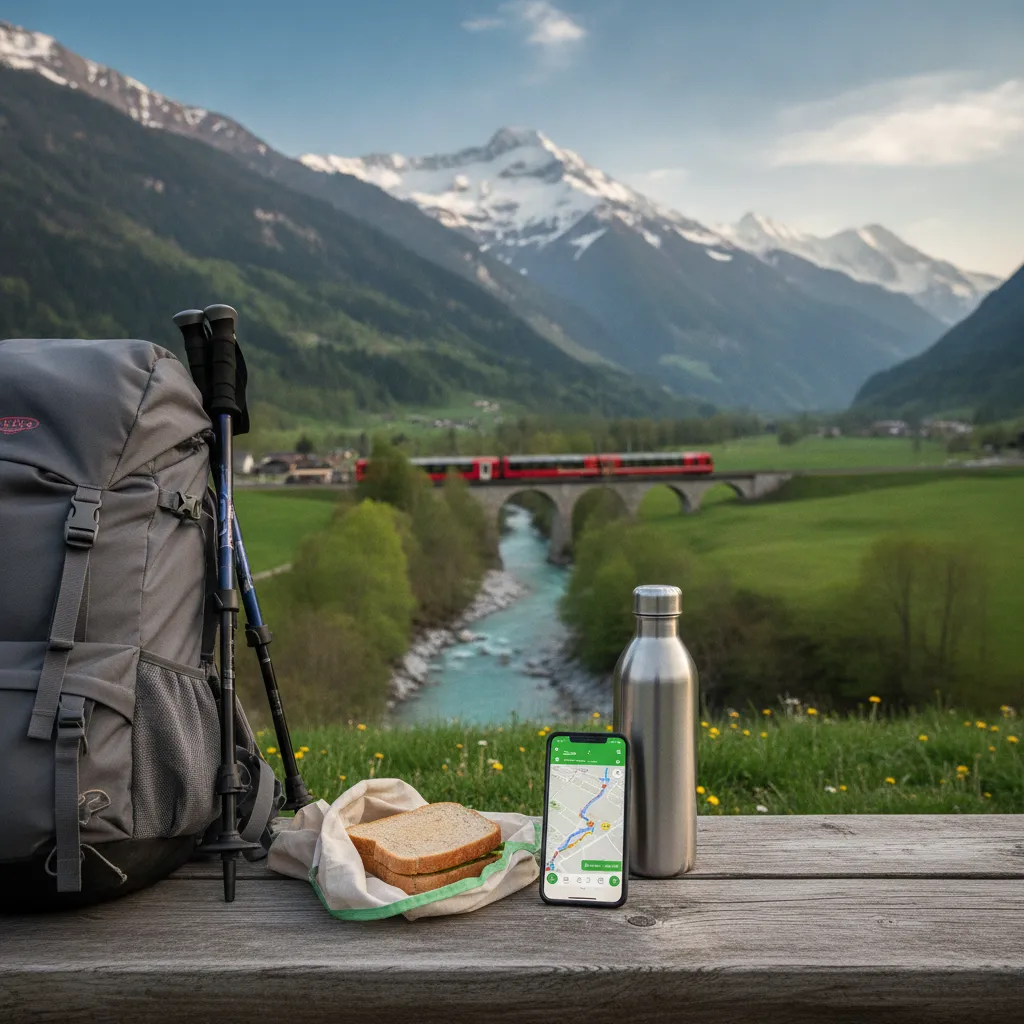
- Supermarket Picnics: Migros and Coop are national institutions offering excellent prepared salads, sandwiches, hot dishes, and baked goods for CHF 8-15. This is how many Swiss people eat lunch.
- Free Hiking: Switzerland’s most stunning landscapes are often free. Hundreds of well-signed trails require only a train ticket to the trailhead. The Swiss Mobility app provides free access to detailed hiking, cycling, and mountain biking maps.
- Accommodation Location: Staying in smaller towns just outside major hubs can save 20-40%. For example, stay in Grindelwald instead of Interlaken, or in Montreux instead of central Lausanne.
- Water Bottles: Carry a reusable bottle. Tap water is safe and excellent quality. Public drinking fountains are abundant in cities and villages.
Is the Swiss Travel Pass the Best Transport Option for First-Timers?
Switzerland’s public transport network, centered on the Swiss Federal Railways (SBB), is arguably the best in the world. For first-time visitors covering multiple destinations, navigating it efficiently is paramount. The Swiss Travel Pass is often the most convenient solution, but it’s not always the cheapest.
The pass provides unlimited travel on the entire SBB network (trains, buses), most lake boats, and urban public transport in 90 towns. It also includes free entry to over 500 museums and provides discounts of 25-50% on most mountain railways and cable cars. The 2026 prices for a continuous pass in 2nd class are:
- 3 days: CHF 254
- 4 days: CHF 289
- 8 days: CHF 399
- 15 days: CHF 499
When is the Swiss Travel Pass Worth It? The pass shines for an intensive, multi-city itinerary. Calculate your point-to-point journeys. A single one-way ticket from Zurich Airport to Lucerne costs around CHF 30, Zurich to Interlaken is about CHF 50, and Interlaken to Zermatt can exceed CHF 100. If you plan two or three such long-distance trips within a week, plus daily local transit, the pass pays for itself and eliminates the stress of buying tickets for every leg.
When Should You Consider Alternatives?
- The Half-Fare Travelcard (CHF 120 for one month): This card entitles you to a 50% discount on all SBB tickets and most mountain transport. It’s superior if your itinerary is less dense or if you prefer flexibility, as you only pay for the journeys you take.
- Regional Passes: If you’re focusing on one area—like the Bernese Oberland or Lake Geneva region—a regional pass (e.g., Berner Oberland Pass, Geneva Pass) covering unlimited transport and attractions in that specific zone often offers better value.
- Point-to-Point Tickets: For a very short stay (2-3 days) in one city, standard tickets or city travel cards are sufficient.
Remember, mountain transport like the Jungfraubahn or Gornergratbahn are privately owned and only offer discounts, not full inclusion, with the Swiss Travel Pass. Always factor these costs into your overall budget.

Which Swiss Cities and Regions Should First-Time Visitors Prioritize?
With limited time, choosing where to go is critical. Switzerland’s diversity means you can experience medieval cities, alpine villages, and lake-side resorts. For a first visit spanning 7-10 days, this framework is ideal:
Zurich (1-2 Nights)
Often the arrival city, Zurich is a global banking hub with a surprisingly charming old town (Altstadt). Don’t just transit through; spend a day exploring the cobbled lanes of Niederdorf, visit the Swiss National Museum for context, and take a boat trip on Lake Zurich. The ZurichCARD (CHF 27 for 24 hours) offers unlimited public transport and museum entry. Zurich is expensive, so use it as a cultural introduction rather than a base for alpine trips.
Lucerne (2 Nights)
Lucerne is the quintessential Swiss city for many first-timers. Its compact, picturesque old town features the iconic Chapel Bridge (Kapellbrücke) and Water Tower. It’s the perfect gateway to Central Switzerland. Use Lucerne as a base for a day trip to Mount Pilatus (the world’s steepest cogwheel railway) or Mount Rigi (both included with certain passes). The lake promenade and the Lion Monument are essential stops.
The Bernese Oberland (3 Nights)
This is the alpine heartland. Base yourself in Interlaken, Grindelwald, or Lauterbrunnen. From here, you can ascend to the Jungfrau region. Must-do experiences include hiking the Eiger Trail from Grindelwald to Alpiglen, taking the cable car to Männlichen for panoramic views, and visiting the car-free village of Mürren. The Jungfraujoch – Top of Europe is spectacular but weather-dependent and expensive; have a backup plan like the included Schynige Platte railway.
Bern (1-2 Nights)
The federal capital and a UNESCO World Heritage site, Bern is frequently underrated. Its six kilometers of covered medieval arcades (Lauben) are unique. Spend a day visiting the Zytglogge (clock tower), the BearPark (home to the city’s heraldic animals), and the Rose Garden for a stunning city view. Bern’s central location makes it a convenient stop between the German and French-speaking parts of the country.
Lake Geneva & French-speaking Switzerland (2 Nights)
For a change of pace, head west. Geneva offers international flair with the Jet d’Eau and the Palace of Nations. Lausanne is vibrant and youthful, home to the Olympic Museum. The Lavaux vineyards (a UNESCO site) between Lausanne and Montreux are stunning for a walk or train ride. Montreux, with its famous jazz festival and Chillon Castle, embodies the Riviera-like atmosphere of this region.
An Alternative: Italian-speaking Ticino. For a taste of Mediterranean Switzerland, add Lugano or Locarno to your itinerary if you have extra time. The palm-lined lakes, Italianate architecture, and warmer climate provide a stark and delightful contrast to the alpine north.
What Are the Biggest Cultural Surprises and Etiquette Rules?
Swiss culture is defined by order, privacy, and directness. Understanding a few key norms will smooth your interactions.
- Tipping: Service charges are included by law in all restaurant and hotel bills. Tipping is not expected. It is common to round up the bill to the nearest franc as a gesture of appreciation (e.g., from CHF 47.50 to CHF 50), but leaving a 15-20% tip as in North America is unnecessary and can be seen as unusual.
- Sundays and Quiet Hours: Sundays are legally protected as a day of rest. Most shops are closed, including supermarkets. Only stores in major train stations and airports remain open. Additionally, observe “quiet hours” typically from 10:00 PM to 7:00 AM and all day Sunday. Avoid loud noises, vacuuming, or loud conversations in residential buildings during these times.
- Recycling: Switzerland has a rigorous and sometimes complex recycling system. As a visitor, you’ll mainly encounter the pay-per-bag system for general waste. Your accommodation will handle this, but be prepared to separate paper, plastic, and glass in clearly marked public bins.
- Punctuality: Being on time is a sign of respect. This applies to train travel, tours, and even social meetings. If you’re late, a brief apology is appropriate.
- Greetings: In German-speaking areas, a firm handshake with direct eye contact is standard. In French-speaking areas, a light handshake or, among friends, kissing on both cheeks (faire la bise) is common. Use formal titles (Herr/Frau) and the formal “Sie” in German until invited to use the informal “du.”
When is the Best Time of Year for a First Visit to Switzerland?
Switzerland offers distinct experiences each season. Your ideal time depends entirely on your priorities.
- Summer (June-August): Peak season for hiking and alpine access. All trails, mountain huts, and cable cars are operational. The weather is generally warm and stable, but July and August can be crowded, especially in Interlaken, Zermatt, and Lucerne. Book accommodation and popular mountain railways (Jungfraujoch) well in advance. Average temperatures: 18°C to 28°C (64°F to 82°F) in valleys.
- Shoulder Seasons (April-May & September-October): Highly recommended for first-timers. Crowds are thinner, prices are lower (10-30% discounts on hotels), and the weather is often pleasant. September is particularly glorious, with stable weather, autumn colors, and still-open high trails. May can be rainy but lush and green. Valley temperatures range from 10°C to 20°C (50°F to 68°F).
- Winter (December-March): This is ski season. If skiing or snowboarding isn’t your goal, many mountain villages are quiet, and some trails are inaccessible. However, the Christmas markets in cities like Basel, Zurich, and Bern are magical. Valley temperatures often hover around freezing, with reliable snow above 1,500 meters.
For a balanced first trip that offers the best chance of good weather, manageable crowds, and full access to alpine scenery, late May to late June or the entire month of September are optimal.
How Should I Book and Structure My First Switzerland Itinerary?
Strategic booking is essential to control costs and secure the best options, especially for accommodation and mountain excursions.
Booking Platforms: For hotels, use platforms like Booking.com or Trip.com, which have extensive inventories including smaller guesthouses and chalets. Filter for “Free Cancellation” to maintain flexibility. For flights, compare prices into both Zurich (ZRH) and Geneva (GVA) using aggregators like Aviasales or Google Flights. Often, flying into one and out of the other (“open-jaw”) creates an efficient geographic route.
Sample 10-Day First-Time Itinerary:
- Days 1-2: Zurich. Arrive, acclimate, explore the old town, Limmatquai, and take a lake cruise.
- Days 3-4: Lucerne. Travel from Zurich (45 mins by train). Explore the city, visit the Transport Museum, take a day trip to Mount Pilatus or Rigi.
- Days 5-7: Bernese Oberland. Travel from Lucerne to Interlaken (2 hours). Base yourself in Grindelwald or Wengen. Spend three days hiking, taking cable cars (Männlichen, Schilthorn), and optionally visiting the Jungfraujoch.
- Day 8: Bern. Travel from Interlaken to Bern (1 hour). Explore the capital’s old town, federal palace, and BearPark.
- Days 9-10: Lake Geneva Region. Travel from Bern to Lausanne (1 hour). Explore Lausanne’s old town and Olympic Museum, visit the Lavaux vineyards, and see Chillon Castle near Montreux. Depart from Geneva Airport.
This itinerary leverages an 8-day Swiss Travel Pass activated on Day 3, covering all major train travel from Lucerne through to Lausanne.
FAQ
Is Switzerland safe for solo and family travelers?
Yes, Switzerland is one of the safest countries in the world for all types of travelers. Violent crime is extremely rare. Petty crime like pickpocketing can occur in crowded tourist areas like Zurich Hauptbahnhof or Geneva’s Cornavin station, so standard vigilance with valuables is advised. Public transport is safe at all hours.
Do I need a visa to visit Switzerland?
Switzerland is part of the Schengen Area. Travelers from the US, Canada, UK, Australia, and many other countries do not need a visa for short stays (up to 90 days within a 180-day period). Your passport must be valid for at least three months beyond your planned departure date. Always check the latest entry requirements with the Swiss Federal Department of Foreign Affairs before travel.
Is the Swiss Travel Pass worth it for a one-week trip?
For a one-week trip visiting three or more different destinations (e.g., Zurich, Lucerne, Interlaken, Bern), the 8-day Swiss Travel Pass is almost certainly worth it for the convenience and cost savings. It simplifies travel immensely. If you are staying primarily in one city with only one day trip, a regional pass or point-to-point tickets may be more economical.
What should I pack for a summer trip to Switzerland?
Pack for variable conditions, even in summer. Essentials include: sturdy walking shoes, a waterproof and windproof jacket, layers (fleece, merino wool), a sun hat and high-SPF sunscreen (UV intensity is high at altitude), a reusable water bottle, a daypack for hikes, a universal power adapter (Switzerland uses Type J plugs), and a credit/debit card with no foreign transaction fees.
Can I drink the tap water in Switzerland?
Absolutely. Swiss tap water is of exceptionally high quality, sourced primarily from alpine springs and groundwater. It is safe to drink everywhere unless specifically marked “Kein Trinkwasser” (not drinking water). Drinking from public fountains is also safe and encouraged. Buying bottled water is an unnecessary expense.
Editorial standards
Why trust this guide
- Route-checked. Itineraries, transfers and timings are verified against current public-transport schedules and operator pages.
- Honest comparisons. Hotel areas and tours are compared on real value — affiliate links never change the recommendation.
- Transparent. Some links are affiliate links; the disclosure is shown on every guide.
This guide is informational travel content, not professional travel, financial or legal advice. Always confirm prices, opening times and conditions with the official provider before you book.