Disclosure: This article contains affiliate links from Travelpayouts (partner ID 629386). If you book hotels, trains, or activities through our links, we earn a small commission at no extra cost to you. We only recommend services we trust.
Switzerland First Time Visitor Guide 2026: Everything You Need to Know
Thinking about your first trip to Switzerland? Let me save you some anxiety right away: yes, it’s expensive — one of the most expensive countries on earth — but it’s also the rare destination that actually delivers on every single promise the Instagram photos make. The average visitor spends CHF 250–400 per day. But with the right transport pass, a smart regional plan, and a handful of moves that most guidebooks skip over, you can experience the real Switzerland without coming home in financial shock.
I’ve spent over twelve years living and working here. In that time, I’ve watched countless first-time visitors make the same preventable mistakes — wrong transport pass, wrong region order, the wrong assumption that restaurants are unavoidable. This guide covers all of it: how to get around, which regions to actually prioritize, what things genuinely cost, the cultural norms that matter, and a straight comparison of every major transport pass.
Table of Contents
1. Why Switzerland Is Worth It (Despite the Cost)
2. What Does Switzerland First Time Really Cost?
3. Swiss Travel Pass vs Half Fare Card: Which One Should You Buy?
4. Which Regions Should a First-Time Visitor Prioritize?
5. When Is the Best Time to Visit Switzerland for the First Time?
6. How Do You Get Around Switzerland Without a Car?
7. What Are the Cultural Rules Every First-Time Visitor Must Know?
8. Budget Tips That Actually Work in Switzerland
9. Practical Essentials: Currency, SIM, Safety, Language
10. Your First-Timer’s 7-Day Framework
11. Lead Magnet: Free Switzerland Packing Checklist
12. FAQ
13. Related Posts
1. Why Switzerland Is Worth It (Despite the Cost) {#worth-it}
Switzerland doesn’t oversell itself. That’s the first thing I noticed when I moved here — the trains run to the second, not the minute. The mountains look exactly like the photos, maybe better. The food surprises you in the best way, especially if you arrive expecting bland hotel buffets.
First-timers are almost always caught off guard by three things. One: the country is tiny. You can cross the entire thing by train in under three hours. Two: it contains four completely distinct cultures within those borders — four official languages, four food traditions, four architectural sensibilities. Three: once you understand the transport system, navigating Switzerland independently is genuinely easy. Easier than most Western European countries, actually.
Switzerland Tourism’s 2025 annual report recorded 39.7 million overnight stays from international visitors, with the US, UK, and Germany consistently in the top five source markets. American first-timers typically stay five to ten days, gravitating toward Zurich, Lucerne, Interlaken, and the Bernese Oberland — which, as we’ll get into, is a solid instinct.
2. What Does Switzerland First Time Really Cost? {#cost}
A realistic Switzerland budget for first-time visitors runs CHF 150/day on the budget end and CHF 500+ on the comfortable end. Accommodation, mountain excursions, and food are the big three. Transport, once you’ve sorted your pass, becomes manageable fast.
Original Cost Breakdown: Daily Budget by Traveler Type
| Expense Category | Budget Traveler | Mid-Range | Comfortable |
|---|---|---|---|
| Accommodation | CHF 35–55 (hostel dorm) | CHF 130–200 (3-star hotel) | CHF 250–450 (4-star hotel) |
| Breakfast | CHF 5–10 (bakery/supermarket) | CHF 15–25 (cafe) | CHF 30–50 (hotel buffet) |
| Lunch | CHF 15–20 (supermarket/Migros) | CHF 25–40 (restaurant) | CHF 45–80 (sit-down) |
| Dinner | CHF 20–30 (self-cook/takeaway) | CHF 40–65 (mid restaurant) | CHF 80–150 (quality restaurant) |
| Transport | CHF 0–15 (pass covers most) | CHF 0–15 (pass covers most) | CHF 20–40 (adds Glacier Express) |
| 1 Mountain Excursion | CHF 50–80 (Rigi/Pilatus) | CHF 90–150 (Jungfraujoch 50% off) | CHF 170–220 (full price) |
| Estimated Daily Total | CHF 125–190 | CHF 220–345 | CHF 465–790 |
Exchange rate note: As of April 2026, CHF 1 ≈ USD 1.13 / EUR 1.05 / GBP 0.90. Switzerland prices are in Swiss Francs.
Where Your Money Goes (and Where to Cut It)
Food is your biggest lever. A sit-down lunch in Zurich runs CHF 25–45 — but that same meal from a Migros or Coop supermarket costs CHF 8–12. And this isn’t a tourist-on-a-budget compromise. Most Swiss people eat lunch from Migros. The prepared food sections are genuinely excellent: sandwiches, hot dishes, sushi, soups. Don’t feel like you’re slumming it. You’re eating like a local.
Mountain excursions are the second drain on your budget. Jungfraujoch — the “Top of Europe” — costs CHF 220 return from Interlaken at full price. With a Swiss Travel Pass, you pay 25% of that. With a Half Fare Card, 50%. If your budget’s tight, Mount Rigi gives you 360-degree alpine panoramas for a fraction of the cost, and on many clear mornings it’s actually less crowded than Jungfraujoch.
Sleep outside the cities. A night in Grindelwald or Meiringen is 30–40% cheaper than comparable quality in Zurich or Geneva. Base yourself in the villages and take day trains into cities — you’ll sleep better and spend less.
3. Swiss Travel Pass vs Half Fare Card: Which One Should You Buy? {#transport-passes}
For most first-time visitors spending five to ten days moving between multiple destinations, the Swiss Travel Pass is the better value. If you’re anchoring yourself in one city with a couple of day trips, the Half Fare Card is probably cheaper. Let me show you the numbers.
Head-to-Head Comparison Table
| Feature | Swiss Travel Pass | Half Fare Card |
|---|---|---|
| Price (2026) | CHF 244 (3 days) / CHF 289 (4 days) / CHF 360 (8 days) / CHF 490 (15 days) | CHF 99 (1 month) |
| Trains | Unlimited free travel on SBB, BLS, Rhaetian Railway | 50% off all trains |
| City transport | Free in 90+ cities (buses, trams, metros) | Not included |
| Boats | Free on lakes (Lucerne, Geneva, Zurich, Thun) | 50% off |
| Mountain railways | 25–50% discount on most | 50% off most |
| Museums | Free in 500+ museums | Not included |
| Glacier Express | 25% off reserved supplement | 50% off base fare + supplement |
| Best for | Active travelers, 5+ days, moving daily | City-based stays, 1 major excursion/day |
| Where to buy | SBB.ch, rail agents, switzerlandvibe | SBB.ch, train stations |
The Break-Even Calculation
Here’s a real example — the route I recommend to most first-timers: Zurich → Lucerne → Interlaken → Zermatt → Geneva over seven days.
- Full-price rail tickets for that route: approximately CHF 380–420
- City transport across seven days: approximately CHF 80–100
- Museum entries (three or four visits): approximately CHF 60–80
- Lake boat trips: approximately CHF 40–60
- Total without a pass: CHF 560–660
- Swiss Travel Pass 8 days: CHF 360
- Savings: CHF 200–300 on this route alone
On that itinerary, the Swiss Travel Pass pays for itself before day three is over.
Book your Swiss Travel Pass through SBB.ch or via Travelpayouts rail partners — compare prices and check current availability before purchasing.
Travelpayouts Partner Link: Search and compare Switzerland train tickets and rail passes at competitive rates — check current prices here.
4. Which Regions Should a First-Time Visitor Prioritize? {#regions}
For a first trip, lock in three regions: the Bernese Oberland, Central Switzerland (Lucerne and Rigi), and one major city — Zurich or Geneva. These three give you the iconic alpine scenery, the lake culture, and a taste of urban Swiss life. That’s actually plenty for seven days. Trying to cram in Ticino, Graubünden, and the Jura on a first trip is how people end up exhausted.
The 5 Main Travel Regions and What They Offer
Bernese Oberland (Interlaken, Grindelwald, Lauterbrunnen, Jungfrau)
This is the region most first-timers have been staring at on screensavers for years. The waterfall valleys, the glacier views, the train journeys that feel cinematic — it all lives up to the hype. Budget at least two nights here, ideally three. Base yourself in Interlaken if budget matters (better transport links, cheaper accommodation), or Grindelwald if you want to wake up with the Eiger outside your window.
Central Switzerland (Lucerne, Mount Rigi, Mount Pilatus, Lake Lucerne)
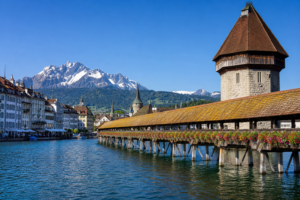
Lucerne is 45 minutes from Zurich by train and has a perfectly preserved medieval old town on a lake ringed by mountains. It’s Switzerland’s most accessible alpine introduction, and honestly one of the most beautiful cities in Europe. Mount Rigi — reachable by cogwheel train and lake boat — is the most budget-friendly panoramic viewpoint in the country. CHF 65 return from Vitznau with a Half Fare Card.
Zurich (financial capital, culture, lakeside promenades)
Living in Switzerland, I hear people dismiss Zurich as just a transit hub. That’s wrong. The Altstadt, the lake promenades, Kunsthaus, the Langstrasse neighborhood — Zurich rewards a proper day or two. Just know it’s expensive even by Swiss standards. Use the tram network constantly and keep taxis for emergencies.
Geneva (international, lakeside, Jet d’Eau, Old Town)
Geneva operates in its own world. About 40% of residents are foreign nationals, French is the primary language, and the city has a more Mediterranean pace than anywhere else in Switzerland. It’s also the gateway to the Swiss Riviera — Montreux, Vevey, and the castle at Chillon are an easy train ride east. If you’re flying in through Geneva, budget a full day before heading deeper into the country.
Valais (Zermatt, Matterhorn, Saas-Fee, Verbier)
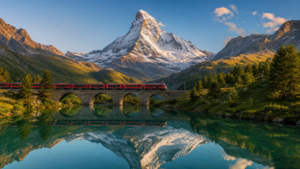
For trips longer than seven days, or if the Matterhorn is specifically why you’re coming. Zermatt is car-free, perched at altitude, and the view of the Matterhorn from the main street genuinely stops you in your tracks. Trains connect it to Zurich in 3.5 hours. Just budget accordingly — mid-range doubles in Zermatt start at CHF 200.
5. When Is the Best Time to Visit Switzerland for the First Time? {#best-time}
For a first visit, June through September gives the most reliable mountain access, open trails, and lake swimming. July and August are peak — prices climb, Jungfraujoch queues stretch, and Grindelwald fills with tour groups. Late September into October is genuinely my favorite time: the crowds thin out, the autumn colors come in, prices drop, and most mountain railways are still running.
Month-by-Month Summary for First Timers
| Month | Mountain Access | Crowds | Prices | Verdict |
|---|---|---|---|---|
| Jan–Feb | Limited (snow/fog) | Medium | Medium | Good for skiing only |
| Mar–Apr | Improving | Low | Lower | Spring hiking begins |
| May | Most passes open | Low-Med | Medium | Excellent choice |
| Jun | Fully open | Medium | Rising | Strong first visit |
| Jul–Aug | Peak | High | Peak | Iconic, busy, expensive |
| Sep | Fully open | Medium | Falling | Best overall month |
| Oct | Closing (higher) | Low | Lower | Autumn colors, solid |
| Nov–Dec | Limited | Low | Varies | Christmas markets only |
My pick for first-timers: late May or September. In May, wildflower meadows cover the valleys, trails are empty, mountain railways are running, and you’ll pay noticeably less than in summer. September gives you warm days, cool evenings, and crowds that are maybe 40% smaller than August. Both are genuinely great. I personally take visitors in late September whenever I can.
6. How Do You Get Around Switzerland Without a Car? {#getting-around}
You don’t need a car. At all. Switzerland’s public transport system — trains, buses, boats, mountain railways — connects virtually every village, summit, and city in the country. I’ve lived here for over twelve years and I don’t own one. The SBB train network ran at above 92% on-time performance in 2025 (SBB Annual Report 2025). For context, that means a Swiss “late” train is often two minutes behind schedule. Arriving visitors from countries where trains run 20 minutes late tend to find this mildly miraculous.
The Swiss Transport Hierarchy for Visitors
- InterCity trains (IC/ICN) — connect major cities every 30–60 minutes. Zurich to Bern: 57 minutes. Zurich to Lucerne: 45 minutes. Geneva to Lausanne: 34 minutes.
- Regional trains — reach smaller towns and valley villages. Always check SBB.ch for the precise connection — Swiss timetables are engineered so regional trains meet InterCity trains at junctions.
- PostBus — the bright yellow buses that serve mountain villages where trains can’t go. Part of the integrated network, covered by Swiss Travel Pass.
- Boats — scheduled lake services on all major lakes. The boat from Lucerne to Flüelen takes 2.5 hours and is one of the great slow-travel experiences in Switzerland — particularly on a clear day when the Rütli meadow comes into view.
- Mountain railways — cogwheel trains (Rigi, Pilatus, Rochers-de-Naye), cable cars, and aerial gondolas. Partially covered by the Swiss Travel Pass, with discounts on most.
Key Booking Tips
- Buy tickets through SBB.ch — the official Swiss train portal. Download tickets to the app before you travel; it works offline.
- Book the Glacier Express (St. Moritz to Zermatt, eight hours) at least three weeks in advance in summer. There’s a compulsory reservation of CHF 35–50 on top of your pass — non-negotiable.
- The Lötschberg mountain route (Brig to Kandersteg) is one of Switzerland’s most underrated train journeys, and it’s on the way to Zermatt. Worth a window seat.
7. What Are the Cultural Rules Every First-Time Visitor Must Know? {#etiquette}
Switzerland has real social norms, and Swiss people genuinely notice when visitors break them. In eight years of watching tourists move through this country, the same three violations come up constantly: being too loud on trains, ignoring Sunday quiet rules, and walking into small shops without saying hello. None of these are hard to avoid once you know about them.
The 8 Cultural Rules That Matter Most
1. Sunday is Sunday. Most shops close. Supermarkets in train stations stay open (this is a lifesaver — note which one is near your accommodation), but pharmacies, hardware stores, and most boutiques are shut. Do your grocery shopping on Saturday evening.
2. Quiet hours are enforced. Between 10pm and 7am, and through most of Sunday, loud behavior in residential areas is genuinely frowned upon. Some apartment buildings have building rules prohibiting laundry and vacuuming on Sundays. I’m not joking — it’s in the lease.
3. Say hello when entering small spaces. Walking into a small shop, a cable car cabin, or even a lift without saying “Grüezi” (German-speaking areas), “Bonjour” (French), or “Buongiorno” (Italian) reads as rude. It takes a second and it completely changes how people respond to you.
4. Four languages, not one. German is spoken by about 65% of the population, French by 23%, Italian by 8%, and Romansh by under 1%. But the German Swiss don’t speak standard German — they speak Swiss German (Schweizerdeutsch), a dialect that even native German speakers from Berlin or Munich struggle to follow. In formal contexts and with tourists, most Swiss people switch to High German or English. Don’t panic about the language situation — English gets you everywhere.
5. Tipping is optional, not obligatory. Service charge is already included in Swiss bills. A tip of 5–10% is a genuine compliment, not an expected baseline. When paying by card, tell the server the total you want to pay (“fifty-five, please”) rather than entering a tip amount separately.
6. Punctuality signals respect. If you’re meeting a guide, joining a tour, or catching up with a Swiss contact, arriving five minutes late is noticed. Not dramatically — Swiss people are polite — but it registers.
7. Greet every hiker on the trail. On Swiss mountain trails, you say “Grüezi” or “Hoi” to every person you pass, even strangers. I love this about Switzerland. It sounds small but on a quiet mountain trail it creates a genuine feeling of community among people who’ve never met.
8. Sort your rubbish. Switzerland runs a color-coded waste system. Locals sort glass, plastic, paper, and organic waste. Visitors aren’t expected to know every nuance, but stuffing everything into a residential recycling bin incorrectly will earn you a look from the neighbors.
8. Budget Tips That Actually Work in Switzerland {#budget-tips}
If I had to give you one piece of advice for keeping costs sane, it’s this: eat from Migros and Coop. Both chains have exceptional prepared food sections — fresh sandwiches, hot dishes, sushi, soups, salads — at CHF 5–12 per meal. Pair that with a Swiss Travel Pass, and you immediately cut CHF 50–80 off your daily spend compared to eating out three times a day.
12 Budget Tips with Real CHF Savings
- Get a Migros or Coop loyalty card — free to sign up in-store, instantly saves 5–10% on many items.
- Sleep in villages, not cities — Grindelwald hotels run CHF 80–140/night vs CHF 180–280 for comparable quality in Zurich.
- Hit mountain railways early — before 9am, crowds are noticeably smaller and some offer early-bird pricing.
- Use the Swiss Travel Pass museum inclusion — the pass covers 500+ museums, saving CHF 15–25 per visit.
- PostBus over private transfers — Interlaken to Grindelwald by PostBus costs CHF 3 with Swiss Travel Pass. A taxi costs CHF 60.
- Eat your main meal at lunch — most Swiss restaurants offer a Tagesmenü (daily menu) at lunch for CHF 18–28, covering soup, main, and sometimes dessert. The same items ordered individually at dinner cost CHF 45–65.
- Drink tap water — Swiss tap water comes from mountain springs and is genuinely excellent. Paying CHF 4 for a bottle of water here is a choice, not a necessity.
- Check the SBB app’s Saver Day Pass — on certain routes and days, a regional day pass runs CHF 29–49 for unlimited travel in that zone. Very useful if you’re spending a full day in one valley.
- Consider Rigi before Jungfraujoch — Rigi costs CHF 65 return with a Half Fare Card, gives you 360-degree panoramic views, and has a fraction of the crowds. On a first trip with a tight budget, I’d honestly choose Rigi.
- Swiss Youth Hostels private rooms — the national hostel network (Schweizer Jugendherbergen) offers private rooms from CHF 80–120/night. They’re cleaner and better located than many budget hotels.
- Buy a local SIM on arrival — Switzerland isn’t in the EU, so EU roaming doesn’t apply. A Sunrise prepaid SIM costs CHF 19.90 for 10GB. Pick it up at Zurich Airport or any Migros.
- Book accommodation well ahead in summer — Zermatt, Grindelwald, and Interlaken prices spike fast in July and August. Book six to eight weeks out and save CHF 50–80/night easily.
Find the best hotel deals for Switzerland: Search accommodation across Switzerland via our Travelpayouts partner — compare prices across Booking.com, Hotels.com, and more.
9. Practical Essentials: Currency, SIM, Safety, Language {#practical}
Currency
Switzerland uses the Swiss Franc (CHF), not the Euro. Some towns near the German and Italian borders accept Euros, but the exchange rates are lousy — just use CHF. Swiss ATMs are everywhere and accept Visa and Mastercard. Withdraw CHF directly from an ATM for the best rate; airport exchange booths will take a significant cut.
Card payments work everywhere in cities, and most restaurants and hotels in the mountains have moved to contactless. That said, smaller village markets and some mountain cable car operators are still cash-only. Keep CHF 50–100 on you in rural areas.
SIM Card and Connectivity
Switzerland isn’t in the EU, which means your EU roaming deal doesn’t follow you here. Pick up a SIM at Zurich Airport — Sunrise and Salt both have kiosks in the Arrivals hall. Sunrise prepaid: CHF 19.90 for 10GB, valid 30 days. Salt: CHF 24.90 for 15GB. If you’d rather skip the airport queue entirely, an eSIM from Airalo (starting around $4.50 for 1GB) works fine and you can activate it before boarding.
Safety
Switzerland is one of the safest countries in the world — the 2025 Global Peace Index put it at 10th globally. Violent crime against tourists is extremely rare. Standard city sense applies around Zurich HB station late at night and Geneva’s waterfront after midnight, but it’s all pretty minor compared to most European capitals.
Mountain safety is a different category. Weather above 2,000m changes fast — sunshine to fog to snow in under an hour, including in July. Always check MeteoSwiss (meteoswiss.admin.ch) before heading up. Carry a rain layer no matter what the morning looks like. I’ve been caught above Grindelwald in what started as a perfect blue-sky morning — twice.
Language
- Zurich, Bern, Lucerne, Interlaken, Zermatt: Swiss German. Speak English — almost everyone under 60 handles it easily.
- Geneva, Lausanne, Montreux, Sion: French. English is widely understood in tourist areas.
- Lugano, Locarno, Bellinzona: Italian. English works fine in hotels and restaurants.
- Useful phrases everywhere: “Grüezi” (hello, German areas), “Merci” (thank you — used across all regions, even in Italian-speaking Ticino), “Entschuldigung” (excuse me), and “Uf Widerluege” (goodbye in Swiss German).
10. Your First-Timer’s 7-Day Framework {#itinerary-framework}
This isn’t a rigid day-by-day schedule — for that, see our detailed Switzerland 7-Day Itinerary. This is the strategic logic for how to distribute your time so you actually see the best of the country without burning out on travel days. For more information, check out Europe trip finder.
Days 1–2: Lucerne + Lake Lucerne + Rigi or Pilatus
Start here, not Zurich. Lucerne is smaller, immediately beautiful, and easy to navigate on foot. Take the lake boat across to Vitznau or Alpnachstad, then ride the cogwheel railway up Rigi for sunset views over five cantons. Spend one evening on the lake — the evening light on the mountains is something I’ve never quite gotten used to, even after twelve years.
Days 3–4: Bernese Oberland — Interlaken + Grindelwald + Lauterbrunnen
This is the dramatic core of Switzerland. Sleep in Interlaken, day-trip to Grindelwald for Eiger North Face views, walk or train through the Lauterbrunnen Valley (72 waterfalls, which sounds like marketing but is literally accurate). If your budget allows, ride up to Kleine Scheidegg for Jungfrau views — you don’t need to pay for the full Jungfraujoch ticket to get a genuinely awe-inspiring perspective.
Days 5–6: Zermatt + Matterhorn
Train from Interlaken via Visp, roughly 2.5 hours. Zermatt is car-free and surprisingly walkable despite sitting at 1,600m altitude. Take the Gornergrat railway — half price with Swiss Travel Pass — for unobstructed Matterhorn views that beat the famous postcard shot from town. Budget CHF 200–250 for one night in a mid-range Zermatt hotel; this is a splurge, but it’s worth sleeping there rather than day-tripping.
Day 7: Zurich or Geneva — depart
Depending on your flight, end in Zurich (45 minutes from Lucerne by fast train, 3.5 hours from Zermatt) or Geneva (3 hours from Zermatt). Both cities are worth half a day of wandering before you head to the airport. In Zurich, walk from HB up through Altstadt to Lindenhügel for a view over the city. In Geneva, walk the Jet d’Eau promenade and Old Town before catching your flight.
11. Free Switzerland Packing Checklist {#packing}
Switzerland asks more of your packing list than most European destinations. You’ll move between sea-level cities and 3,000m summits, between warm lake afternoons and cold mountain mornings, sometimes on the same day. The altitude range, the weather variability, and the combination of urban and outdoor time mean a generic “Europe packing list” won’t quite cut it.
Get the free Switzerland Packing Checklist — a downloadable PDF built specifically for first-time visitors. It covers city days, mountain hikes, winter visits, and budget travel. Includes gear recommendations, a medicine kit list, and the digital essentials every visitor needs.
Download the Free Switzerland Packing Checklist — enter your email and we’ll send it straight to your inbox.
Covers: hiking layers, waterproofs, Swiss Type J adapter plugs, altitude essentials, and the apps every first-time visitor needs on their phone.
12. Frequently Asked Questions {#faq}
Q1: Is Switzerland worth visiting for the first time?
Genuinely, yes. Switzerland is one of those rare destinations where the reality matches the expectation — the mountains, the trains, the food, the quality of infrastructure. The cost is real but manageable if you plan smart. Nearly every first-time visitor I’ve spoken with leaves already planning a return trip.
Q2: How much money do I need per day in Switzerland?
Budget travelers can manage CHF 130–160/day with a hostel, supermarket meals, and a Swiss Travel Pass covering transport. Mid-range travelers typically land at CHF 220–320/day — a three-star hotel, a mix of restaurant meals and supermarket lunches, and one mountain excursion every couple of days. Comfortable travel runs CHF 400–600+. The biggest controllable variable is food.
Q3: Is the Swiss Travel Pass worth it for a first-time visitor?
For most first-timers spending five or more days moving between regions, yes. The pass typically pays for itself within two to three days once you add up trains, city buses, and museum entries. For shorter stays anchored in one city, the Half Fare Card at CHF 99 is the smarter buy.
Q4: Do I need to speak German to visit Switzerland?
Not at all. English is solid across all tourist areas, train stations, hotels, and restaurants. In French-speaking Geneva and Lausanne, French is more prevalent but English is understood everywhere you’d actually need it. Learning “Grüezi” (hello in Swiss German) will make people visibly warmer toward you — it takes about three seconds to learn and has a real effect.
Q5: What is the best way to get from Zurich Airport to the city?
Direct train from Zurich Airport (ZRH) to Zurich HB runs every ten minutes, takes twelve minutes, and costs CHF 5.60. The platform is directly beneath the Arrivals hall — follow the train signs as you exit customs. Don’t take a taxi for this journey. It costs CHF 50–65 and takes longer once you hit city traffic.
Q6: Can I visit Switzerland on a budget?
Yes, but it takes a plan. Eat from Migros and Coop for most meals (CHF 8–15), sleep in village hostels or smaller hotels outside the main cities (CHF 50–100/night), use the Swiss Travel Pass to eliminate most transport costs, and do Rigi instead of Jungfraujoch for your big mountain day. CHF 130–150/day is achievable if you’re disciplined about it.
Q7: What is the cheapest month to visit Switzerland?
November has the lowest prices but also the shortest days and almost no mountain access. Among months where Switzerland is fully operational and worth visiting, late May and late September are the sweet spot — mountains are open, crowds are much smaller, and prices run 15–25% below the July–August peak.
Q8: Do I need travel insurance for Switzerland?
Yes, absolutely. Switzerland isn’t in the EU, so EHIC cards don’t apply here. A single GP visit costs CHF 200–400. Mountain helicopter rescue via Rega — the Swiss air rescue service — runs CHF 3,000–15,000 without insurance coverage. Buy travel insurance that explicitly covers mountain activities and helicopter evacuation. Don’t skip this.
Q9: How many days do I need in Switzerland for a first visit?
Five days is the minimum to see the Bernese Oberland and one city properly. Seven days lets you add Lucerne and Zermatt, which is the most satisfying first-trip structure and what I’d recommend to most people. Ten days or more opens up Ticino (Italian Switzerland) or the Glacier Express train journey from St. Moritz to Zermatt.
Q10: Is Switzerland good for solo travel?
One of the best countries in Europe for it. It’s safe, English-friendly, easy to navigate alone, and the hostel network is strong. Lucerne, Interlaken, and Zermatt hostels consistently attract international solo travelers — you won’t struggle to find conversation. Hiking alone on marked trails (blue or red markers) is perfectly safe through the summer months.
Sources and Further Reading
- MySwitzerland.com — Official Switzerland Tourism — trip planning resources, seasonal guides, regional maps
- SBB.ch — Swiss Federal Railways — timetables, Swiss Travel Pass, Glacier Express reservations
- MeteoSwiss — Swiss Federal Office of Meteorology — official weather forecasts including mountain-specific forecasts
- Switzerland Tourism 2025 Annual Report — visitor statistics cited in this article
- SBB Annual Report 2025 — punctuality data cited in this article
13. Related Posts {#related}
- Switzerland 7-Day Itinerary 2026: The Complete Route
- Swiss Travel Pass: Is It Worth It in 2026? Honest Review
- Best Time to Visit Switzerland 2026: Month-by-Month Guide
- Bernese Oberland Switzerland Travel Guide 2026
- Switzerland Travel Budget 2026: Real Costs Breakdown
About the Author
Anna Berger is a Swiss tourism specialist and travel writer based in Bern. She’s lived and worked in Switzerland for over twelve years, guiding English-speaking visitors through the Alps, the Bernese Oberland, Central Switzerland, and Ticino. Anna holds a certification in Swiss Heritage Tourism from the Swiss Tourism Federation and contributes regularly to Switzerland travel planning guides. Read more articles by Anna Berger →
Editorial standards
Why trust this guide
- Route-checked. Itineraries, transfers and timings are verified against current public-transport schedules and operator pages.
- Honest comparisons. Hotel areas and tours are compared on real value — affiliate links never change the recommendation.
- Transparent. Some links are affiliate links; the disclosure is shown on every guide.
This guide is informational travel content, not professional travel, financial or legal advice. Always confirm prices, opening times and conditions with the official provider before you book.