Swiss Transport Hacks 2026: 9 Insider Tricks to Travel Switzerland for Half Price
Did you know Swiss locals spend 53% less on transportation than tourists? This Alpine nation’s 29,000-kilometer rail network isn’t just about postcard views – it’s a money-saving machine perfected over generations.
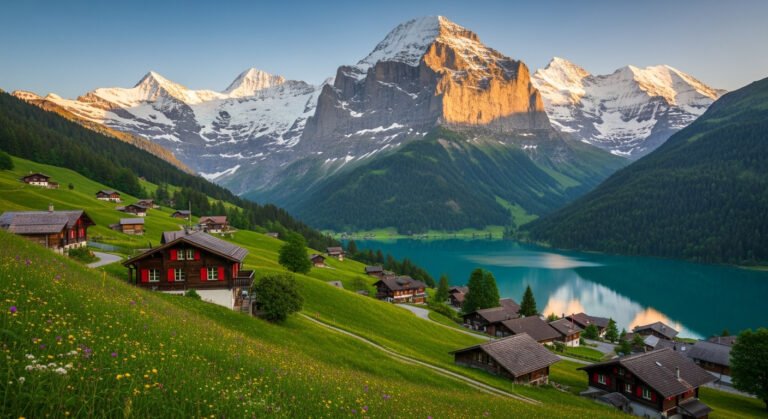
You’re about to unlock a travel system where efficiency meets jaw-dropping scenery. Picture solar-powered cable cars gliding past snow-capped peaks and electric buses winding through car-free villages. The Swiss don’t just move from place to place – they craft experiences that turn ordinary commutes into bucket-list moments.
This guide reveals how to navigate like someone who grew up hiking these mountain passes. Discover hidden discounts, under-the-radar routes, and why a simple train ticket doubles as your passport to crystal-clear lakes and flower-strewn valleys.
We’ll show you how to blend sustainability with savings. Imagine cruising climate-neutral boats across turquoise waters or catching a tram that runs entirely on renewable energy. These aren’t futuristic dreams – they’re your transportation options tomorrow.
Ready to explore every corner of this travel paradise without draining your wallet? Let’s dive into the systems that make Switzerland’s famous efficiency work for your adventure.
Understanding Switzerland’s Transport System
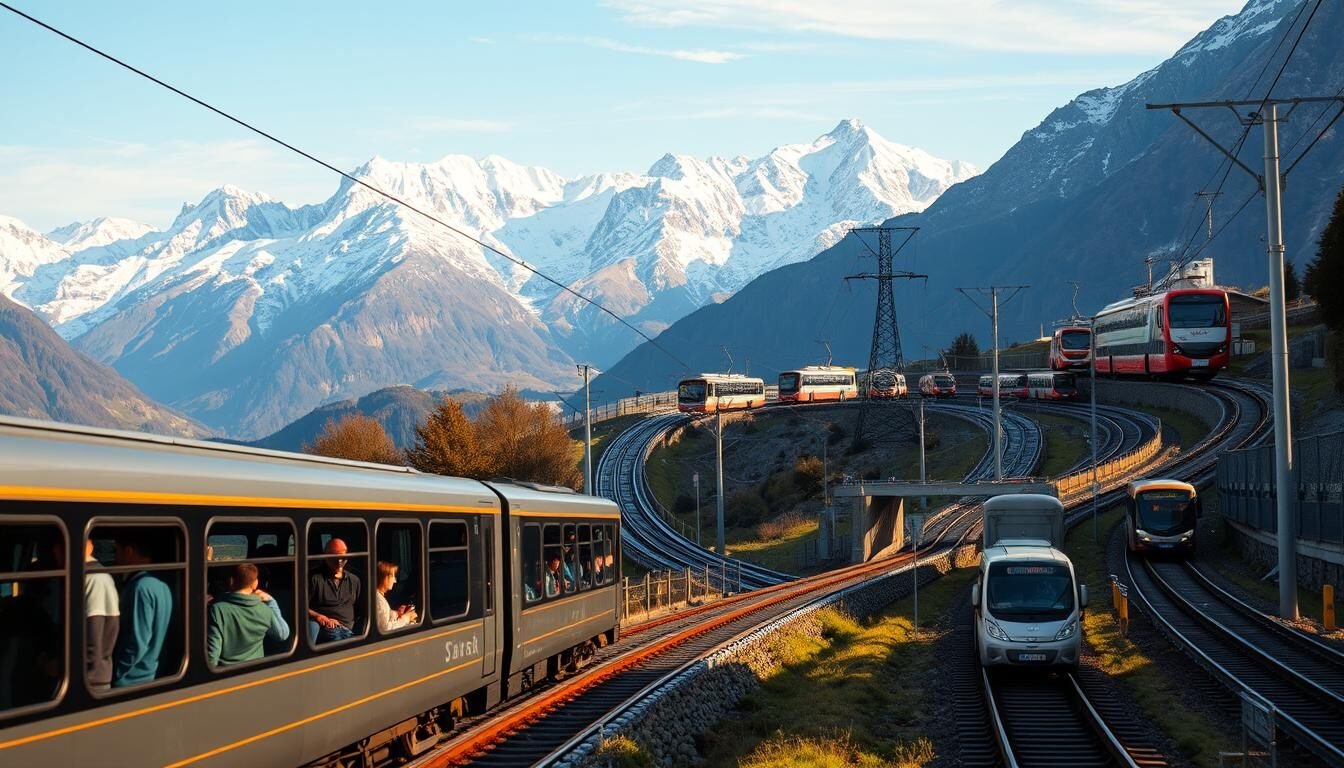
Swiss transportation isn’t just efficient—it’s a masterclass in eco-innovation. Picture trains gliding past glaciers, buses powered by renewable energy, and cable cars ascending peaks without a drop of diesel. This network connects every corner of the country while keeping sustainability at its core.
The Eco-Friendly and Sustainable Edge
You’ll find solar panels powering mountain lifts and boats crossing lakes with zero emissions. Over 90% of rail energy comes from renewables, and electric vehicle charging stations outnumber gas pumps in many towns. Even remote villages use shared electric shuttles to reduce traffic.
| Feature | Benefit | Coverage |
|---|---|---|
| Solar cable cars | Zero-emission ascents | 85% of ski resorts |
| Climate-neutral boats | Clean lake travel | 10 major lakes |
| EV charging stations | Nationwide access | 2,500+ locations |
Punctuality and Efficiency at Its Finest
Trains here arrive within 40 seconds of schedule 96% of the time. Connections sync perfectly—your bus will wait if a train runs late. This precision makes multi-leg journeys stress-free, whether you’re hopping between cities or reaching alpine trails.
Accessibility shines too. Low-floor trams, ramped buses, and station lifts ensure everyone explores comfortably. It’s why Switzerland tops global rankings for public transport usability across age groups and mobility needs.
Getting around Switzerland: Your Ultimate How-To Guide
Switzerland transforms every journey into a tailored adventure. With 65% of visitors using three or more transport types per trip, your choices shape how you experience alpine meadows, historic cities, and crystal lakes.
Match Your Transport to Your Adventure
Trains dominate for speed and reliability—ideal for city-hopping. Prefer spontaneity? Rental cars unlock hidden valleys. Cyclists enjoy 12,000 km of signed routes, while boats offer floating relaxation. Your Swiss Travel Pass works across all options.
| Mode | Best For | Season Tip |
|---|---|---|
| Trains | Speed & views | Year-round |
| Bikes | Lakeside trails | April-Oct |
| Boats | Leisurely exploring | May-Sept |
| Cable cars | Mountain access | Check snow levels |
Winter travelers: 40% of mountain routes require cogwheel trains or snow chains. Summer visitors gain bike-friendly paths and open alpine passes. Mobility matters too—modern trams accommodate wheelchairs, while rugged trails challenge experienced cyclists.
Time your journeys between 10 AM-3 PM to avoid commuter crowds. The Swiss precision timetable lets you effortlessly connect trains, buses, and boats—just scan your pass and go.
Exploring Scenic Train Journeys

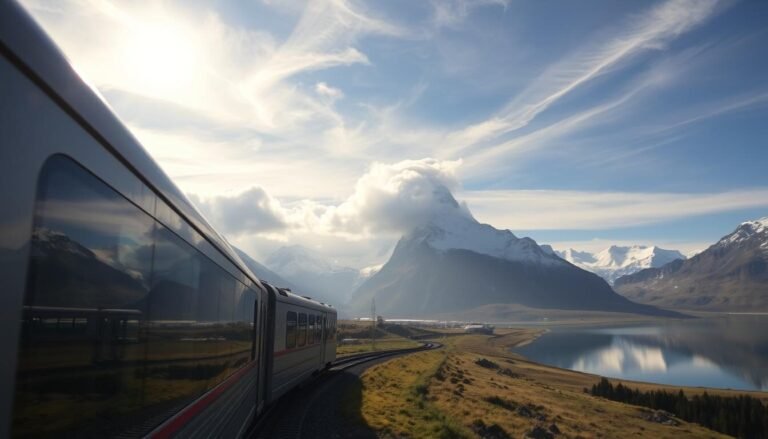
Switzerland’s rails turn transportation into art—where engineering marvels meet UNESCO-listed landscapes. These routes aren’t just about reaching destinations—they’re the destination.
Panoramic Routes: Glacier Express, Bernina Express, and More
The Glacier Express lives up to its “slowest express” title with 8 hours of Alpine theater. You’ll glide across 291 bridges and through 91 tunnels, watching snow-dusted peaks frame valleys dotted with chalets. For lake lovers, the GoldenPass Line serves three courses of scenery—Lucerne’s waterfront, rolling vineyards, and Lake Geneva vistas.
Daredevils crave the Bernina Express. This red-and-white marvel climbs to 7,391 feet without gears, using spiral tunnels and cliff-hugging tracks. It’s the only train journey crossing the Alps without mountain passes—just pure rail ingenuity.
- Mont Blanc Express: Glacier views to Chamonix
- Voralpen Express: 78 lakes in 2.5 hours
- Gotthard Panorama Express: Rail-boat combos
Booking Tips and Supersaver Discounts
Book supersaver tickets 60 days ahead for 50% discounts on premium routes. Tuesday mornings see the best deals. Pro tip: Regular trains follow the same tracks as tourist trains—same views, lower prices, hourly departures.
Use the SBB app’s “via” feature to create custom scenic itineraries. Pair afternoon trains with golden-hour lighting for photos that’ll make friends back home gasp. Remember—window seats on the right side from Zermatt to St. Moritz deliver prime Matterhorn views.
Navigating Swiss Roads for a Memorable Road Trip
Switzerland’s roads twist through history and innovation like chocolate ribbons on an alpine cake. This country transforms asphalt into art, where every bend reveals medieval villages or charging stations for electric vehicles. The Grand Tour of Switzerland offers the ultimate way to experience 1,600 km of curated landscapes – all accessible by car year-round.

The Grand Tour of Switzerland: A Driver’s Perspective
This epic route connects 12 UNESCO sites through mountain passes and vineyard-lined valleys. Electric cars thrive here – 93% of the journey features charging stations within 15 km. Your road trip becomes eco-friendly without sacrificing adventure.
| Route Feature | Key Benefit | Best Season |
|---|---|---|
| Furka Pass | Glacier views | June-Oct |
| Lavaux Vineyards | Lakeside drives | Year-round |
| San Bernardino | Tunnel alternatives | Winter |
Tips for Using Freeways and Handling Mountain Roads
All cars need a Sfr40 vignette for freeways – get the digital version before arrival. Mountain roads demand respect: 27% grades require low gears, while winter trips mandate snow tires (provided by most rentals).
Check road statuses via the Swiss Traffic app. Between November-May, 14 high passes close – but modern tunnels keep routes open. Remember: right turns on red lights are illegal, and headlights must stay on daytime.
| Road Type | Speed Limit | Essential Gear |
|---|---|---|
| Freeways | 75 mph | Vignette |
| Mountain passes | 35 mph | Winter tires |
| Village roads | 30 mph | Parking disc |
Discovering Buses, Cable Cars, and Mountain Transport
Switzerland’s mountain villages and peaks hide transport gems that turn ordinary trips into alpine adventures. The iconic yellow PostBus network and gravity-defying cable systems reveal landscapes trains can’t reach – if you know how to use them.

Yellow PostBuses: Accessing Remote Mountain Regions
These cheerful yellow buses operate like clockwork. Their stops sit directly beside train platforms, letting you switch from rail to road in under 2 minutes. You’ll find routes winding through valleys where cows outnumber people, with fares matching train prices.
Three things to remember:
- Book bike space 72 hours ahead for popular routes
- Swiss Travel Pass covers most routes – except premium tourist lines
- Drivers often share insider tips about hidden trails
Cable Cars, Funiculars, and Mountain Railways Explained
Swiss cable systems redefine mountain access. Funiculars climb 100% gradients, while rotating gondolas offer 360° views. Cogwheel trains conquer peaks like Jungfrau – Europe’s highest station at 11,332 feet.
Always check descent times! Winter routes often stop at 4 PM. Pro tip: Morning rides beat crowds and guarantee return trips. Maintenance happens nightly, so these systems stay safer than your grandma’s knitting club.
Cycling and Accessible Travel: A Closer Look
Switzerland’s bike paths and transport networks turn every journey into an inclusive adventure. You’ll find routes winding through wildflower meadows and cities where accessibility meets Alpine charm.
Pedal Power Meets Mountain Majesty
Conquer 12,000 km of signposted trails ranging from lakeside cruisers to thigh-burning climbs. Summer transforms high passes like Susten into cyclist-only zones – imagine car-free roads with 360° glacier views.
| Trail Type | Key Features | Best Season |
|---|---|---|
| E-bike routes | Motor-assisted climbs | April-Nov |
| Family paths | Play stations & picnic spots | Year-round |
| Mountain passes | Car-free summer access | June-Sept |
Grab wheels at any major station – regular bike rentals cost less than a coffee, while e-bikes tackle hills effortlessly. Pro tip: Reserve train bike spaces early for popular routes like the Rhine Cycle Path.
Barrier-Free Exploration Made Simple
Swiss transport welcomes all travelers with smart solutions. Low-floor trams glide to curb level, while station lifts whisk wheelchairs between platforms. In cities like Zurich, navigating Swiss cities becomes seamless with audio bus stops and tactile paving.
Specialized services like Procap offer route planning for mobility needs. Many cable cars feature wheelchair docks, and adapted bikes let everyone feel mountain wind in their hair. It’s adventure without limits in the Alps.
Planning Smart and Saving Money on Swiss Travel
Smart travelers know the secret to Swiss adventures lies in strategic planning. With the right tools, you’ll stretch every dollar while experiencing world-class transport and cultural gems.
Unlock Full Value From Your Travel Pass
Your Swiss Travel Pass becomes a golden ticket covering trains, buses, and boats across 10 stunning lakes. Free entry to 500+ museums turns travel days into cultural deep dives. Families save big – kids under 16 ride free when adults hold passes.
Maximize the pass by timing mountain excursions. Use its 50% discount on premium routes like Jungfraujoch after 2 PM when crowds thin. Lake cruises double as mobile lunches – pack a picnic and enjoy views without restaurant costs.
Smart Strategies for Budget-Friendly Journeys
Book Supersaver tickets 60 days ahead for popular routes. The SBB app’s timetable shows cheapest options – sometimes two regional trains cost less than one direct ride. Travel mid-week for better deals and quieter carriages.
Pro tip: Combine pass discounts with off-peak pricing. Early birds get 30% savings on boats before 10 AM. Evening trains often have last-minute deals – perfect for flexible explorers.
Remember – every Swiss franc saved on transport means more chocolate tastings or fondue dinners. Your dream trip doesn’t need luxury budgets, just clever planning and that magic plastic card in your pocket.
Explore More of Europe
Love European travel? See our 25 things to do in Paris and best time to visit Spain.
Frequently Asked Questions
Is the Swiss Travel Pass worth it?
Yes, if you plan 3+ train rides. A 4-day pass costs CHF 281 (2nd class) and covers unlimited trains, buses, boats, plus free museum entry. It pays for itself in 2-3 long rides.
How expensive is Switzerland per day?
Budget: CHF 100-150/day (hostels, supermarket meals). Mid-range: CHF 200-350/day. A restaurant meal costs CHF 25-45. Coffee: CHF 4-6. Switzerland is 40-60% pricier than neighboring France or Germany.
What is the best time to visit Switzerland?
June-September for hiking and lakes. December-March for skiing. September-October for fewer crowds and fall colors. Shoulder seasons save 20-30% on accommodation.
🧳 Plan Your Trip to Switzerland
This section contains affiliate links. If you book through them, we earn a small commission at no extra cost to you — it helps us keep creating free travel guides!
🏨 Find the best hotel deals in Switzerland — Compare prices across 100+ booking sites
→ Search Hotels in Switzerland
✈️ Compare cheap flights to Switzerland — Find the lowest fares from your city
→ Search Flights to Switzerland
Compare thousands of hotels with free cancellation options.
Search Hotels on Booking.com →
Frequently Asked Questions
When is the best time to visit the destinations mentioned in "Swiss Transport Secrets: Travel for Less"?
The ideal time to visit depends on your preferences for weather and crowd levels. Generally, spring (April–June) and early autumn (September–October) offer the best balance of pleasant weather and fewer tourists.
How much should I budget for a trip related to "Swiss Transport Secrets: Travel for Less"?
Budget travelers can expect to spend $50–80 per day, while mid-range travelers typically budget $100–200 per day including accommodation, meals, and activities. Costs vary significantly by season and location.
Is it safe to travel to the places covered in this article?
The destinations featured in this article are generally considered safe for tourists. As with any travel, it is recommended to check your government's current travel advisories, purchase travel insurance, and take standard precautions.
What documents do I need for the trip described in "Swiss Transport Secrets: Travel for Less"?
Requirements vary by nationality and destination. Typically you will need a valid passport with at least 6 months validity, and potentially a visa depending on your country of origin. Always verify current entry requirements before booking.
What are the must-see attractions or experiences highlighted in this article?
The article covers the top highlights worth prioritizing on your itinerary. Focus on the experiences that align with your interests — whether cultural, culinary, or outdoor — to make the most of your visit.