Swiss Riviera Travel Guide: Montreux & Vevey 2026 (What Most Guides Get Wrong)
Swiss Riviera Travel Guide: Montreux & Vevey 2026 (What Most Guides Get Wrong)
The Swiss Riviera — the stretch of Lake Geneva shoreline between Montreux and Vevey — is one of the most misunderstood destinations in Switzerland. Most travelers either skip it entirely (assuming it’s just for jazz festival season) or arrive unprepared for the price tag. This guide fixes both problems: you’ll discover why May through June and September are actually better than July, how to visit without spending CHF 300 a day, and which hidden corners the Instagram crowd never finds.
Why the Swiss Riviera Surprises Even Experienced Travelers
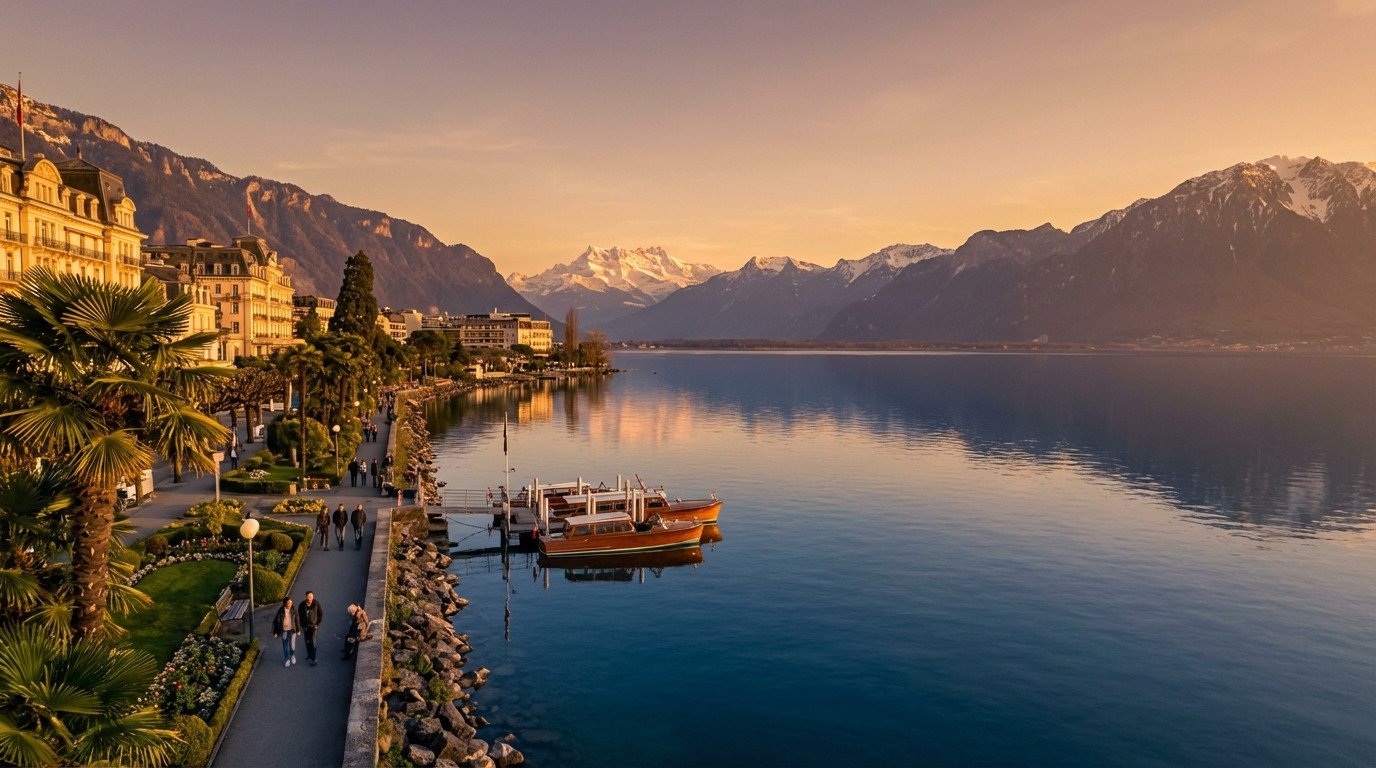
Most Switzerland itineraries rush to Interlaken, Zermatt, or Lucerne — and that’s understandable. But the Vaud Riviera consistently catches visitors off guard. The microclimate here is genuinely Mediterranean: palm trees line the lakefront promenade, vineyards climb the hillsides right to the water’s edge, and on clear days, the French Alps reflect in a lake so still it looks like glass.
The problem most visitors face: they arrive without a plan, get hit by hotel prices in Montreux’s center (CHF 220–400 per night in peak season), and conclude the Swiss Riviera is for the ultra-wealthy only. It isn’t — but you need to know where to stay, when to go, and which free experiences to prioritize.
The core fact: The Lavaux Vineyard Terraces between Vevey and Lausanne are a UNESCO World Heritage Site covering 830 hectares, producing some of Switzerland’s most distinctive wines. Visiting them costs exactly CHF 0. According to Switzerland Tourism, the region attracts over 2 million visitors annually, yet fewer than 15% venture beyond the main lakefront strip.
When to Visit: The Problem with Peak Season (And What to Do Instead)
July is the Montreux Jazz Festival month. Hotels triple their rates, the waterfront is packed shoulder-to-shoulder, and restaurants add 20–30% to bills with “festival supplements.” Unless you’ve booked tickets to see a specific artist, July is objectively the worst month to visit.
Here’s what actually works:
- May–June: Vineyards are green and flowering, temperatures reach 18–24°C, hotel rates are 40–50% lower than peak. The Fête des Vignerons (vineyard festival) occurs every 20+ years — 2026 is an excellent year for spring visits without festival crowds.
- September–October: Harvest season. The Lavaux vineyards turn gold and copper. Wine cellars open for tastings, temperatures stay warm, and the lake is calmest for boat trips. This is genuinely the region’s most beautiful period.
- Winter (December–February): The Montreux Christmas Market ranks among Switzerland’s finest. Temperatures hover around 3–8°C, but lakeside walks remain pleasant, and accommodation drops to CHF 90–140 for decent hotels.
Montreux: What to Do (And What to Skip)
Montreux is compact. The old town sits above the modern lakefront promenade, and you can cover the main sights on foot in a day. Here’s the honest breakdown:
Château de Chillon — Worth Every Franc
Switzerland’s most visited historic monument is genuinely impressive, not just because Lord Byron carved his name into a dungeon pillar in 1816. The 13th-century castle extends directly into Lake Geneva on its own rocky island, connected by a bridge you’d almost miss. Budget 2–3 hours. Entry costs CHF 15 for adults, CHF 8 for children (2026 rates). Go early — before 10am, tour groups haven’t arrived and the castle is nearly silent. The lakeside ramparts offer the best photography light in morning hours.
Insider tip: Buy your ticket online (chillon.ch) to skip the queues in shoulder season. The audio guide (included in ticket price) is unusually well-researched — use it.
Freddie Mercury Statue and the Queen Legacy
Queen recorded several albums at Montreux’s Mountain Studios. Freddie Mercury spent his final years here, and the 3-meter bronze statue on the lakefront promenade has become one of Switzerland’s most photographed landmarks. It’s free to visit, open 24 hours, and genuinely moving if you know the context. The nearby “Freddie’s Bar” at the Hotel Fairmont Montreux Palace is tourist-priced (CHF 18 for a cocktail) — skip it unless you’re a committed fan.
The Promenade: Free and Excellent
The lakefront walkway from Montreux toward Vevey stretches approximately 7 kilometers through Clarens, La Tour-de-Peilz, and into Vevey town center. Palm trees, flower gardens, and unobstructed lake views the entire route. This walk is free, doable in 2 hours at a relaxed pace, and consistently ranks as one of the best free experiences in Switzerland. Rent a bike from Montreux’s train station (approximately CHF 35/day) to cover more ground.
What to Skip
The Rochers-de-Naye cogwheel railway to 2,042m is scenic but costs CHF 67 return — comparable to Rigi or Pilatus for views, but far less famous. If you’ve already done a Swiss mountain excursion elsewhere on your trip, skip it. The Montreux casino (rebuilt after the 1971 fire immortalized in “Smoke on the Water”) is an underwhelming modern building. The fire history is more interesting than the current structure.
Vevey: The Underrated Half of the Riviera
Most visitors treat Vevey as a footnote to Montreux. This is a mistake. Vevey is more authentic, less expensive, and more culturally rich than its famous neighbor.
The Alimentarium: Best Food Museum in Switzerland
Nestled on the lakefront (in a building owned by Nestlé, which headquartered here), the Alimentarium explores the science, culture, and history of food globally. Entry is CHF 15 adults, CHF 10 children. The interactive exhibits are genuinely engaging for adults — the section on food preservation across cultures alone is worth the trip. The giant fork sculpture partially submerged in the lake outside is a Vevey landmark and free to photograph.
Saturday Market at Grand-Place
Every Saturday morning, Vevey’s central square transforms into one of the Vaud region’s finest weekly markets. Local farmers sell Gruyère, seasonal produce, honey, dried mushrooms, and Lavaux wines. Prices are competitive with supermarkets. This is where locals shop — arrive between 8–10am before the crowds peak. If your visit falls on Saturday, this market is a non-negotiable morning activity.
Charlie Chaplin’s World
Charlie Chaplin lived in Vevey from 1952 until his death in 1977. The museum at his former villa, Manoir de Ban, is the only museum in the world dedicated exclusively to Chaplin. Using immersive technology — holograms, film projections, recreated sets — it’s consistently rated among Switzerland’s top cultural experiences. Entry: CHF 22 adults, CHF 14 children. Allow 2.5–3 hours. Book tickets in advance (chaplinsworldmuseum.com) — sold out frequently in summer.
The Lavaux Vineyards: Switzerland’s Best Free Experience
Inscribed on UNESCO’s World Heritage List in 2007, the Lavaux vineyard terraces stretch 30 kilometers between Lausanne and Montreux. The terraces were built by Cistercian monks in the 11th and 12th centuries — some of the same walls still stand today, holding up vineyards that produce Chasselas grapes unique to this microclimate.
Three walls of natural heating make Lavaux exceptional: the sun itself, the lake reflecting sunlight upward, and the stone walls radiating warmth overnight. The resulting wines (Dezaley and St-Saphorin are the most renowned appellations) have a minerality and freshness unavailable anywhere else in the world.
How to Hike Lavaux
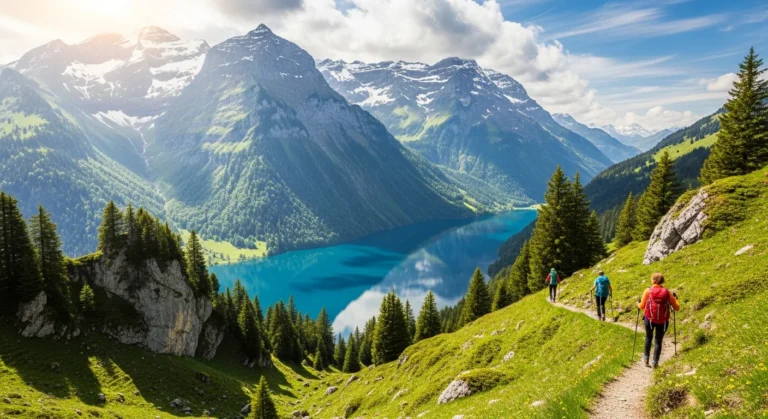
The best route for first-timers: Lutry → Epesses → Rivaz → St-Saphorin. This 8km walk takes approximately 3 hours with moderate elevation changes. The path is well-marked (look for yellow hiking signs) and passes through active vineyards, stone villages, and several wine cellars that offer tastings from CHF 8–15 per glass. Statistics from the Lavaux UNESCO Committee show that Chasselas from the Lavaux region accounts for over 60% of Switzerland’s total Chasselas production despite covering less than 1% of the country’s agricultural area.
The Lavaux Vinorama in Rivaz (CHF 10 entry, includes a guided tasting) provides excellent context before or after hiking. The train back to Montreux or Vevey from St-Saphorin takes under 15 minutes.
Getting Around the Swiss Riviera
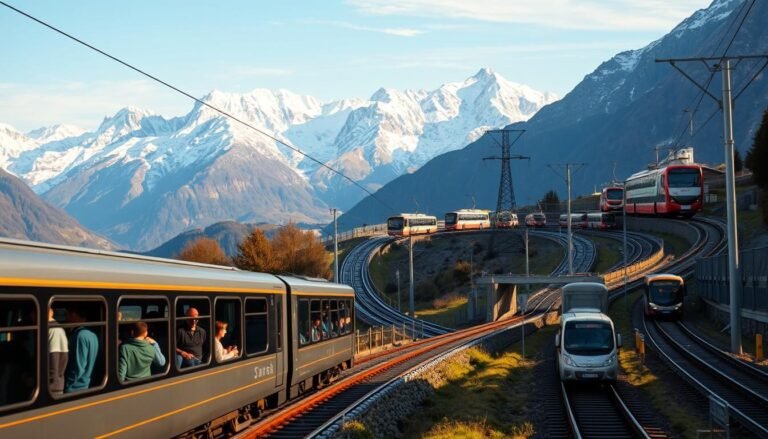
The Swiss Riviera’s main advantage is its transport density. Trains between Vevey and Montreux run every 10–15 minutes and cost CHF 4.40. The CGN lake boats (Compagnie Générale de Navigation) connect Lausanne, Vevey, Montreux, and Chillon with frequent departures April–October. A single lake crossing Vevey–Montreux costs CHF 9.60; the full Lausanne–Chillon route costs CHF 18.40 one way.
If you have a Swiss Travel Pass, all these transport modes are included. A 3-day Swiss Travel Pass costs CHF 244 in 2026 second class — worthwhile if you’re also combining this region with Lausanne and Geneva. If you’re staying purely in the Riviera area for 2–3 days, point-to-point tickets are cheaper.
A regional pass specific to the Lake Geneva area (Pass Voie Verte) covers buses, trains, and some boat services for CHF 28/day — excellent value for day-trippers from Geneva or Lausanne.
Where to Stay Without Paying Montreux’s Peak Prices
Staying in central Montreux costs CHF 200–350/night for a decent 3-star hotel in June-August. Here are three alternatives:
- Vevey center: Same lake access, 12 minutes by train to Montreux, rooms from CHF 120–180/night. The Hotel des Trois Couronnes is Vevey’s historic grande dame at CHF 280+, but budget options cluster near the train station.
- Clarens: The village between Montreux and Vevey. Quiet residential area, lakefront access, 5 minutes from Montreux by train. Guesthouses from CHF 95–140/night.
- Lausanne (15 min by train): Switzerland’s Olympic city has significantly more accommodation at all price points. Daily commuting to the Riviera is completely practical. Lausanne has hostels from CHF 45/night, budget hotels from CHF 110.
Budget Breakdown: Swiss Riviera in 3 Days
Based on a 2-person visit in shoulder season (September 2025):
| Item | Cost per Person |
|---|---|
| Accommodation (2 nights Vevey, 3-star) | CHF 135/night → CHF 270 |
| Château de Chillon entry | CHF 15 |
| Charlie Chaplin’s World | CHF 22 |
| Alimentarium | CHF 15 |
| Train/boat transport (3 days) | CHF 35 |
| Food (CHF 35/day: market lunch, grocery dinner, 1 restaurant) | CHF 105 |
| Lavaux tasting + Vinorama | CHF 25 |
| TOTAL | CHF 487 (~USD 560) |
This is a realistic budget that doesn’t require sacrificing experiences. The CHF 487 figure assumes no splurge dining — add CHF 60–80 if you want one proper Swiss dinner with lake views.
Day-Trip Options from the Swiss Riviera
If you’re using the Riviera as a base (smart move in shoulder season), these day trips work well:
- Geneva (50 min by train): The Jet d’Eau, Old Town, and CERN (free tour if booked months ahead) make Geneva a full-day trip. CHF 24 return from Montreux.
- Lausanne (20 min): The Olympic Museum (CHF 20) and the Gothic Cathedral are highlights. Lausanne also has the country’s best nightlife if that’s relevant.
- Gruyères village (40 min by train + bus): The medieval hilltop village, H.R. Giger Museum (yes, the Alien artist), and actual Gruyère cheese factory make this Switzerland’s most underrated half-day trip. The cheese factory tour is free.
- Villars-sur-Ollon (1.5 hours): Alpine skiing village in winter, hiking trails in summer. Less tourist-saturated than Verbier or Crans-Montana.
Practical Information for 2026
- Currency: Swiss Franc (CHF). EUR is accepted at many tourist venues but at poor exchange rates. Use ATMs (Postfinance or UBS) or Wise card for best rates.
- Language: French. English is widely spoken at hotels, museums, and restaurants in tourist areas. Learning “merci” and “pardon” goes a long way.
- Tipping: Not mandatory. Rounding up to the nearest franc is standard. Service charges are included in restaurant bills.
- Entry requirements: Switzerland is not in the EU but is in the Schengen Area. From 2025, ETIAS approval is required for most non-EU visitors — check current requirements at etias.eu before booking.
- Mobile data: Swiss carriers (Sunrise, Salt, Swisscom) don’t have automatic EU roaming agreements. Get a temporary Swiss SIM or check your plan covers Switzerland specifically.
Internal Links to Help Plan Your Switzerland Trip
If you’re combining the Swiss Riviera with other destinations, these guides cover the rest of your trip:
- Planning transport? Read our complete Swiss Transport Hacks 2026: 9 Insider Tricks
- Considering Interlaken? Our Interlaken Switzerland Travel Guide 2026 covers everything from paragliding to budget accommodation
- Need visa info? See our Switzerland Visa Guide 2026: 7 Application Mistakes to Avoid
- Considering Zermatt? Our Zermatt Travel Guide 2026 gives the honest cost breakdown
FAQ: Swiss Riviera Travel Questions
How many days do you need for the Swiss Riviera?
Two full days cover the key highlights: Château de Chillon, the Lavaux vineyard hike, Charlie Chaplin’s World, and lakefront exploration in both Montreux and Vevey. Add a third day if you want a day trip to Geneva or Lausanne, or more time in the vineyards during harvest season.
Is the Swiss Riviera expensive compared to other Switzerland destinations?
Mid-range, by Swiss standards. Accommodation in Vevey runs CHF 120–180/night for decent hotels — cheaper than Zermatt or Interlaken. Food costs are typical Swiss: CHF 20–35 for a restaurant lunch, CHF 40–65 for dinner. The major attractions (Chillon CHF 15, Charlie Chaplin CHF 22) are reasonably priced. The Lavaux vineyards are completely free.
Is Montreux worth visiting outside the Jazz Festival?
Absolutely — and many argue it’s better. The Jazz Festival (first two weeks of July) brings massive crowds and tripled hotel prices. Outside festival season, you get the same scenery, the same Château de Chillon, the same lakefront promenade, and the same Lavaux vineyards at 40–50% lower accommodation costs. September during harvest is especially beautiful.
Can you do a day trip to the Swiss Riviera from Geneva?
Yes, and it’s a popular option. Trains from Geneva to Montreux take approximately 65–75 minutes and run every 30 minutes. You can do Château de Chillon + the Montreux lakefront + a quick stop in Vevey comfortably in a day. For Lavaux vineyards, a full day from Geneva works better — or consider an overnight stay to slow down.
What’s the best food to eat on the Swiss Riviera?
The Vaud region has its own food specialities distinct from German-Swiss cuisine. Try papet vaudois (leek and sausage casserole), malakoff (deep-fried cheese fritters), and anything made with local Chasselas wine. The Saturday market in Vevey is the best place to sample regional cheese, especially local Gruyère variants. Raclette is ubiquitous but ask for it made with Vaud cheese, not the generic version.
Is the Lavaux vineyard hike suitable for beginners?
Yes, with appropriate shoes. The paths are well-maintained stone terraces with guardrails on exposed sections. The main Lutry–St-Saphorin route (8km) has moderate elevation changes of approximately 150–200m total. Good walking shoes are essential — the stones can be slippery after rain. Hiking boots are not required. The route takes 2.5–3 hours with stops for views and tastings.