
Swiss Food: What to Eat in Switzerland – 10 Best Dishes 2026
Affiliate disclosure: This article contains affiliate links. If you book through them, we may earn a commission at no extra cost to you. This does not influence our recommendations.
Swiss food is not a monolith; it is a rich mosaic of four distinct culinary traditions shaped by the country’s official languages: German, French, Italian, and Romansh. Each region produces dishes tied intimately to its terrain, its rich dairy culture, and its seasonal calendar. When travelers ask what to eat in Switzerland, the answer depends heavily on which canton they are visiting. From the French-speaking lakeside brasseries of Geneva to the German-speaking alpine huts of Bernese Oberland, the culinary landscape is as varied as the geography. Understanding these regional nuances is key to unlocking the best dining experiences the nation has to offer.
This comprehensive guide covers the 10 dishes that define Swiss food and what to eat in Switzerland in 2026. They are organized from the most iconic international favorites to the most insider local secrets, each with current restaurant price ranges in CHF and specific recommendations for where to order them. Whether you are seeking hearty comfort food or refined chocolate experiences, this list ensures you taste the best of the nation. We have updated pricing and availability to reflect the 2026 tourism season, accounting for recent inflation adjustments in the hospitality sector.
Before your restaurant bookings, sort your accommodation first. Trip.com covers Switzerland’s major cities and alpine villages with clear pricing across Zurich, Geneva, Lucerne, Zermatt, and Fribourg. Securing a stay near the old town often means walking distance to the best traditional eateries, saving you on transport costs after a heavy meal.
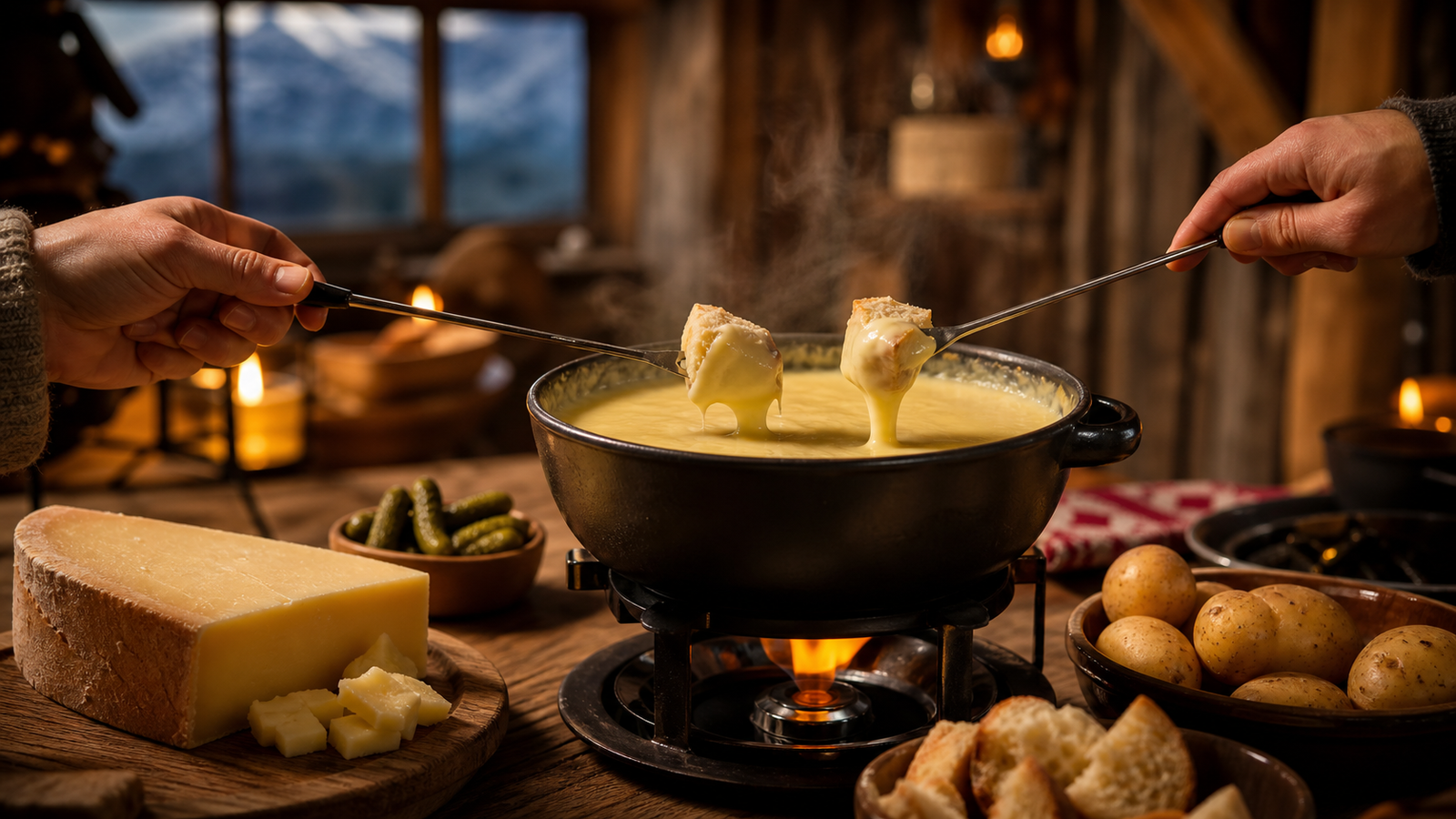
What Is the Most Iconic Swiss Food? Cheese Fondue
Cheese fondue is the dish that defines Switzerland internationally, and it earns that reputation. A shared pot of melted cheese arrives at the table with cubed white bread, long forks, and, at proper establishments, a small spirit burner to keep the temperature exact. It is the quintessential answer to what to eat in Switzerland during the colder months. The ritual of dipping bread into the communal pot fosters conversation and warmth, making it a social event as much as a meal. It is deeply embedded in the national identity, symbolizing unity and sharing among friends and family.
The canonical fondue uses Gruyère AOP as the base. Most restaurants blend it with a second cheese to adjust flavor and texture, creating a smooth, dip-able consistency. White wine and kirsch are essential ingredients in the pot, helping to emulsify the cheese and prevent it from separating. Local lore suggests that if you lose your bread in the pot, you must buy a round of drinks for the table or kiss your neighbor, adding a playful layer to the dining experience. Proper etiquette dictates that you should not double-dip your bread into the communal pot for hygiene reasons.
Classic Fondue Varieties
Three varieties appear on nearly every traditional menu, each offering a unique taste profile that reflects its canton of origin:
- Fondue Fribourgeoise: Made exclusively from Vacherin Fribourgeois AOP. It contains no wine, resulting in a creamier texture and milder flavor. This is the Fribourg original and is often considered the smoothest option.
- Fondue Moitié-Moitié: Half Gruyère AOP, half Vacherin Fribourgeois AOP. This is the benchmark version. It originates from the canton of Fribourg, where it has been made since at least the 18th century. Most Swiss people, when they say “fondue,” mean this specific blend.
- Fondue Neuchâteloise: A mix of Gruyère and Emmental in Neuchâtel white wine. It is sharper and thinner than Moitié-Moitié, offering a more robust flavor profile that pairs well with crisp whites.
Fondue is traditionally a cold-weather dish. Swiss people eat it between October and April. A restaurant serving it year-round is often responding to tourist demand rather than tradition. That said, it tastes good in any season, especially in air-conditioned rooms during summer.
Where to Eat the Best Fondue
Fribourg: The hometown of Moitié-Moitié. Several restaurants in the old town serve it from CHF 35-45 per person. This is where the dish was standardized, and the quality of local Gruyère is noticeably higher than in cities far from the source.
Zermatt: Restaurant Gitz-Gädi serves fondue at CHF 39 per person, including Valais dried meat and a Williams pear flambé. The alpine setting adds to the experience, making it memorable for visitors.
Zurich: Zeughauskeller, a former 15th-century armory near Paradeplatz, serves fondue for around CHF 38 per person. It seats over 200 people, making it one of the city’s more reliable large-group options for tourists.
Casual restaurants typically charge CHF 35-50 per person, while mid-range establishments may charge CHF 55-75 per person. Trip.com lists hotels in Fribourg and Zermatt with proximity to the old town, which matters when you are walking back after a full fondue pot and a carafe of Fendant.
Why Is Raclette a Valais Tradition Worth Every Franc?
Raclette is both a cheese and a dish. The cheese comes from the Valais canton and carries AOP status. The dish involves melting that cheese on a heated surface and scraping it directly onto boiled potatoes, pickled gherkins, and silverskin onions. It is a vital part of understanding Swiss food and what to eat in Switzerland. The presentation varies from table-side machines to individual grills, but the core experience remains the same. It is a favorite among skiers and hikers alike.
The word comes from the French verb racler, meaning to scrape. That single action defines the dish. In 2026, traditional table-side scraping is seeing a resurgence in high-end alpine restaurants as tourists seek authenticity over convenience. Watching the cheese melt and bubble is part of the entertainment.
What Makes Authentic Raclette Different?
Raclette du Valais AOP guarantees that the milk, production, and aging all occur within the designated Valais region. Supermarket raclette cheese exists and serves well at home. However, at a restaurant, asking for Raclette du Valais AOP specifically is worth the extra CHF 5-8 per person. The certification ensures strict quality control.
The flavor difference between generic raclette and the AOP version is genuine. The AOP version is firmer, slightly nutty, and holds its texture better when melted. Younger versions are milder; those aged 6-12 months carry more character. Valais white wines, particularly Chasselas (called Fendant locally) and Johannisberg, are the traditional pairing. A glass of cold Fendant alongside melted raclette is one of the most authentically Swiss combinations in the country.
Price Range and Where to Order It
Expect to pay CHF 35-55 per person for a full raclette meal at a mid-range restaurant. Prices fluctuate based on the amount of cheese served.
- Sierre, Valais: Château de Villa in Sierre is widely considered the reference point. They serve Raclette du Valais AOP for CHF 36 per person and offer pairings with Valais cantonal wines.
- Geneva: Brasserie des Halles de l’Île serves raclette year-round, useful for travelers arriving via Geneva airport who want to eat authentically before heading further east.
- Verbier and Saas-Fee: Most fondue restaurants in ski villages also serve raclette from November to April, catering to the winter sports crowd.
What Are the German-Swiss Kitchen Staples? Rösti and Zürcher Geschnetzeltes
German-speaking Switzerland accounts for roughly 63% of the population. Its two most distinctive dishes are a potato cake from Bern and a veal dish from Zurich. These are essential items on any list of Swiss food and
Editorial standards
Why trust this guide
- Route-checked. Itineraries, transfers and timings are verified against current public-transport schedules and operator pages.
- Honest comparisons. Hotel areas and tours are compared on real value — affiliate links never change the recommendation.
- Transparent. Some links are affiliate links; the disclosure is shown on every guide.
This guide is informational travel content, not professional travel, financial or legal advice. Always confirm prices, opening times and conditions with the official provider before you book.