If you’re planning a Grindelwald travel guide 2026 trip, here’s the short answer: base yourself in this Bernese Oberland village for four to five nights, ride the Eiger Express to Grindelwald Terminal for skiing or hiking beneath the Eiger’s north face, and buy a regional pass before you arrive because point-to-point tickets on the Jungfrau Railways add up fast. I’ve spent more winters and summers in this valley than I can comfortably count, and Grindelwald still surprises me every single time the clouds lift off the north face.
This guide covers everything you need for a 2026 trip: how to get there from Zurich, Geneva, or Bern, which hikes are worth your legs (and which aren’t), the two very different ski areas that share the Grindelwald name, the adventure activities that make First one of the most photographed mountains in Switzerland, where to sleep, when to go, and what it’s actually going to cost you in Swiss francs. No fluff, no recycled brochure copy — just what I’d tell a friend booking their first (or fifth) trip here.
How to Get to Grindelwald
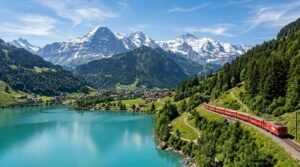
Grindelwald sits at 1,034 meters in the Bernese Oberland, and getting there is almost entirely by train — which is part of the charm. There’s no need to rent a car, and honestly, I’d actively discourage it since parking in the village is limited and expensive.
From Zurich, Geneva, and Bern
From Zurich main station, the journey takes roughly 2 hours 40 minutes with one change in Interlaken Ost, where you switch to the Bernese Oberland Railway (BOB) up to Grindelwald. From Geneva it’s closer to 3 hours 20 minutes, and from Bern you’re looking at about 1 hour 50 minutes. The Swiss rail network is punctual enough that I set my watch by it — connections in Interlaken Ost are typically 5 to 12 minutes, which feels tight until you realize Swiss trains almost always arrive on the dot.
Swiss Travel Pass and Regional Tickets
This is where first-timers overspend. A single return ride on the Eiger Express from Grindelwald Grund to Eigergletscher costs around CHF 90 without a discount, and mountain excursions to Jungfraujoch or First stack up quickly if you’re paying full fare each time. I’d strongly recommend sorting your rail pass before you land — Get your Swiss Travel Pass and you’ll get free travel on the national rail, bus, and boat network plus 25-50% off most mountain railways in the Jungfrau region, including First and the Eiger Express. For a week-long Bernese Oberland trip involving two or three mountain excursions, the pass pays for itself.
If you’re staying multiple nights in Grindelwald, ask your hotel for the Jungfrau Travel Pass (regional), which covers unlimited travel within the Jungfrau region for 3, 4, 6, or 8 days and is usually cheaper than the national pass if you’re not venturing outside the valley.
Best Hikes in Grindelwald
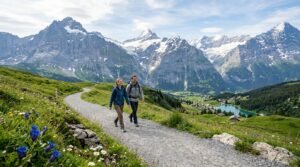
Grindelwald’s hiking trails range from stroller-friendly valley walks to genuinely committing alpine routes below the Eiger’s north face. Trail markers here are color-coded (yellow for easy, white-red-white for mountain trails requiring proper boots), and I’d trust that system — Swiss trail grading is conservative, not marketing.
First Cliff Walk by Tissot
This is the easiest big-view payoff in the whole region. Ride the First gondola from Grindelwald (25 minutes, departing roughly every few minutes in high season) up to 2,168 meters, and the Cliff Walk is a free metal platform bolted to the rock face right at the top station — a five-minute stroll with a 300-meter drop under your feet at one point. Even non-hikers do this one. It’s included with any First ticket and takes about 15-20 minutes round trip if you’re just doing the walk.
Bachalpsee Lake Trail
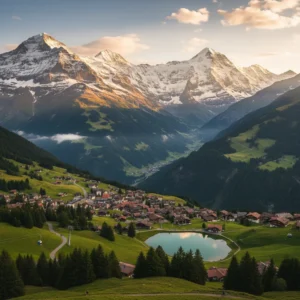
My personal favorite, and the most photographed hike in the region for good reason. From First, it’s a 4.5-kilometer, roughly 1.5-hour walk (one way) up to Bachalpsee at 2,265 meters, where on a still morning the Wetterhorn, Schreckhorn, and Fiescherhorn reflect perfectly in the water. Go early — by 11am in July and August the lakeshore gets crowded with day-trippers who arrived on the same gondola wave. The trail gains about 200 meters of elevation and is well-maintained gravel and packed earth, suitable for anyone with reasonable fitness and proper shoes.
Eiger Trail
This is the serious one. The Eiger Trail runs from Eigergletscher station (2,320m) down to Alpiglen (1,616m), tracing directly beneath the infamous north face — 6.4 kilometers, about 3 hours, with rockfall zones you’re advised not to linger in. I’ve done this trail on a clear September afternoon and stood in near-silence listening to actual rockfall echo off the wall above me. It’s not technical climbing, but it demands sturdy boots, respect for the terrain, and checking conditions at the tourist office before you set out, since sections close after heavy rain or snowmelt.
Grindelwald-First to Grosse Scheidegg
A longer alternative for experienced hikers wanting to avoid backtracking: from First, continue past Bachalpsee toward Faulhorn (2,681m) and down to Grosse Scheidegg, where a post bus (included on most regional passes) takes you back to the valley. Budget a full 6-7 hours and only attempt this between mid-June and October when the high passes are snow-free.
Skiing and Winter Sports in Grindelwald
Here’s something that trips people up: “Grindelwald skiing” actually refers to two separate ski areas linked by valley transport, not one connected mountain.
Grindelwald-Wengen (Kleine Scheidegg / Männlichen)
This is the classic area, home of the Lauberhorn World Cup downhill course — the longest on the circuit at 4.48 kilometers. The Grindelwald-Wengen-Mürren-Schilthorn area (marketed together as the Jungfrau Ski Region) offers around 206 kilometers of piste across all connected sectors, with the Kleine Scheidegg bowl delivering some of the most scenic skiing in the Alps, Eiger and Jungfrau looming directly over your shoulder on every run. Lift tickets for the full Jungfrau region run around CHF 79 for a day pass in the 2025/26 season (adult, high season pricing varies), with multi-day passes bringing the daily rate down noticeably.
Grindelwald-First
The First side is smaller and sunnier, popular with families and intermediate skiers, plus it stays open into a longer shoulder season on its upper slopes given the northeast exposure holding snow well. First also runs a dedicated snow park for freestyle skiers and boarders.
Season typically runs late November through mid-April depending on snowfall, though Jungfraujoch and the glacier areas offer some summer skiing access for the truly dedicated. Ski rental in the village runs roughly CHF 45-65/day for a full ski package; I’d book gear the evening before in peak weeks (late December, February school holidays) since shops do run short on popular sizes.
Top Things to Do in Grindelwald (Beyond Skiing)
Grindelwald-First has become an adventure park in its own right, and honestly some of it is more fun than the hiking.
First Flyer and First Glider
The First Flyer is a zipline that gets you up to 84 km/h suspended in a harness, running roughly 800 meters from the mountain station. The First Glider is the gentler cousin — you lie flat, arms out, gliding over the valley in a birdman-style harness for a longer, calmer ride. Both cost around CHF 30-35 depending on the season and can be combined with your First lift ticket.
Mountain Cart and Trotti Bike
In summer, rent a mountain cart (a low three-wheeled go-kart) or a trotti bike (scooter-style) and ride the marked trail down from Bussalp or First back toward the valley — no license required, just a helmet and a sense of humor about hairpin turns. It’s roughly CHF 25-40 for a half-day rental including the uplift.
Grindelwald Terminal and the Eiger Express
Opened in December 2020, the Grindelwald Terminal building is the new gateway to Kleine Scheidegg and Jungfraujoch, and the Eiger Express tricable gondola cut the ride to Eigergletscher from about 50 minutes on the old cogwheel train down to roughly 15 minutes. It’s a genuinely impressive piece of Swiss engineering — the cabins hold 26 people and climb nearly 1,000 vertical meters with sweeping views back over the valley. Whether you’re skiing, hiking, or heading to Jungfraujoch (the “Top of Europe” at 3,454m), this is now the main departure point, and I’d recommend booking your Jungfraujoch excursion in advance during summer since capacity is limited and it sells out on clear days.
For guided options — glacier walks, via ferrata, paragliding tandem flights over the valley, or a half-day Jungfraujoch excursion with a local guide — I’ve had good experiences booking through Book Grindelwald tours & activities on GetYourGuide, which lets you compare operators and read recent reviews before committing, particularly useful for weather-dependent activities like paragliding where you want an operator with flexible rebooking.
Village Life and the Museum
Don’t skip the village itself. Grindelwald’s chalet-style main street has a handful of good cheese and chocolate shops, and the small Grindelwald Museum near the church covers the valley’s mountaineering history, including the first ascents of the Eiger north face — worth 45 minutes on a rest day or a rainy afternoon.
Where to Stay in Grindelwald
Accommodation ranges from backpacker hostels to five-star chalet hotels, and location matters more than in most Swiss towns because of how the two mountain terminals sit at opposite ends of the village.
| Area | Best For | Typical Price (CHF/night) |
|---|---|---|
| Near Grindelwald Terminal | Skiers using Eiger Express, Jungfraujoch day-trippers | 150-400+ |
| Village center | First-time visitors, restaurants and shops walkable | 120-300 |
| Near First gondola station | Hikers heading to Bachalpsee, families | 110-280 |
| Grund (valley floor) | Budget stays, quick access to both terminals | 90-200 |
Prices climb sharply during the February ski holidays and July-August peak hiking season, so I always book at least two to three months out for those windows. For comparing current availability and locking in free-cancellation rates, Find Grindelwald hotels on Booking.com — I check it against direct hotel websites since some smaller family-run chalets offer slightly better direct rates if you email them.
Best Time to Visit Grindelwald in 2026
It genuinely depends on what you’re chasing.
- Late December to mid-April — ski season, with the best snow reliability typically January through March. Christmas and February school holidays (roughly Feb 7-22, 2026, though exact dates vary by canton) are the busiest and priciest weeks.
- Mid-June to early July — my favorite window. Alpine meadows are in full bloom, trails are open but not yet crowded, and accommodation is noticeably cheaper than August.
- July-August — peak hiking season, warmest weather, longest daylight, but also the busiest lifts and highest prices. Book Jungfraujoch tickets in advance.
- September to mid-October — clear, crisp air and fewer crowds, though some higher trails and mountain restaurants start closing by early October.
- Shoulder seasons (November, late April-May) — many lifts and hotels close for maintenance; I’d avoid unless you’re specifically after a quiet, low-cost trip with limited activities.
What Does a Grindelwald Trip Cost in 2026?
Rough daily budgets per person, excluding flights to Switzerland:
- Budget traveler: CHF 120-160/day (hostel dorm or budget guesthouse, groceries and casual meals, one paid activity every other day, regional transport pass)
- Mid-range: CHF 250-350/day (3-star hotel or guesthouse room, restaurant meals, daily lift or activity ticket, Swiss Travel Pass)
- Comfortable/luxury: CHF 500+/day (4-5 star chalet hotel, fine dining, guided tours, ski or Jungfraujoch passes)
A few concrete reference points: a cheese fondue dinner runs CHF 28-35 per person at most village restaurants, a cappuccino is around CHF 5, and a day pass covering the whole Jungfrau ski region sits around CHF 79 in the 2025/26 season. Switzerland isn’t cheap, but the mountain infrastructure — punctual trains, well-marked trails, mountain huts serving hot food at 2,000+ meters — genuinely justifies a good chunk of that premium.
Eating in Grindelwald: What to Expect and What to Order
Food in Grindelwald follows the Bernese mountain pattern: hearty, cheese-heavy, and priced for a resort village. A few specific recommendations worth knowing before you sit down anywhere.
What to Order
Cheese fondue and rösti (the Swiss fried-potato dish, usually topped with a fried egg and bacon or cheese) are the two dishes you’ll see on nearly every menu. Order Älplermagronen if you find it — an alpine take on mac and cheese with potatoes, onions, and apple sauce on the side, which sounds odd until you taste it after a full day on the Eiger Trail. Mountain restaurants at First and Bussalp serve simplified versions of the same menu, plus soup and bread, and I’ve never regretted stopping at one instead of packing a lunch — hot food at 2,000 meters after a cold morning hike is worth the CHF 18-22 it costs for a bowl of soup with bread.
Grocery Runs and Self-Catering
If you’re on a tighter budget, the Coop and Migros supermarkets in the village center are your friends — a sandwich, fruit, and a coffee from either will run you CHF 10-15, a fraction of a sit-down breakfast. Both open around 8am and close by 6:30-7pm on weekdays, earlier on Sundays when most shops in Switzerland close entirely, so stock up on a Saturday if you’re arriving on a Sunday.
Practical Tips From Someone Who’s Done This Trip Many Times
A handful of details that don’t make it into most guides but genuinely change how smooth your trip runs.
- Weather windows matter more than your itinerary. The Eiger north face creates its own microclimate, and a clear morning can cloud over by 11am. Check the live webcams on the Jungfrau Railways website the night before and again at breakfast, and be willing to swap your hiking day for your ski or museum day if visibility looks poor.
- Book Jungfraujoch tickets with a specific time slot in high season. Since capacity management was introduced, walk-up tickets on clear July and August days sometimes aren’t available until the afternoon, by which point clouds have often rolled in.
- Pack layers even in July. Grindelwald village sits at 1,034 meters, but First is at 2,168 meters and Jungfraujoch at 3,454 meters — a 20°C village morning can mean single digits and wind at altitude.
- Luggage transfer is available and worth it. If you’re moving between Grindelwald and another Bernese Oberland base like Wengen or Mürren, SBB’s luggage service will move your bags between hotels for a flat per-piece fee, which is far easier than hauling suitcases through multiple gondola and train changes.
- Cash still has a place. Most restaurants and shops take cards, but small mountain huts and the occasional trail-side kiosk are cash-only, so keep CHF 50-100 on you.
Frequently Asked Questions
How many days do I need in Grindelwald?
Three full days covers the highlights (First and Bachalpsee, one ski day or Jungfraujoch excursion, and a village/adventure day), but I’d recommend four to five nights if you want to add the Eiger Trail, a second ski area, or a rest day without rushing between gondolas.
Is Grindelwald good for beginners or only experienced skiers and hikers?
Both areas cater well to beginners — First has gentle blue runs and a dedicated ski school area, and the First Cliff Walk plus lower Bussalp trails are accessible to casual walkers. The Eiger Trail and off-piste terrain are for experienced visitors only.
Do I need a car to visit Grindelwald?
No. Grindelwald is fully served by train from Interlaken Ost, and once you’re there, gondolas, cable cars, and post buses reach every major trailhead and ski lift. A car adds cost and parking hassle without adding convenience.
What is the Eiger Express and how much does it cost?
The Eiger Express is a tricable gondola opened in 2020 that connects Grindelwald Terminal to Eigergletscher in about 15 minutes, replacing a much slower cogwheel train route. A return ticket runs roughly CHF 90 without a pass discount; Swiss Travel Pass holders get a significant reduction.
Can I see the Eiger north face up close without technical climbing skills?
Yes — the Eiger Trail from Eigergletscher to Alpiglen passes directly beneath the north face and requires only good fitness, proper hiking boots, and normal trail hiking skills, no climbing gear or experience needed.
What is the best month to visit Grindelwald for photography?
Late June for wildflower meadows against snow-capped peaks, or September for clear autumn light with far fewer crowds at Bachalpsee and First. Both beat the hazier, busier peak of July-August for photography.
About the Author
Emma Berger is a Switzerland travel writer based in the Bernese Oberland who has spent over a decade hiking, skiing, and reporting on the valleys around the Eiger, Mönch, and Jungfrau. She contributes regular destination guides to switzerlandvibe.com, drawing on firsthand trips, conversations with local mountain guides, and season-by-season visits to track how trail conditions, lift infrastructure, and pricing change year to year. Read more of Emma’s Switzerland guides, including nearby Interlaken travel guide and Jungfraujoch guide, for more Bernese Oberland trip planning.
Sources & Further Reading
Editorial standards
Why trust this guide
- Route-checked. Itineraries, transfers and timings are verified against current public-transport schedules and operator pages.
- Honest comparisons. Hotel areas and tours are compared on real value — affiliate links never change the recommendation.
- Transparent. Some links are affiliate links; the disclosure is shown on every guide.
This guide is informational travel content, not professional travel, financial or legal advice. Always confirm prices, opening times and conditions with the official provider before you book.