Best Time to Visit Switzerland 2026: Month-by-Month Guide (From a Resident)
Disclosure: This article contains affiliate links. We may earn a small commission at no extra cost to you if you purchase through these links.
Last Updated: March 2026
The best time to visit Switzerland is June through September for hiking, December through March for skiing, and May or October if you’re looking for lower prices with good weather. Switzerland truly offers four distinct seasons, and honestly, each one brings a dramatically different experience. After living here for 6 years and experiencing every month firsthand, I can tell you exactly what to expect and when to go based on what you want to do.
- Best overall: June and September (warm, less crowded, all facilities open)
- Best for skiing: January-February (best snow, all resorts open)
- Best for budget: November and March-April (lowest prices)
- Avoid: August for crowds, November for weather (grey, rainy, mountain closures)
- Worth mentioning, according to Switzerland Tourism (2025), summer (June-September) accounts for 55% of all tourist overnights
Table of Contents
- What is the weather like in Switzerland month by month?
- Why is summer the most popular time to visit?
- Is winter in Switzerland only for skiers?
- What makes spring an underrated choice?
- Why do locals prefer autumn?
- What are the best Swiss events and festivals?
- How we researched this guide
- FAQ
What is the weather like in Switzerland month by month?
| Month | Temp (Valley) | Conditions | Crowds | Prices | Best For |
|---|---|---|---|---|---|
| Jan | -2 to 4C | Snow, cold | Medium | High (ski) | Skiing |
| Feb | -1 to 6C | Snow, longer days | High (school hols) | Peak ski | Skiing, Carnival |
| Mar | 3 to 10C | Transitional | Low | Low | Spring skiing, cities |
| Apr | 8 to 15C | Variable | Low-Med | Low | Cherry blossoms, cities |
| May | 12 to 20C | Warm, green | Medium | Moderate | Hiking starts, flowers |
| Jun | 16 to 24C | Warm, long days | Medium-High | Moderate | Hiking, all passes open |
| Jul | 18 to 28C | Hot, sunny | High | Peak | Mountains, festivals |
| Aug | 17 to 27C | Hot, thunderstorms | Peak | Peak | Lake swimming, music fests |
| Sep | 14 to 22C | Warm, clear | Medium | Moderate | Hiking, wine harvest |
| Oct | 8 to 15C | Cool, autumn colors | Low-Med | Low | Fall foliage, wine |
| Nov | 2 to 8C | Grey, foggy | Lowest | Cheapest | Budget travel, museums |
| Dec | -1 to 5C | Cold, Christmas markets | Medium-High | High (holidays) | Christmas markets, skiing |
Why is summer the most popular time to visit?
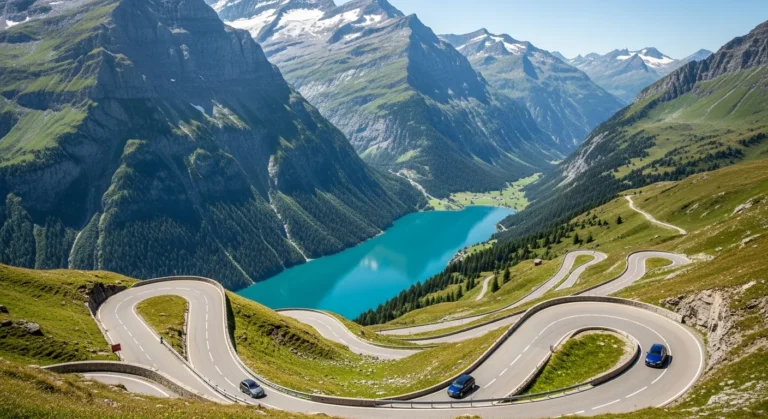
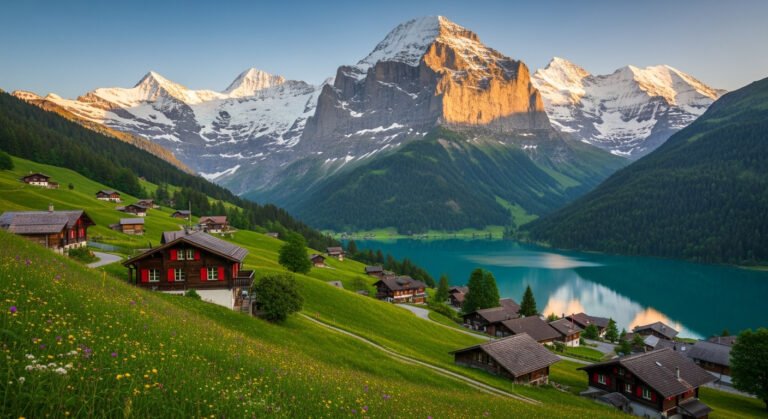
Summer (June-September) is when Switzerland truly shines. All the mountain passes are open, hiking trails are finally snow-free, lakes get warm enough for swimming (20-24C by August, can you believe it?), and daylight stretches out until 21:30.
June: my top recommendation
June combines everything you could want: meadows bursting with wildflowers, snow still clinging to the peaks (the contrast is absolutely stunning), all cable cars and mountain railways are running, and you’ll find fewer tourists than in July or August. Prices are also 15-20% lower than peak summer. What’s not to love?
One thing that surprised me as a new resident: Switzerland above 1,500m in June feels like a completely different country from the valleys. You can totally have breakfast at a lake cafe in shorts and then be hiking through snow patches just two hours later.
July-August: peak season realities
July and August bring the warmest weather (25-30C in the valleys), but let’s be real, they also mean the highest prices and biggest crowds. The Jungfraujoch train, for example, can have 2-hour waits. Hotels in Zermatt and Interlaken? They’ll charge 30-50% more than they would in June or September.
That said, August does offer Lake Zurich and Lake Geneva at their warmest, the famous Montreux Jazz Festival (with plenty of free outdoor concerts), and Swiss National Day (August 1st, expect fireworks everywhere!).
September: the insider’s month
September is actually when Swiss locals take their holidays. The crowds start thinning out after September 15, the weather stays excellent (18-24C), and the light turns this incredible golden hue. Plus, the Lavaux wine harvest, alpine cheese descents (Alpabfahrt/Desalpe), and autumn festivals create a really unique atmosphere. It’s my favorite.
Is winter in Switzerland only for skiers?
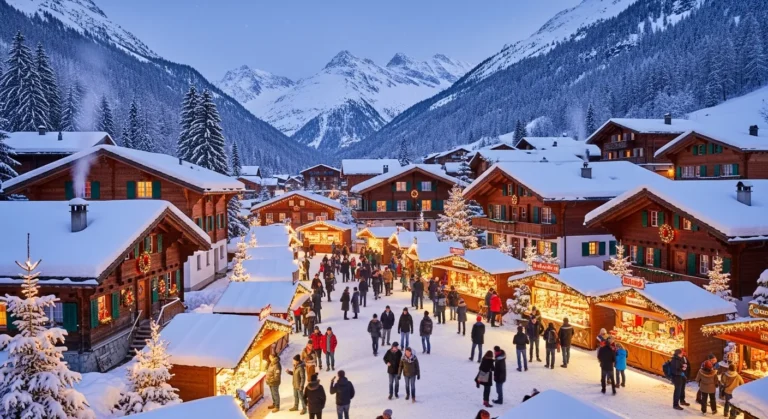
No, absolutely not! Winter Switzerland offers so much more: think charming Christmas markets (Zurich, Basel, Bern, Montreux), relaxing thermal spas, cozy fondue dinners in mountain restaurants, and exhilarating sledging (toboggan runs). Even the famous Glacier Express train, running from Zermatt to St. Moritz, is particularly dramatic in winter with its stunning snow-covered scenery.
Skiing: the numbers
Switzerland boasts over 300 ski resorts. The season generally runs from December to April, though some glaciers are open year-round. Lift pass prices typically range from 50-85 CHF/day at major resorts like Verbier, Zermatt, or St. Moritz. Want to save a bit? Budget resorts such as Savognin or Airolo charge 35-50 CHF/day for snow quality that’s just as good.
The Christmas market circuit
The best Christmas markets in Switzerland are Montreux (lakeside, with 170+ chalets), Basel (the oldest, running since 1471), Zurich (the Christkindlimarkt at the train station is Europe’s largest indoor market), and Bern (nestled in the UNESCO Old Town). They’re all free to enter and open from late November through December 23.
What makes spring an underrated choice?
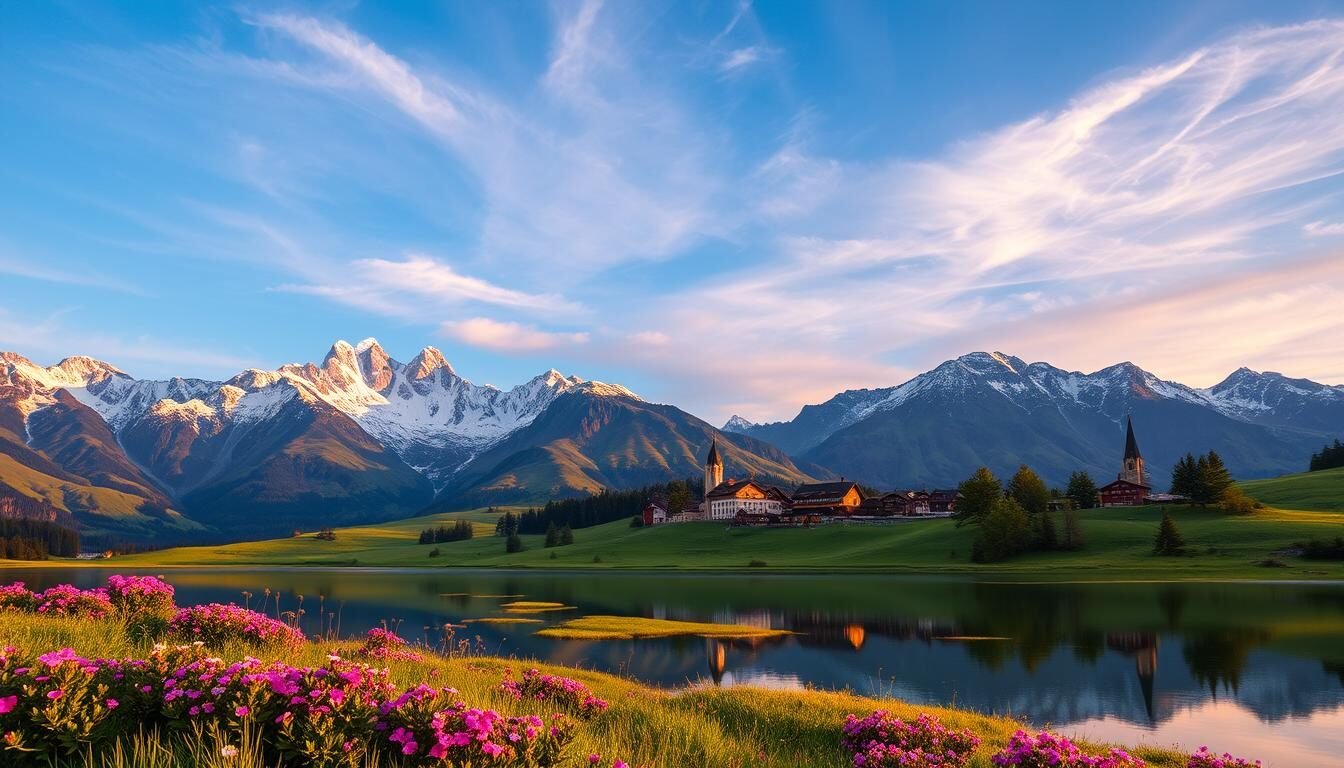
April-May is when Switzerland truly transforms from its grey winter slumber into an explosion of color. You’ll see cherry blossoms everywhere in the valleys (especially around Lake Zug and Basel), snow still on the mountains, and honestly, prices are at their lowest.
Here’s the catch: many mountain facilities close down between ski season (which ends mid-April) and summer season (starting mid-June). Some cable cars and mountain restaurants shut for maintenance. So, you need to check individual resort websites before planning your trip.
The upside? Cities like Zurich, Bern, Lucerne, and Geneva are absolutely perfect in spring. Temperatures are moderate, there are fewer tourists, and all the outdoor cafes start opening up. Plus, the Bern Rose Garden in May is simply spectacular.
Why do locals prefer autumn?
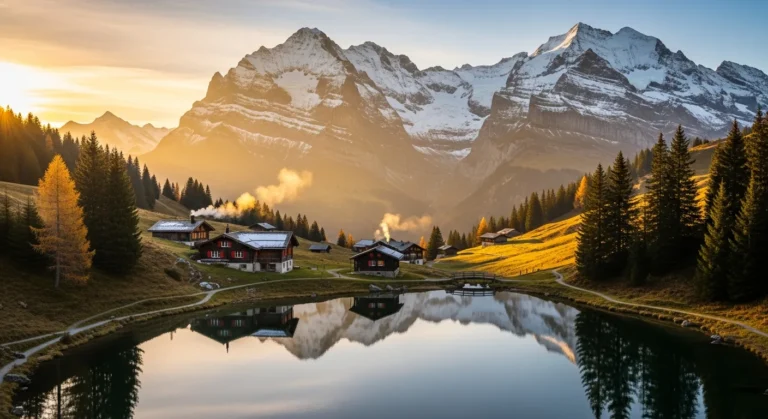
October in Switzerland is the season locals tend to keep for themselves. The larch trees turn this incredible golden color in Engadin (it’s one of the most photographed autumn scenes in Europe, I’m telling you!), vineyard harvests in Lavaux and Valais offer fantastic wine tastings, and that fog layer (Nebelmeer) below the Alps creates otherworldly scenes you can see from any summit above 1,500m.
Exclusive insight: the phenomenon known as “Nebelmeer” (sea of fog) happens from October to January. The valleys fill with thick fog while the mountains above bask in glorious sunshine. Standing on a peak, watching the fog flow between the mountains like an ocean, is one of the most surreal experiences Switzerland offers, and guess what? It’s completely free.
What are the best Swiss events and festivals?
- Montreux Jazz Festival (July): Two weeks of world-class music. You’ll find free outdoor concerts right on the lakefront. Paid shows typically run 60-200 CHF.
- Basel Fasnacht (February/March): This is Switzerland’s biggest carnival! Expect three days of parades, lantern marches at 4 AM (yes, AM!), and confetti everywhere. It’s even a UNESCO Intangible Heritage. Free to attend.
- Fête des Vignerons (once every 20+ years, last: 2019): The world’s most exclusive wine festival, held in Vevey. The next edition is expected around 2039-2045. Start planning now!
- Alpabfahrt/Desalpe (September): This is where cows, beautifully decorated with flowers, descend from their alpine pastures back to the valleys. You’ll find local cheese, wine, and music. It happens in multiple locations across the Alps and is free.
- Swiss National Day (August 1): Get ready for fireworks, bonfires on hilltops, and patriotic celebrations in every single village. Free events are everywhere.
How we researched this guide
FAQ
What is the cheapest month to visit Switzerland?
November. It offers the lowest accommodation prices, minimal crowds, but some attractions will be closed. March-April, however, gives you the best balance of low prices and decent weather.
Can I hike in Switzerland in May?
In the valleys (below 1,000m): yes, it’s excellent. Above 1,500m: trails may still have snow. Most high-altitude trails generally open mid-June. But lower trails like the lakeside paths, vineyard walks, and city hikes are absolutely perfect in May.
Is Switzerland crowded in summer?
Popular spots like Jungfraujoch, Zermatt, and Lucerne are definitely very crowded in July-August. However, Switzerland has so much space that venturing just 30 minutes off the main tourist trail usually means finding complete solitude. Lesser-known valleys such as Lauterbrunnen’s Sefinen Valley or Ticino’s Val Bavona are nearly empty, even in peak summer.
What should I pack for Switzerland?
Layers, layers, layers! Even in summer, mountains can be 10-15C cooler than the valleys. Always carry a rain jacket, a warm layer, sunscreen (UV is stronger at altitude, don’t forget it!), comfortable walking shoes, and a refillable water bottle.
Do I need ETIAS?
Yes, since 2025. Switzerland is part of the Schengen Area. ETIAS costs 7 EUR and is valid for 3 years. You can apply at etias.ec.europa.eu.
Sources
- Switzerland Tourism – Seasonal Statistics 2025
- MeteoSwiss – Climate Data 2020-2025
- BFS – Tourism Overnight Statistics 2025
- SBB – Transport Pricing 2026
Thomas Weber has experienced every Swiss season multiple times during 6 years of residency. He shares month-by-month travel insights on SwitzerlandVibe.