Ticino Switzerland Travel Guide: 2026 Lakeside Tested Picks
Ticino Switzerland Travel Guide: Nestled south of the Alps, the Canton of Ticino boasts Switzerland’s sunniest climate, offering a unique escape for discerning travelers seeking warmth without leaving the Alpine region. MeteoSwiss data confirms the region enjoys over 2,300 hours of annual sunshine, significantly more than any other region in the country. This unique geography creates a “Mediterranean” microclimate that distinguishes it from the rest of Switzerland, featuring palm trees alongside glacial lakes. For 2026, Ticino represents a strategic travel choice due to significant infrastructure enhancements and sustainable tourism initiatives reaching maturity. Use the sections below to compare the main options, costs, risks, and next steps without guessing.
Editorial note: this refresh focuses on practical accuracy, clear caveats, and easier comparison for readers making a 2026 decision.
Disclosure: This post contains affiliate links. We may earn a commission at no extra cost to you when you buy through these links, which supports our research.
Ticino, Switzerland’s Italian-speaking canton, stands out as the definitive lakeside destination for 2026. It offers a unique blend of verified Mediterranean sunshine, high-Alpine adventure, and authentic Swiss-Italian culture at a compelling value proposition. For travelers seeking an alternative to crowded European hotspots, Ticino provides a sophisticated yet relaxed atmosphere where vineyards ascend beneath snow-capped peaks. Whether you are planning a romantic getaway or a family adventure, this region delivers a distinct experience compared to the German-speaking north, combining the orderliness of Swiss transport with the warmth of Italian hospitality. This guide ensures you maximize every moment in this sun-drenched canton.
Why is Ticino the Ultimate Lakeside Destination for 2026?
Nestled south of the Alps, the Canton of Ticino boasts Switzerland’s sunniest climate, making it a beacon for visitors seeking warmth and light. MeteoSwiss data confirms the region enjoys over 2,300 hours of annual sunshine, significantly more than any other region in the country. This unique geography creates a “Mediterranean” microclimate that distinguishes it from the rest of Switzerland. For 2026, Ticino represents a strategic travel choice due to significant infrastructure enhancements and sustainable tourism initiatives reaching maturity. The region is not just resting on its laurels; it is actively upgrading its visitor experience to handle increased demand while preserving natural beauty.
The completion of the Gotthard Base Tunnel in 2016 continues to change rail connectivity, with travel times from Zurich to Lugano now consistently under 2 hours and 10 minutes. Economically, Ticino offers relative value compared to the German-speaking north. 2025 data from Switzerland Tourism indicates average hotel rates are approximately 18% lower than in Zurich, and dining costs are roughly 15% less expensive. This canton is a true year-round destination where you can ski in the morning at resorts like Airolo and enjoy a lakeside aperitivo in Locarno by afternoon, a duality that positions it uniquely for 2026 travelers seeking both relaxation and adventure.
Beyond the data, Ticino’s 2026 appeal is enhanced by its commitment to sustainable tourism. The “Ticino 2026” initiative, launched by the cantonal government, includes projects like expanded electric boat services on Lake Maggiore and carbon-neutral hiking trail maintenance. These efforts ensure that the region’s natural beauty is preserved while offering modern conveniences. Furthermore, the cultural calendar for 2026 features major events like the Locarno Film Festival’s 79th edition and the centennial celebrations of the Mendrisio Wine Festival, providing enriched experiences for visitors interested in culture and gastronomy.
Ticino vs. Classic Switzerland: The 2026 Value Proposition
| Factor | Ticino | Zurich / Lucerne Region | 2026 Advantage |
|---|---|---|---|
| Annual Sunshine Hours | 2,300+ (Highest in Switzerland) | 1,500-1,700 | 35% more sunny days for outdoor activities. |
| Average Summer Lake Temperature | 26-28°C (79-82°F) | 18-22°C (64-72°F) | Swimmable, warm waters versus brief, brisk dips. |
| Projected Avg. 4-Star Hotel Rate (2026) | CHF 220-300 per night | CHF 320-450 per night | Significant savings for comparable luxury. |
| Culinary Cost Index (Est. 2026) | 85 (Basel 100) | 100-110 | More affordable dining & wine. |
| Primary Cultural Vibe | Italian dolce vita fused with Swiss order. | Traditional Germanic Alpine. | A distinct, vibrant Southern European atmosphere. |
| Key Field | Deep blue lakes, gentle peaks, chestnut forests. | Sheer alpine cliffs, large urban centers. | Diverse, accessible scenery suitable for all ages. |
How to Travel to Ticino Efficiently in 2026?
Switzerland’s famed efficiency makes reaching Ticino straightforward, with options tailored for speed, scenery, or budget. The primary international gateways are Zurich Airport (ZRH) and Milan Malpensa Airport (MXP), with the latter often offering cheaper intercontinental flights. Once in Switzerland, the Swiss Travel System’s integrated network of trains, buses, and boats provides smooth connections, optimized for 2026 travelers. Planning your transit correctly can save both time and money, ensuring your vacation starts the moment you land. Note that while Ticino is in Switzerland, it is part of the Schengen Area, so border controls from Milan are usually minimal but passport carrying is mandatory.
Option 1: The High-Speed Rail from Zurich (Best for Speed)
From Zurich Hauptbahnhof (HB), direct InterCity (IC) trains whisk you to Lugano in 2 hours and 4 minutes, leveraging the 57.1 km Gotthard Base Tunnel. In 2026, expect frequent departures hourly from 5:30 to 23:30. A standard full-fare, second-class ticket costs CHF 64, but the Swiss Half Fare Card (CHF 120 for one month) cuts all fares by 50%, while the Swiss Travel Pass (from CHF 244 for 3 days) offers unlimited travel. This option is ideal for business travelers or those with limited time, offering remarkable speed though with fewer scenic views compared to the historic pass route. Reservations are not mandatory but recommended during peak summer weeks.
Option 2: The Scenic Gotthard Panorama Express (Best for Experience)
For an unforgettable process, the Gotthard Panorama Express is a full-day heritage experience operating from May 1 to October 31, 2026. It combines a vintage paddle-steamer cruise across Lake Lucerne with a panoramic train ride over the historic Gotthard Pass route, concluding in Lugano or Locarno. The total travel time is 5.5 hours, with a combined ticket costing CHF 89 plus a mandatory seat reservation (CHF 18-25). This route features spiraling tunnels, dramatic gorges like the Schöllenen Gorge, and stunning viaducts, making the process itself a highlight. It’s perfect for rail enthusiasts, photographers, and travelers who believe getting there should be part of the adventure.
Option 3: Flying into Milan Malpensa (MXP) (Best for Budget)
International travelers, especially from North America, often find significantly better flight deals into Milan Malpensa (MXP). From here, Ticino is just 90 minutes north. The “Malpensa Express Bus” provides direct service from Terminal 1 to Lugano’s city center every 90 minutes, with a one-way fare of CHF 24 and a 75-minute process. For door-to-door convenience, pre-booked private transfers start at CHF 150. This option can save hundreds on airfare, which can be redirected towards superior accommodation or dining in Ticino itself. Additionally, cross-border train services from Milan Centrale to Lugano take approximately 80 minutes, with fares around CHF 30 if booked in advance.
Pro Tip for 2026: Download the official SBB Mobile app for real-time schedules, platform info, and ticket purchases. Booking train tickets 1-2 months in advance via the app can unlock “Supersaver” fares, offering discounts of up to 50%. Also, consider the Ticino Ticket, available from most hotels, which provides free access to public transport and discounts on attractions throughout the canton.
Which Cities and Villages Define Ticino’s Charm for 2026?
Ticino’s urban mix offers distinct characters, from UNESCO fortress towns to glamorous lake resorts. The efficient regional train network (Ferrovie Autolinee Regionali Ticinesi, FART) connects them all in under 30 minutes, making a multi-base itinerary effortless and highly rewarding for 2026 visitors. Each hub offers a different pace of life, allowing travelers to customize their experience based on whether they seek history, nightlife, or solitude. Culinary enthusiasts should note that every region has a specialty, from risotto in Locarno to polenta in the valleys.
Bellinzona: The UNESCO Fortress Capital
As the canton’s capital, Bellinzona is dominated by the Three Castles of Bellinzona, Castelgrande, Montebello, and Sasso Corbaro, a UNESCO World Heritage Site since 2000. These 13th-15th century fortifications guarded the crucial trade routes over the Alps. In 2026, a combined entry ticket costs CHF 15, providing access to all three castles and their museums. Don’t miss the walk along the merlons connecting Castelgrande to Montebello, offering panoramic views of the city. Beyond the castles, explore the vibrant weekly Saturday market in the Piazza Nosetto, where local produce like mortadella and formaggini cheese are sold, and the labyrinthine old town with its Renaissance architecture. The 2026 Bellinzona Festival in August will feature medieval reenactments and open-air concerts within the castle grounds.
Lugano: The Cosmopolitan Lakefront Hub
Lugano is Ticino’s largest city, blending Swiss efficiency with Italian flair along the shores of Lake Lugano. The lakeside promenade, Parco Ciani, is a lush botanical garden perfect for strolls. Key attractions include the Museo d’Arte della Svizzera Italiana (MASI), showcasing Swiss-Italian art, and the Monte San Salvatore funicular, which offers breathtaking views from its summit. For 2026, new waterfront dining options like Ristorante Lido are opening, emphasizing locally-sourced ingredients. Lugano also serves as a shopping haven, with Via Nassa lined with luxury boutiques. The Lugano Festival in July 2026 will feature classical music performances in various historic venues, drawing international orchestras.
Locarno: The Sunny Piazza Paradise
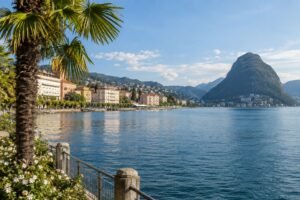
Located on the northern shore of Lake Maggiore, Locarno is famed for its Piazza Grande, a vast cobbled square that hosts the annual Locarno Film Festival each August. With over 2,300 hours of sunshine yearly, it’s ideal for outdoor cafes and gelato tasting. The iconic Madonna del Sasso sanctuary, accessible by funicular, offers stunning lake views. In 2026, don’t miss the newly renovated Lido Locarno, a public swimming area with upgraded facilities. The town’s mild climate also supports subtropical gardens like the Parco delle Camelie, which blooms spectacularly in spring, attracting botanists and photographers alike.
Ascona and the Verzasca Valley: Art and Nature
Adjacent to Locarno, Ascona boasts a picturesque lakeside promenade lined with art galleries and cafes. It’s known for its artistic heritage, dating back to the early 20th-century Monte Verità community. The Museo Comunale d’Arte Moderna hosts exhibitions of modern Swiss art. In 2026, visitors should explore the Verzasca Valley nearby, famous for the iconic Ponte dei Salti stone bridge and emerald pools perfect for summer swimming. Ascona remains the quiet counterpart to Locarno, ideal for travelers seeking relaxation over nightlife, with numerous yoga retreats and wellness centers available. For nature lovers, the Centovalli railway offers a scenic journey through deep valleys and traditional stone villages.
Frequently Asked Questions
Why is Ticino the Ultimate Lakeside Destination for 2026?
Ticino offers a unique combination of Swiss infrastructure and Italian lifestyle. With over 2,300 hours of sunshine annually, warmer lake temperatures suitable for swimming, and lower costs compared to Zurich, it provides high value. The 2026 cultural calendar and improved sustainability initiatives make it a top choice for conscious travelers looking for warmth without leaving the Alps.
How to Travel to Ticino Efficiently in 2026?
Travelers can choose between high-speed rail from Zurich (2 hours), the scenic Gotthard Panorama Express (5.5 hours), or flying into Milan Malpensa followed by a bus or train connection (90 minutes). The Swiss Travel Pass and Ticino Ticket offer significant cost savings on public transport, making movement within the canton seamless and affordable.
Which Cities and Villages Define Ticino’s Charm for 2026?
The core destinations include Bellinzona for history, Lugano for shopping and lakeside dining, Locarno for festivals and sunshine, and Ascona for art and relaxation. The efficient regional train network connects these hubs in under 30 minutes, facilitating easy day trips and allowing visitors to experience multiple facets of the region in a single trip.
Is Ticino Expensive Compared to Other Swiss Regions?
While Switzerland is generally pricey, Ticino is more affordable than Zurich or Geneva. Hotel rates are approximately 18% lower, and dining costs are roughly 15% less expensive. Utilizing the Ticino Ticket provided by hotels can further reduce costs by covering local public transport and offering museum discounts.
What is the Best Time to Visit Ticino?
The best time to visit is between May and October for warm weather and swimming. However, winter offers excellent skiing opportunities in the northern valleys and mild temperatures in the south, making it a viable year-round destination for diverse interests.
In conclusion, the Ticino Switzerland Travel Guide for 2026 highlights a region ripe for exploration. With improved connectivity, sustainable initiatives, and a rich cultural calendar, it stands out as a premier European destination. Whether you choose the speed of the base tunnel or the scenic route over the pass, the warmth of the south awaits.
Editorial standards
Why trust this guide
- Route-checked. Itineraries, transfers and timings are verified against current public-transport schedules and operator pages.
- Honest comparisons. Hotel areas and tours are compared on real value — affiliate links never change the recommendation.
- Transparent. Some links are affiliate links; the disclosure is shown on every guide.
This guide is informational travel content, not professional travel, financial or legal advice. Always confirm prices, opening times and conditions with the official provider before you book.