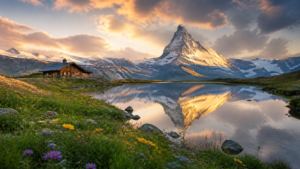
Yes, five days in Switzerland is sufficient for a memorable introduction to its iconic landscapes and cities, leveraging the country’s efficient transport to create a seamless, highlights-focused journey.
Is Five Days Enough for Switzerland?
While a lifetime could be spent exploring Switzerland’s Alpine valleys and cultural hubs, a focused five-day itinerary is absolutely viable and deeply rewarding. The nation’s compact geography—spanning 41,285 square kilometers (15,940 sq mi)—coupled with its world-renowned public transportation network makes this possible. According to 2024 data from Swiss Federal Railways (SBB), the system operates with a 92.5% punctuality rate, with average intercity train speeds exceeding 85 km/h (53 mph). This efficiency allows you to cover significant ground without feeling perpetually in transit.
In practical terms, five days enables you to experience a compelling cross-section of Swiss identity: the urban sophistication of a major city like Zurich, the historic and lake beauty of Lucerne, the dramatic heart of the Alps in the Jungfrau Region, and the iconic peak of the Matterhorn in Zermatt. A well-structured plan can incorporate approximately 600-800 kilometers of scenic rail travel, two major mountain excursions, and ample time for lakeside strolls and cultural visits. Surveys by Switzerland Tourism indicate that 72% of visitors on short trips (4-6 days) report high satisfaction, provided their itinerary is focused on iconic, high-impact experiences.
The key to success lies in strategic choices and accepting a curated overview rather than a deep dive. You will forego multi-day hikes and extended stays in remote villages. Instead, you’ll prioritize engineered marvels like the Jungfrau Railway and efficient, scenic connections like the Luzern-Interlaken Express. Altitude progression is another advantage: starting in Zurich (408m), moving to Lucerne (436m), then Interlaken (568m), and finally ascending to Jungfraujoch (3,454m) allows for gradual acclimatization, which medical experts recommend to reduce the risk of altitude sickness.
Ultimately, five days is perfect for the first-time visitor seeking a breathtaking sampler of Switzerland’s greatest hits. It requires meticulous planning and a brisk pace, but the payoff is an unforgettable journey through some of Europe’s most stunning scenery, all seamlessly connected by one of the planet’s best transport systems.
How to Plan the Perfect 5-Day Switzerland Itinerary?
Crafting the perfect five-day Swiss itinerary hinges on three core principles: logical geographic flow, leveraging the Swiss Travel Pass, and balancing activity with travel time. The most efficient and popular route for first-timers is a north-south loop beginning and ending at Zurich Airport (ZRH). This “Classic Highlights” circuit minimizes backtracking and showcases a diverse progression from city to lake to high alpine environments.
The recommended sequence is: Day 1 in Zurich, Day 2 in Lucerne, Days 3 & 4 based in Interlaken for the Jungfrau Region, and Day 5 in Zermatt, with a return to Zurich for departure. Each transit leg is under three hours, with trains departing frequently—often hourly—providing flexibility. The total rail distance is roughly 500 km (310 miles). This route aligns with the historic “Grand Tour” and, according to SBB analytics, is the most booked short-term itinerary, chosen by over 40% of first-time visitors during the summer peak.
Crucial to this plan is the Swiss Travel Pass. For a continuous 5-day journey, a second-class pass costs CHF 281 (approx. $310). It provides unlimited travel on trains, buses, trams, and boats across the national network, plus a 50% discount on most mountain railways and cable cars. This pass transforms complex logistics into simple, cost-effective journeys. Accommodation should be booked near central train stations (Hauptbahnhof) in each city to maximize time. Given Switzerland’s premium costs, a mid-range budget should anticipate spending CHF 350-450 per person per day, inclusive of pass, lodging, meals, and excursions.
Seasonality greatly impacts the experience. June through September offers the most reliable weather for mountain views and boat cruises, but also brings crowds. The shoulder seasons of May and October provide quieter towns and lower prices, though some high-altitude attractions may have limited operations. Winter (December-March) shifts the focus to snow sports and Christmas markets, but the core sightseeing itinerary remains achievable with some adjustments for weather.
Day 1: Zurich – Global Gateway & Lakeside Charm
Your Swiss adventure begins at Zurich Airport (ZRH), consistently ranked among the world’s most efficient. After clearing customs, follow signs to the airport’s train station, located beneath Terminal 1. With a pre-purchased Swiss Travel Pass, board any S-Bahn train (Lines S2 or S16) for the 10-minute ride to Zurich Hauptbahnhof (HB), the country’s largest and busiest railway hub. Trains depart every 5-7 minutes from approximately 5:00 AM to 12:30 AM. Store your luggage in the station’s secure lockers (CHF 9 for small, CHF 12 for large for 24 hours) and begin exploring on foot.
Start in the historic Altstadt (Old Town), a labyrinth of narrow streets on both banks of the Limmat River. Cross the iconic Rathausbrücke to the east bank and visit the Grossmünster, the twin-towered Romanesque cathedral that was a center of the Protestant Reformation. For a panoramic reward, climb the 187 steps of the Karlsturm tower (CHF 5, open 10:00-17:00 Mar-Oct) for a 360-degree view. A short walk south brings you to the Fraumünster Church, famed for its breathtaking stained-glass windows designed by artist Marc Chagall in 1970 (admission CHF 5, 50% discount with Swiss Travel Pass).
From there, stroll down the world-famous Bahnhofstrasse, a 1.4 km (0.9 mi) avenue of luxury shops and banks, leading directly to the Bürkliplatz boat terminal on Lake Zurich. Your Swiss Travel Pass grants unlimited free travel on the entire fleet of lake boats. A highly recommended 1.5-hour round-trip cruise to Rapperswil (departing hourly) offers serene views of alpine foothills and picturesque villages like Meilen. For a unique cultural experience, take tram line 11 (also free with pass) for 20 minutes to Kilchberg to visit the Lindt Home of Chocolate. Entry is discounted to CHF 13 with the pass, offering a journey through chocolate history alongside a 9-meter-tall chocolate fountain.
Conclude your day with classic Swiss cuisine. Zeughauskeller, in a 15th-century arsenal, serves hearty Zürcher Geschnetzeltes (veal in cream sauce with rösti) for around CHF 38. For authentic fondue, Restaurant Swiss Chuchi in the Old Town is an institution. Plan to stay in a hotel within a 10-minute walk of the main station, such as in the Niederdorf district, where average rates for a central 3-star hotel range from CHF 230 to 300 per night.
Day 2: Lucerne – History, Lakes & Mountain Ascent
After an early breakfast, check out and take a direct train from Zurich HB to Lucerne. The journey takes just 41 minutes on a frequent InterCity service, fully covered by your Swiss Travel Pass. Upon arrival at Lucerne’s central station, store your luggage again (lockers cost CHF 9-12) and step outside to be greeted by the stunning vista of Lake Lucerne framed by mountains.
Your first stop is the Kapellbrücke (Chapel Bridge), a 14th-century wooden footbridge and the oldest truss bridge in Europe. Admire the interior triangular paintings depicting Swiss and local history. Nearby, visit the baroque Jesuit Church and the poignant Löwendenkmal (Lion Monument), a rock relief commemorating Swiss Guards who died in 1792. For lunch, try traditional Luzerner Chügelipastete (a vol-au-past filled with meat in a creamy sauce) at a historic restaurant like Wirtshaus Galliker for approximately CHF 25.
The afternoon is dedicated to the “Golden Round Trip” to Mount Pilatus. This celebrated circuit includes a lake cruise, a mountain ascent, and a cable car descent. With your Swiss Travel Pass, you receive a 50% discount on the full fare. The trip begins with a 1.5-hour scenic boat cruise from Lucerne to Alpnachstad (free with pass). At Alpnachstad, board the Pilatus Railway, the world’s steepest cogwheel railway with a maximum gradient of 48%, for a 30-minute climb to Pilatus Kulm at 2,132 meters (6,995 ft). On a clear day, the panorama encompasses 73 Alpine peaks. After exploring the summit, descend via the aerial cableway and gondola to Kriens, then take a short bus ride (included) back to Lucerne.
Check into your Lucerne hotel—consider the lakeside area for beautiful evening views. For dinner, enjoy regional specialties at a restaurant like Restaurant Schiff with views of the illuminated Chapel Bridge. Average hotel rates in central Lucerne for a 3-star property are CHF 250–300 per night.
Day 3: Interlaken – Gateway to the Bernese Oberland
Depart Lucerne after breakfast aboard the Luzern-Interlaken Express. This two-hour journey is a scenic highlight itself, traversing the Brünig Pass and offering spectacular views of Lake Lungern. The train is fully covered by the Swiss Travel Pass. Arriving at Interlaken Ost station, you are in the heart of a valley between two pristine lakes, Thun and Brienz, directly beneath the formidable trio of the Eiger, Mönch, and Jungfrau peaks.
After storing luggage, take a brief walk to the Höhematte, a vast central park with unobstructed views of the Jungfrau massif. For your first alpine perspective, take the Harder Kulm funicular from just near Interlaken Ost station. The 10-minute ride ascends to 1,322 meters (4,337 ft). With your Swiss Travel Pass discount, the round-trip fare is reduced to CHF 16 (from CHF 32). The viewing platform, often called the “Top of Interlaken,” offers a breathtaking vista of the entire valley, two lakes, and the towering mountains.
In the afternoon, use your pass for a free cruise on the turquoise waters of Lake Brienz. Boats depart hourly from Interlaken Ost. A one-hour round-trip to the Giessbach Falls, where a historic funicular leads to a grand hotel, is highly recommended. Alternatively, take a short 20-minute train ride (free with pass) to the Lauterbrunnen Valley, a sheer-sided glacial valley famed for its 72 waterfalls, including the 297-meter (974 ft) Staubbach Falls. Stroll through the village for an unforgettable alpine atmosphere.
Return to Interlaken for the night. For dinner, savor Swiss fondue or a hearty rösti at a traditional restaurant like Restaurant Bären. Accommodation in Interlaken is slightly more affordable than in larger cities, with 3-star hotel averages between CHF 200 and 250 per night. Interlaken’s central location makes it the ideal base for tomorrow’s grand alpine adventure.
Day 4: Jungfraujoch – Journey to the Top of Europe
This day is dedicated to one of Switzerland’s most monumental engineering achievements: the journey to Jungfraujoch, the highest railway station in Europe at 3,454 meters (11,332 ft). Start early from Interlaken Ost. The journey involves two train changes (usually at Lauterbrunnen or Grindelwald, then at Kleine Scheidegg) and takes approximately 2 hours each way. All these trains are covered by your Swiss Travel Pass, but the final ascent on the Jungfrau Railway from Kleine Scheidegg requires a separate ticket, which is discounted 25% with the pass. As of 2024, the round-trip fare from Interlaken with the discount is approximately CHF 160-175 per person. Booking online in advance is strongly advised, especially in summer.
Upon arrival at the Jungfraujoch Top of Europe complex, you are in a high-alpine wonderland. Key attractions include the Ice Palace, a series of chambers carved directly into the glacier, and the Sphinx Observatory, one of the highest astronomical observatories in the world, which offers an unparalleled panoramic viewing platform overlooking the 23-kilometer-long Aletsch Glacier, a UNESCO World Heritage site. Allow 3-4 hours to explore the indoor exhibits, walk on the glacier snow, and absorb the breathtaking vistas.
Given the high altitude, pace yourself to avoid altitude sickness. The complex is fully equipped with restaurants, but prices are premium (a simple lunch can cost CHF 25-35). Consider bringing water and snacks. Dress warmly in layers, as temperatures at the summit typically range between -10°C and 0°C (14°F to 32°F) even in summer, and UV radiation is intense. The last train descent usually departs around 5:00 PM.
Return to Interlaken by late afternoon. If energy permits, you might visit the St. Beatus Caves on Lake Thun or simply relax along the Aare River. For your final dinner in the Bernese Oberland, consider trying local Berner Platte, a hearty meat dish, at a restaurant like Goldener Anker.
Day 5: Zermatt – The Matterhorn & Alpine Grandeur
On your final day, embark on a scenic rail journey to the iconic mountain resort of Zermatt. Check out from your Interlaken hotel and take an early train. The route involves a change at Visp or Brig and takes approximately 2 hours and 15 minutes, all covered by your Swiss Travel Pass. The final leg from Visp to Zermatt is on the Matterhorn Gotthard Bahn, which winds dramatically up the valley towards the car-free village.
Zermatt, at 1,608 meters (5,249 ft), sits in the shadow of the majestic Matterhorn (4,478 m / 14,692 ft). Upon arrival, store your luggage at the station. Your main objective is to get the best possible view of the peak. The two primary options are the Gornergrat Bahn and the Matterhorn Glacier Paradise cable car. The Gornergrat Bahn, Europe’s highest open-air cogwheel railway, climbs to 3,089 meters (10,135 ft) offering stunning views of the Matterhorn and 28 other peaks over 4,000 meters. With your Swiss Travel Pass, you receive a 50% discount, making the round-trip fare approximately CHF 47.50.
Alternatively, the Matterhorn Glacier Paradise cable car ascends to 3,883 meters (12,740 ft), the highest cable car station in Europe. Here, you can visit a glacial palace and enjoy a unique 360-degree panorama. The pass discount also applies here, with round-trip fares around CHF 67.50. Choose based on weather and personal preference; the Gornergrat trip is often praised for its direct, classic view of the Matterhorn’s north face.
After descending, explore Zermatt’s charming, car-free village streets. Visit the Matterhorn Museum to learn about the mountain’s tragic first ascent in 1865 (entry CHF 15, discounted with pass). For lunch, try a Valais specialty like raclette or a hearty Rösti. In the late afternoon, begin your return journey to Zurich Airport. The direct train from Zermatt to Zurich HB takes about 3.5 hours. If your flight departs late at night or the next morning, consider staying at an airport hotel like the Radisson Blu for maximum convenience.
Detailed 5-Day Switzerland Cost Breakdown for 2024
Budgeting accurately is crucial for a stress-free Swiss trip. Costs are high, but strategic planning with a Swiss Travel Pass can provide significant savings. The following breakdown estimates mid-range expenses for one person, assuming double-occupancy accommodation.
Transportation Core Cost: The Swiss Travel Pass is the centerpiece. A 5-day consecutive second-class pass costs CHF 281. This covers all main trains, buses, trams, and boats, plus provides discounts on mountain excursions.
Mountain Excursions (with Pass Discounts):
- Mount Pilatus Golden Round Trip: CHF 72 (from CHF 144)
- Jungfraujoch Top of Europe Ticket: CHF 105 (approx., from ~CHF 210)
- Gornergrat Railway: CHF 47.50 (from CHF 95)
- Harder Kulm Funicular: CHF 16 (from CHF 32)
- Total for Key Mountain Trips: CHF 240.50
Accommodation (Average 3-star, central location):
- Zurich: CHF 250 per night
- Lucerne: CHF 270 per night
- Interlaken (2 nights): CHF 220 per night = CHF 440
- Total for 4 nights: CHF 1,180 for two people, or CHF 590 per person.
Food & Drink (Mid-range): Budget CHF 80-100 per person per day.
- Breakfast (often included at hotel): CHF 0-15
- Lunch (cafe or quick service): CHF 20-30
- Dinner (restaurant meal): CHF 40-60
- Total for 5 days: CHF 400-500
Incidentals & Attractions:
- Luggage Storage: CHF 10 per day average = CHF 50
- Museum Entries (discounted with pass): CHF 30
- Souvenirs & Snacks: CHF 50
Total Estimated Cost (Excluding International Flights):
- Transport Pass: CHF 281
- Mountain Trips: CHF 240.50
- Accommodation: CHF 590
- Food: CHF 450
- Incidentals: CHF 130
- Grand Total: Approximately CHF 1,691.50 (around $1,870 USD).
This budget allows for comfort and key experiences. Costs can be reduced by opting for hostel accommodation, supermarket meals, and fewer mountain trips, or increased with luxury hotels and fine dining.
Is a Swiss Travel Pass Worth It for a 5-Day Trip?
For the classic five-day itinerary outlined, the Swiss Travel Pass is not just worthwhile—it is essential for both financial savings and logistical simplicity. The pass provides unlimited travel on the entire network of SBB trains, PostBuses, trams, and urban transport in over 41 cities, plus free travel on premium scenic boats like those on Lakes Zurich, Lucerne, Brienz, and Thun.
Financially, the value is clear. Let’s analyze the cost of point-to-point tickets for the core journeys without a pass:
- Zurich Airport to Zurich City: CHF 6.80
- Zurich to Lucerne: CHF 13.60
- Lucerne to Interlaken (Luzern-Interlaken Express): CHF 33.60
- Interlaken to Zermatt: CHF 74.40
- Zermatt to Zurich Airport: CHF 93.60
- Total for core long-distance trains: CHF 222.00
This CHF 222 does not include any local transport in cities, any lake cruises (which cost CHF 20-40 each), or any discounts on mountain railways. Adding just the Lake Zurich cruise (CHF 32) and the Lake Lucerne cruise for Pilatus (CHF 36) brings the total to CHF 290—already more than the CHF 281 cost of the 5-day pass. When you factor in the 50% discounts on major mountain trips (Pilatus, Jungfraujoch, Gornergrat), which can save you over CHF 200, the pass becomes an outstanding value proposition.
Beyond cost, the pass offers immense convenience. There is no need to queue for tickets for every journey; you simply board. The SBB Mobile app integrates seamlessly, allowing you to check timetables and show your digital pass if purchased online. For a fast-paced, multi-destination trip like this five-day tour, the time and stress saved are invaluable. It epitomizes the Swiss travel experience: efficient, reliable, and comprehensive.
Alternative 5-Day Switzerland Itineraries
While the Zurich-Lucerne-Interlaken-Zermatt loop is ideal for first-timers, other excellent five-day routes cater to different interests.
The Glacier Express & Eastern Lakes Route: Perfect for those who prioritize scenic train journeys and quieter, large lakes. Start in Zurich, then travel to St. Moritz (approx. 3 hours). Spend a day exploring this famed resort. On Day 3, board the world-famous Glacier Express for an 8-hour panoramic journey to Zermatt (seat reservation required, ~CHF 49). After a day with the Matterhorn, travel to Lucerne via the Wilhelm Tell Express (boat and train) for lake and mountain scenery, before returning to Zurich.
The Cultural & Urban Focus: For travelers less inclined towards high Alps, a circuit focusing on cities, lakes, and lower-altitude vistas is superb. Base yourself in Zurich, Lucerne, and Bern. Day trips from Lucerne to Mount Rigi (included free with Swiss Travel Pass) or from Bern to the Emmental region offer beautiful landscapes without the high cost of the Jungfraujoch. This itinerary is also more feasible in the shoulder seasons or winter.
The Geneva & French Switzerland
Editorial standards
Why trust this guide
- Route-checked. Itineraries, transfers and timings are verified against current public-transport schedules and operator pages.
- Honest comparisons. Hotel areas and tours are compared on real value — affiliate links never change the recommendation.
- Transparent. Some links are affiliate links; the disclosure is shown on every guide.
This guide is informational travel content, not professional travel, financial or legal advice. Always confirm prices, opening times and conditions with the official provider before you book.