Swiss Travel Pass Worth It 2026 Review: Honest Cost Analysis
Swiss Travel Pass Worth It 2026 Review
The Swiss Travel Pass is worth it for most tourists visiting Switzerland for 4 or more days who plan to use trains, buses, and boats frequently. In 2026, a 4-day adult 2nd-class pass costs around CHF 244, which you recover quickly if you take just a few intercity train rides and visit one or two mountain railways. However, if you’re staying in one city, renting a car, or only doing a couple of trips, the math won’t work in your favor. This review breaks down every scenario so you can decide before you book.
What’s Included in the Swiss Travel Pass
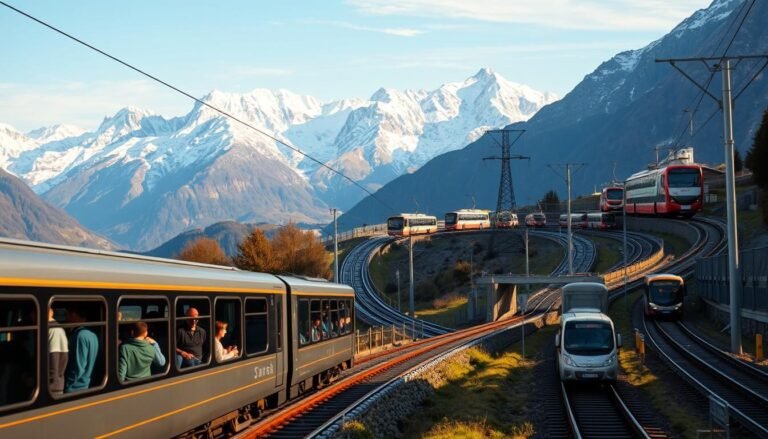
The Swiss Travel Pass is arguably the most comprehensive rail pass in Europe. Here’s exactly what you get:
- Unlimited train travel on the entire Swiss Federal Railways (SBB/CFF/FFS) network
- PostBus routes — the iconic yellow buses connecting mountain villages not served by rail
- Lake steamers — panoramic boat rides on Lakes Geneva, Lucerne, Zurich, and more
- Urban public transport in over 90 Swiss cities and towns, including Zurich, Geneva, Basel, and Bern
- Free entry to 500+ museums including the Swiss National Museum and Museum of Art Zurich
- 50% discount on most mountain railways, cable cars, and panoramic routes (Jungfrau, Pilatus, Titlis, etc.)
- Seat reservations NOT included — you’ll need to book seats on intercity routes separately (CHF 5–15 per journey)
The panoramic routes like the Glacier Express and Bernina Express require a separate panorama surcharge, but the base ticket is covered by your pass.
Swiss Travel Pass 2026 Cost Breakdown
Prices below are for standard 2026 adult rates in 2nd class. Youth (ages 16–25) receives a 25% discount; children under 16 travel free with a Family Card.
| Duration | 2nd Class Adult (CHF) | 1st Class Adult (CHF) |
|---|---|---|
| 3 consecutive days | CHF 213 | CHF 339 |
| 4 consecutive days | CHF 244 | CHF 389 |
| 6 consecutive days | CHF 293 | CHF 469 |
| 8 consecutive days | CHF 331 | CHF 528 |
| 15 consecutive days | CHF 399 | CHF 637 |
There’s also a Swiss Travel Pass Flex version, allowing you to choose non-consecutive travel days within a month. A 3-day flex pass costs roughly CHF 264 — about CHF 50 more than the consecutive version but significantly more useful if you plan rest days.
According to the Swiss Federal Railways, the average single intercity ticket (e.g., Zurich to Bern) costs CHF 53 for a one-way 2nd class journey. A return trip between Zurich and Lucerne runs CHF 48. Just four such trips and you’ve already exceeded the cost of the 3-day pass.
When the Swiss Travel Pass Saves You Money
The pass clearly pays off in these scenarios:
Multi-City Itineraries
If your 5-day Switzerland trip includes Zurich → Lucerne → Interlaken → Geneva, your train tickets alone (point-to-point, 2nd class) would total roughly CHF 180–220. Add two days of city transit (CHF 10–15/day) and one museum admission (CHF 15–25) — you’re at CHF 210–260 before any lake boats or PostBus rides. The 4-day pass at CHF 244 already represents equal or better value.
Mountain Excursions
This is where the pass becomes a clear winner. The 50% discount on mountain railways saves serious money:
- Jungfraujoch (top of Europe): CHF 235 full price → CHF 117 with pass discount
- Mt. Pilatus round-trip (gondola + cog rail): CHF 106 → CHF 53
- Rigi Kulm from Lucerne: CHF 60 → CHF 30
Just one mountain trip can offset a significant portion of your pass cost.
Lake Cruises
Boat rides on Lake Geneva or Lake Lucerne cost CHF 30–60 for half-day trips. These are fully covered by the pass — and they’re experiences you won’t want to skip.
When the Swiss Travel Pass Doesn’t Save You Money
Be honest with yourself about your trip style. The pass may not be worth it if:
- You’re staying in one city: A 7-day Geneva city day pass costs around CHF 40. No need for a national pass.
- You’re renting a car: Switzerland’s road network reaches areas trains don’t. If you’re driving, the pass duplicates your coverage.
- You have 1–2 travel days only: Point-to-point tickets may be cheaper for a single intercity round trip.
- You’re visiting Jungfrau region exclusively: The Jungfrau Travel Pass (regional pass) may offer better value for stays in the Bernese Oberland.
- You have a Swiss Half Fare Card already: Frequent Swiss residents often use the CHF 120/year Half Fare Card instead — though this isn’t available for short tourist visits.
According to a 2024 survey by the Swiss Tourism Federation, approximately 68% of international visitors who purchased the Swiss Travel Pass reported it provided net savings versus buying individual tickets.
Alternatives to the Swiss Travel Pass
Swiss Half Fare Card
At CHF 120 for one month, this card gives 50% off all public transport. If you’re spending more than 3 weeks in Switzerland or visiting frequently, it outperforms the travel pass.
Regional Passes
Switzerland offers several regional passes perfect for focused trips:
- Bernese Oberland Regional Pass: Covers Interlaken, Grindelwald, Lauterbrunnen and mountain railways in the region
- Tell-Pass (Central Switzerland): Covers the Lucerne area including lake boats and several mountains
- Ticino Ticket: Free travel on public transport in the Italian-speaking canton
Point-to-Point Tickets with Supersaver Fares
Book SBB Supersaver fares 30–60 days in advance and save up to 70% on specific trains. This works well for budget travelers with fixed plans.
Sample 4-Day Route Using the Swiss Travel Pass
Here’s a route that maximizes the pass value — designed by Lukas Weber, our Switzerland travel specialist:
Day 1 — Zurich: Arrive at Zurich Airport (free S-Bahn with pass), check in. Afternoon: Swiss National Museum (free with pass). Evening: stroll along the Limmat.
Day 2 — Lucerne + Mt. Pilatus: Train Zurich → Lucerne (CHF 23 saved). Lake cruise on Lake Lucerne (CHF 40 saved). Afternoon: Pilatus Cog Railway (50% = CHF 53 saved). Total day savings: ~CHF 116.
Day 3 — Interlaken + Grindelwald: Train Lucerne → Interlaken (CHF 30 saved). PostBus to Grindelwald (CHF 10 saved). Scenic hike to First. Evening lake boat on Lake Thun (CHF 25 saved). Total day savings: ~CHF 65.
Day 4 — Bern + Return: Train Interlaken → Bern (CHF 26 saved). Free Bern Historical Museum visit (CHF 22 saved). Train Bern → Zurich Airport (CHF 55 saved). Total day savings: ~CHF 103.
4-day pass cost: CHF 244
Estimated savings vs. individual tickets + transit: CHF 284+
Net savings: CHF 40+ — plus the convenience of unlimited travel
Ready to book? Swiss Travel Pass — check current price and compare durations before you commit.
Verdict: Is the Swiss Travel Pass Worth It in 2026?
Yes — for the majority of tourists visiting Switzerland for 3+ days with a multi-city itinerary. The combination of unlimited trains, free city transport, museum entry, and 50% mountain discounts creates a package that’s extremely hard to beat on value. The break-even point is typically 3–4 intercity journeys, which most itineraries hit on day one or two.
The pass is NOT worth it if you’re based in a single city, renting a car, or only doing one or two trips. In those cases, individual tickets or a regional pass will serve you better.
For 2026 specifically, SBB has maintained prices close to 2025 levels, making this a relatively stable investment compared to rising airfares. Book early if traveling in July–August when availability on popular scenic trains tightens.
Frequently Asked Questions
Does the Swiss Travel Pass include the Glacier Express?
The base train fare on the Glacier Express is included, but you must pay a mandatory panoramic surcharge of CHF 49 (2nd class) or CHF 65 (1st class) plus a seat reservation. This is separate from the pass cost but still represents significant savings versus full-price Glacier Express tickets.
Can I buy the Swiss Travel Pass at Swiss train stations?
Yes, but it’s significantly cheaper to purchase online before arriving in Switzerland. SBB and authorized resellers (including Eurail.com) sell the pass. You cannot purchase it once your trip has started — it must be activated on or before your first travel day.
Is the Swiss Travel Pass worth it for just 2 days?
Generally no. A 2-day itinerary typically involves 2–3 train journeys, which you can book as point-to-point Supersaver tickets and come out cheaper. The minimum sweet spot for the pass is 3 days with multiple cities or mountain excursions.
Does the Swiss Travel Pass cover the Bernina Express?
Yes — the base rail fare is covered. Like the Glacier Express, you pay a panoramic surcharge (CHF 15–20) and seat reservation. The Bernina Express route through the Alps from Chur to Tirano (Italy) is one of the most scenic rail journeys in the world and is absolutely worth the small surcharge.
What’s the difference between 1st class and 2nd class?
Swiss trains are exceptionally comfortable in both classes. First class offers wider seats, less crowding, and quieter coaches — useful on long journeys (Zurich to Geneva is 2h40m). For most tourists, 2nd class is perfectly fine and saves CHF 40–150 depending on pass duration.
Is there a discount for groups?
Groups of 2+ can get the Swiss Travel Pass in the “Group” category, which includes a small discount. However, the most impactful group discount is the Family Card — children under 16 travel free when accompanied by a parent holding a valid Swiss Travel Pass.
When should I book the Swiss Travel Pass for summer 2026?
Book by April or May for July–August travel. While the pass itself has no capacity limits, scenic train seat reservations (Glacier Express, Bernina Express, Golden Pass) sell out months in advance. Buy the pass early and book reservations immediately after.