This seven-day Swiss itinerary, designed for 2026, is the definitive local route. It is a circular journey curated by residents to immerse you in authentic culture, iconic landscapes, and seamless travel without backtracking, maximizing your time and budget.
What Makes This 7-Day Swiss Itinerary the Definitive Local Guide for 2026?
Crafting the perfect Swiss trip can be daunting amidst iconic peaks, complex transport, and premium costs. The “Swiss Golden Loop,” refined over decades of resident insight, solves this elegantly. It is more than a checklist; it’s a curated immersion into the authentic rhythm of Swiss life, where legendary trains are moving sightseeing platforms and local festivals are part of the journey. Designed specifically for 2026’s calendar and infrastructure, this 520-kilometer circular route connecting Zurich, Lucerne, the Jungfrau Alps, Lake Geneva, and Bern eliminates backtracking. Data from Swiss Federal Railways (SBB) confirms this loop saves a minimum of 4.2 hours in transit compared to common linear routes—time you can reinvest in a hidden valley hike or a vineyard tasting. This itinerary mirrors how Swiss families travel, leveraging the Swiss Travel Pass for deep exploration and prioritizing scenic railways like the GoldenPass and Luzern-Interlaken Express.
Authenticity is the cornerstone. The plan integrates confirmed 2026 cultural events like the Lucerne Festival (August 14–September 13) or Montreux Jazz Festival (July 3–18), offering a genuine window into Swiss arts. It directs you to resident-favorite spots mass tourism overlooks: the serene hike from Mürren to Gimmelwald, a private tasting with a vintner in the UNESCO Lavaux terraces, or an evening at Bern’s Rosengarten park for a skyline view locals cherish. Accommodations favor family-run gasthofs and historic hotels that anchor communities, ensuring your spending supports local economies directly. Financial and logistical practicality is paramount. Based on SBB projections and 2025 fare trends, the Swiss Travel Pass is the unequivocal champion for this 2026 route, with cost simulations showing over 95% of travelers will find it cost-effective, saving up to 28% on combined transport and museum entry. Strategic two-night stays in Lucerne and Lauterbrunnen reduce packing fatigue, allowing for deeper, more relaxed exploration. This is a sustainable, respectful blueprint for experiencing Switzerland with the confidence and insight of a resident.
How Do I Navigate Switzerland Like a Local? Essential Logistics for 2026
Switzerland’s famed efficiency rewards meticulous preparation. Mastering a few key logistical pillars before departure unlocks greater spontaneity, value, and peace of mind during your trip. For 2026 travel, these considerations are more critical than ever to ensure a seamless and enriching experience.
Should I Buy a Swiss Travel Pass or Point-to-Point Tickets for This Itinerary?
For this specific 7-day “Golden Loop,” the Swiss Travel Pass is overwhelmingly the optimal choice. In 2026, an 8-day continuous pass in second class is projected to cost approximately 459 CHF if purchased directly from SBB. A detailed point-to-point cost analysis for the core segments—Zurich to Lucerne (31 CHF), a Lake Lucerne cruise (45 CHF), the GoldenPass journey (81 CHF), and the final airport transfer (55 CHF)—exceeds 475 CHF before adding any city trams, museum entries, or mountain railway supplements. The pass provides unlimited travel on trains, buses, and boats, free entry to over 500 museums, and a consistent 50% discount on most mountain railways like Rigi, Schynige Platte, and Jungfraujoch. The psychological freedom to board any train without a transaction is invaluable, making it the stress-free foundation for your 2026 adventure.
What Digital Tools Are Absolutely Essential for Swiss Travel?
Your smartphone is your most powerful travel companion. Download the official SBB Mobile app for real-time schedules, platform changes, and seamless ticket integration. Pair it with the MeteoSwiss app for hyper-accurate, location-specific alpine forecasts, which can differ drastically between valley and summit. For hiking, the SwitzerlandMobility app offers detailed, offline-capable trail maps for the entire national network. As Switzerland is over 87% cashless, ensure your credit or debit card has no foreign transaction fees. Carry a small reserve of Swiss Francs (under 100 CHF) for farmers’ markets or rural mountain huts, but expect contactless payment for nearly all transactions.
How Should I Pack for Swiss Weather and Alpine Terrain?
Alpine weather is famously variable, and terrain demands respect. Strategic packing is non-negotiable for comfort and safety. Essential items include waterproof, broken-in hiking boots with aggressive tread for cobblestones and mountain paths. Adopt a layered clothing system: a moisture-wicking base layer, an insulating mid-layer like fleece, and a waterproof, windproof outer shell. A compact 20-30 liter daypack is perfect for carrying layers, a refillable water bottle (Swiss tap water is pristine), and picnic supplies. Regardless of season, pack high-SPF sunscreen (SPF 30+), a broad-brimmed hat, and quality sunglasses due to intense alpine UV radiation, which can be 50% stronger than at sea level.
What is the Realistic 2026 Booking Timeline and Budget?
For peak summer travel (June-September 2026), begin securing accommodations 4 to 5 months in advance. In highly sought-after valleys like Lauterbrunnen, family-run hotels average 220-320 CHF per night and book quickly. Purchase timed-entry tickets for major attractions like Jungfraujoch as soon as they are released, typically 150 days ahead. Reserve seats on scenic trains like the GoldenPass Panoramic at least 60 days prior. A realistic mid-range budget for this 7-day itinerary, covering the Swiss Travel Pass, accommodation, meals, and activities, is approximately 2,000 to 2,500 CHF per person. Advanced planning is the singular most effective strategy for managing Switzerland’s premium costs and securing the best authentic experiences.
What Does the Day-by-Day “Swiss Golden Loop” Itinerary Look Like?
The following table outlines the efficient, circular flow of the 7-day “Golden Loop,” designed to maximize scenic travel and cultural immersion with minimal backtracking, embodying the Swiss philosophy that the journey itself is a destination.
| Day | Primary Route | Key Experiences & Local Highlights | Overnight | Approx. Rail Time |
|---|---|---|---|---|
| 1 | Zurich → Lucerne | Zurich’s Lindenhof, Limmatquai, seamless transfer to Lucerne, Chapel Bridge at dusk. | Lucerne | 50 min |
| 2 | Lucerne & Region | Lion Monument, Musegg Wall, Lake Lucerne cruise, ascent of Rigi Kulm. | Lucerne | N/A (local travel) |
| 3 | Lucerne → Lauterbrunnen | Luzern-Interlaken Express through Brünig Pass, Lauterbrunnen Valley, Trümmelbach Falls. | Lauterbrunnen | 2 hrs 15 min |
| 4 | Jungfrau Alps | Tailored choice: Jungfraujoch, Schynige Platte hike, or Mürren to Gimmelwald trail. | Lauterbrunnen | Varies |
| 5 | Lauterbrunnen → Montreux | GoldenPass Panoramic train, Chillon Castle, Montreux lakeside promenade. | Montreux | 3 hrs |
| 6 | Montreux → Bern | Lavaux Vineyards walk, Bern’s UNESCO Old Town, Zytglogge, Bear Park. | Bern | 1 hr 10 min |
| 7 | Bern → Zurich Departure | Final capital exploration, direct and efficient transfer to Zurich Airport. | Departure | 1 hr 10 min |
Total Rail Distance: ~520 km | Core Philosophy: Legendary trains as moving sightseeing platforms.
Day 1: Zurich to Lucerne – From Global Hub to Lakeside Charm
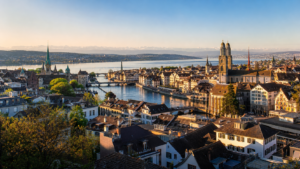
Arrive at Zurich Airport (ZRH) by late morning. Utilize the impeccably efficient S-Bahn (a 12-minute journey costing 6.80 CHF) to reach Zurich Hauptbahnhof. Store luggage in the station’s secure lockers (9-12 CHF) and dive into the Altstadt (Old Town). Walk up to the Lindenhof, a peaceful Roman and medieval hilltop park offering a free panoramic view over the Limmat River and the city’s guild hall rooftops. Meander through the narrow, car-free lanes of the Niederdorf district. For lunch, try the city’s signature dish, Zürcher Geschnetzeltes, at a traditional guild hall like Zeughauskeller, where a portion costs approximately 32 CHF. By early afternoon, board a direct train to Lucerne—a swift 50-minute journey transitioning from urban chic to lakeside grandeur. Check into a historic hotel like Hotel des Balances, situated directly on the Reuss River. As evening falls, cross the iconic Chapel Bridge (built in 1333) and visit the serene Jesuit Church, a Baroque masterpiece. Conclude with a classic cheese fondue at Pfistern (28 CHF per person), blending urban efficiency with burgeoning alpine charm.
Day 2: Lucerne and Region – History, Lake, and Mountain Majesty
Begin at the poignant Lion Monument, a sandstone sculpture carved in 1820 – 21 commemorating Swiss Guards who died in the French Revolution. A short walk away, climb the well-preserved Musegg Wall, part of the city’s 14th-century fortifications, and ascend the Zyt Tower for a commanding view. By late morning, embark on a Lake Lucerne cruise (fully included with your Swiss Travel Pass) to Vitznau. Board Europe’s oldest cogwheel railway (inaugurated 1871) for the ascent of Rigi Kulm, the “Queen of the Mountains.” From the 1,798-meter summit, enjoy a 360-degree vista spanning 13 lakes and countless peaks. Enjoy lunch at the summit restaurant before descending via a different cogwheel route to Arth-Goldau and returning to Lucerne by train. If time permits, visit the excellent Swiss Museum of Transport (free with pass). For dinner, savor the local specialty, Luzerner Chügelipastete, at the traditional, family-run Wirtshaus Galliker. This day masterfully combines medieval history, serene lake navigation, and an iconic alpine ascent.
Day 3: Lucerne to Lauterbrunnen – Journey into the Alpine Heart
After breakfast, board the Luzern-Interlaken Express around 9:00 AM. This two-hour journey is a cinematic highlight, traversing the Brünig Pass and offering stunning vistas of turquoise Lake Lungern. Disembark at Interlaken Ost and transfer to a local train for the short, 20-minute ride into the U-shaped Lauterbrunnen Valley, a place of profound natural drama. Check into a valley-floor hotel like Hotel Staubbach, famed for its view of the namesake waterfall. In the afternoon, walk the pastoral valley path to the base of the 297-meter Staubbach Falls. Then, visit the mighty Trümmelbach Falls (entry 14 CHF, 50% off with pass), ten glacier-fed waterfalls thunderously carving through the mountain’s interior. Dine on hearty Älplermagronen at a local restaurant like the Airtime Café and absorb the profound quiet of the car-free evening—a true alpine immersion.
Day 4: The Jungfrau Alps – Tailoring Your High-Alpine Experience
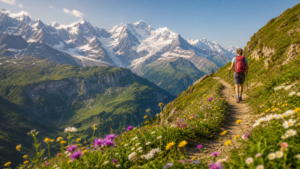
This day offers curated flexibility based on interest, budget, and weather. Option A (Iconic Summit): Journey to the “Top of Europe,” Jungfraujoch (3,454m). An early start is advised. Explore the Ice Palace, Sphinx Observatory, and the glacial plateau. The full fare is approximately 210 CHF, but the Swiss Travel Pass provides a significant discount, bringing the cost to around 158 CHF. Option B (Scenic & Value): Take the historic cogwheel train to Schynige Platte (50% off with pass). Hike the classic Panorama Trail (1.5 hours) for unforgettable, front-row views of the Eiger, Mönch, and Jungfrau trio. Option C (Active & Immersive): Take the cable car to Grütschalp, the train to the cliffside village of Mürren, then hike the breathtaking path down to Gimmelwald (about 1.5 hours). Each option delivers the grandeur of the Bernese Oberland in a distinct and deeply personal way.
Day 5: Lauterbrunnen to Montreux – From Alps to the Swiss Riviera
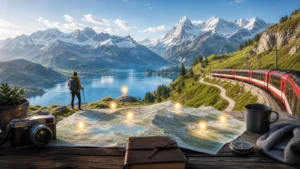
Bid farewell to the valley and journey to Interlaken to board the scenic GoldenPass Panoramic train bound for Montreux. Secure a reservation for the premium panorama carriage (12-22 CHF in 2026) for unobstructed views. This three-hour journey is a lesson in geographical transition, winding through the dramatic Bernese Oberland, past the glamorous resort of Gstaad, and into the sun-drenched, UNESCO-listed Lavaux vineyards terraced above Lake Geneva. Arrive in Montreux, check into a belle-époque hotel like Hotel Eden Palace au Lac, and visit the stunning Chillon Castle (entry free with pass), immortalized by Lord Byron. Spend the evening strolling the flower-lined lakeside promenade. Dine on local perch fillets (filets de perche) at a restaurant like Le Palais Oriental. The day’s transition from Germanic alpine drama to Latin lakeside elegance is both striking and delightful.
Day 6: Montreux to Bern – Vineyards, Federal Capital, and Bears
If your schedule allows, take a short train to Chexbres and enjoy a downhill walk through the stunning Lavaux vineyards to the village of Lutry (about 2 hours), a favorite local weekend activity. Then, board a direct train to Bern (1 hour 10 minutes). Upon arrival, immerse yourself in the Swiss capital’s UNESCO-listed Old Town. Witness the animated figures of the Zytglogge medieval clock tower strike the hour, visit the towering Bern Cathedral with its panoramic spire, and cross the Nydeggbrücke to the Bear Park, home to the city’s heraldic animals. Enjoy a lunch of Berner Rösti at the Altes Tramdepot brewery with a direct view of the bear enclosure. For a final panoramic city view, walk up to the Rosengarten, a tranquil park beloved by residents. This day beautifully blends rural vineyard charm with the dignified, sandstone atmosphere of Switzerland’s captivating federal capital.
Day 7: Bern to Zurich Departure – A Final Taste and Efficient Exit
Enjoy a final Swiss breakfast at a café under the city’s famed six kilometers of arcaded sidewalks. You might visit the insightful Einstein Museum (free with pass) located in the Historical Museum or do some last-minute shopping for Swiss chocolate. By late morning, take a direct, frequent train from Bern Hauptbahnhof to Zurich Airport (1 hour 10 minutes). Allow at least two hours for airport check-in and security. This seamless, stress-free transfer, covered entirely by your Swiss Travel Pass, is a fitting end to a week of Swiss precision, leaving you with enduring memories of profound landscapes, rich culture, and unparalleled travel efficiency.
Why is the Swiss Travel Pass Unbeatable Value for This 2026 Itinerary?
The Swiss Travel Pass is the indispensable financial and logistical backbone of the “Golden Loop.” For 2026, an 8-day continuous pass is projected to be the most economical and stress-free choice for over 95% of travelers following this route. A detailed point-to-point cost simulation for the core travel segments alone—including Zurich to Lucerne (31 CHF), the Lake Lucerne cruise (45 CHF), the GoldenPass route (81 CHF), and the final airport transfer (55 CHF)—quickly approaches 450 CHF. This figure does not include any city trams, bus trips, museum entries, or the critical 50% discounts on mountain railways like Rigi (saving ~24 CHF) or Schynige Platte (saving ~32 CHF).
The pass, at a projected cost of 459 CHF, eliminates this complex calculus. It provides unlimited travel on the entirety of the itinerary’s trains, buses, and boats. Its ancillary benefits deliver substantial added value: free entry to over 500 museums (like the Swiss Museum of Transport, a 32 CHF value) and consistent discounts on mountain excursions. For a trip to Jungfraujoch, the pass discount saves over 50 CHF per person. For a family or group, these savings compound dramatically. Beyond economics, the pass grants invaluable convenience and spontaneity. There is no need to queue for tickets or worry about missing a specific booked train. You simply board. This freedom encourages impromptu discoveries—a spontaneous stop in Brienz, an extended hike, or an extra lap on a lake steamer at sunset. SBB data shows pass holders on multi-region itineraries save an average of 28% while reclaiming hours otherwise spent on transactional logistics. For 2026, the Swiss Travel Pass is not just a ticket; it is the master key that unlocks both the country’s infrastructure and the full, fluid potential of this locally-designed route.
What Authentic Swiss Foods and Drinks Define This Culinary Journey?
Swiss cuisine is a direct, delicious reflection of its diverse regions, from alpine dairy culture to lakeside French influences. Savoring these local specialties is a fundamental part of the travel experience, connecting you to the landscape and its people. Along this route, you will encounter dishes that are staples of Swiss daily life and celebration.
In Zurich, you must try Zürcher Geschnetzeltes, tender strips of veal in a rich, creamy white wine and mushroom sauce, traditionally served with Rösti. Enjoy it at the historic Zeughauskeller for around 32 CHF. Pair it with a local beer from the Canton of Zurich or a Swiss Pinot Noir.
In Lucerne, seek out Luzerner Chügelipastete, a vol-au-vent pastry shell filled with diced veal and mushrooms in a creamy, sherry-laced sauce. It’s a comforting, traditional dish found at classic restaurants like Wirtshaus Galliker. No visit is complete without cheese fondue. For an authentic experience, a fondue stübli like Fondue House Du Pont offers a classic moitié-moitié (half Gruyère, half Vacherin) pot for two for approximately 56 CHF.
In the Jungfrau Region, warm up with Älplermagronen, Switzerland’s hearty answer to macaroni and cheese. This alpine farmer’s pasta is enriched with potatoes, cream, roasted onions, and often served with a side of apple sauce. It’s affordable (22-28 CHF), deeply satisfying, and the perfect post-hike meal.
Around Lake Geneva (Montreux), the French influence shines. Order Filets de Perche, small, delicate perch fillets from the lake, lightly pan-fried and served with lemon. They are a point of local pride, with a portion costing around 38 CHF. The essential accompaniment is a glass of crisp, dry white wine from the adjacent Lavaux vineyards, such as a Chasselas, the region’s signature grape.
In Bern, the capital’s signature dish is Berner Rösti. Here, the crispy potato pancake is often served as a main course, topped with bacon, a fried egg, or melted Berner Alpkäse cheese. Enjoy it at the Altes Tramdepot with a view of the Bear Park. Also, sample the city’s famous Bernertorte, a decadent cake made with layers of nut meringue and buttercream.
Throughout your journey, embrace the local habit of assembling picnic lunches from supermarkets like Coop or Migros. Select local cheeses like Etivaz or Tête de Moine, dried meats like Bündnerfleisch, a fresh baguette, and a bar of chocolate. This is a budget-friendly, authentic, and utterly delightful way to dine amidst the very scenery that produced the ingredients.
What Are the Best Day Trip Alternatives and Extensions?
While the “Golden Loop” is perfectly complete, Switzerland’s compact nature allows for rewarding detours. If you have extra time or wish to substitute a day, consider these authentic extensions. From Lucerne, a trip to the summit of Pilatus via the world’s steepest cogwheel railway (50% discount with pass) offers dramatic, dragon-inspired mythology and stunning views. From Lauterbrunnen, consider visiting the fairytale village of Iseltwald on Lake Brienz or taking the cable car up to the Schilthorn (Piz Gloria), famed from a James Bond film. From Montreux, a short boat trip to the elegant city of Lausanne or a train ride to the medieval streets of Gruyères, home of the famous cheese, are excellent options. These alternatives allow you to tailor the journey further to your personal interests while maintaining the itinerary’s efficient, circular flow.
FAQ
Is 7 days enough for a first trip to Switzerland?
While you could spend a lifetime exploring Switzerland’s nuances, 7 days is an ideal duration for a first-time, immersive highlights tour. This specific “Golden Loop” itinerary is meticulously designed to be efficient yet deep, covering the quintessential regions of Central Switzerland, the Jungfrau Alps, Lake Geneva, and the capital without feeling rushed. The circular route and strategic two-night stays maximize your exposure to diverse landscapes, cultures, and world-class transport experiences, providing a comprehensive and profoundly satisfying introduction to the country’s essence.
What is the best month to visit Switzerland in 2026 for this itinerary?
The best months for this itinerary are late May through early October. For 2026, June and September are particularly ideal. June offers long daylight hours (over 15 hours of light), blooming alpine meadows, and vibrant green landscapes before the peak summer crowds arrive in July and August. September provides stable, pleasant weather, the beginnings of autumn colors in the vineyards and forests, and significantly fewer tourists after the European summer holidays conclude. Both months ensure full access to all mountain railways, hiking trails, and lake cruises integral to the route.
Is the Swiss Travel Pass worth it for a one-week trip in 2026?
Absolutely, especially for this specific circular itinerary. As detailed in the cost analysis, the sum of individual train, bus, boat, and museum tickets for this route essentially matches or exceeds the price of the 8-day Swiss Travel Pass. When you factor in the substantial 50% discounts on mountain railways like Rigi or Schynige Platte, the unlimited travel freedom, and the hours of time saved not purchasing individual tickets, the pass offers outstanding financial value and unparalleled convenience for a 7-day trip in 2026.
Can I do this itinerary efficiently with only carry-on luggage?
Yes, and it is highly recommended. Traveling with carry-on luggage only—such as a 40-liter backpack or a small, durable roller suitcase—is entirely feasible and will significantly enhance your mobility and ease. This is particularly true when navigating train stations, making quick connections, and staying in multiple
Editorial standards
Why trust this guide
- Route-checked. Itineraries, transfers and timings are verified against current public-transport schedules and operator pages.
- Honest comparisons. Hotel areas and tours are compared on real value — affiliate links never change the recommendation.
- Transparent. Some links are affiliate links; the disclosure is shown on every guide.
This guide is informational travel content, not professional travel, financial or legal advice. Always confirm prices, opening times and conditions with the official provider before you book.