Switzerland Budget Travel Tips 2026: How to Save Money Without Sacrificing the Experience
Switzerland Budget Travel Tips 2026: How to Save Money Without Sacrificing the Experience
Switzerland has a reputation as Europe’s most expensive country — and on paper, it is. The average hotel room costs CHF 200+, a basic restaurant meal runs CHF 30-50, and a single train ticket can cost more than a flight. But here’s what nobody tells you: Switzerland is absolutely possible on a budget, if you know the right moves.
The mistake most visitors make is treating Switzerland like a normal European destination and expecting normal European prices. The locals don’t pay tourist prices, and neither should you. This guide is built on the actual strategies that stretch your CHF as far as possible while keeping the experience intact.
The Real Numbers: Switzerland Costs vs. Budget Strategies
Switzerland is expensive in absolute terms. According to the Economist Intelligence Unit’s cost-of-living index, Zurich and Geneva consistently rank as two of the world’s five most expensive cities. But expensive doesn’t mean unaffordable — it means you have to be strategic about where your money goes.
A 2024 traveler survey by the Swiss Tourism Board found that budget travelers (defined as CHF 80-120/day excluding transport) reported satisfaction rates nearly equal to midrange travelers (CHF 150-250/day) when they followed local eating and activity patterns rather than tourist-oriented ones.
Breakdown of a realistic budget Switzerland day:
- Accommodation (hostel dorm or budget guesthouse): CHF 35-60
- Food (grocery breakfast, picnic lunch, one restaurant dinner): CHF 25-35
- Transport (Swiss Travel Pass day): CHF 30-40 (amortized from a pass)
- Activities (mix of free and paid): CHF 5-20
- Total: CHF 95-155/day (roughly €100-165)
Free Activities in Switzerland: The Best Things Cost Nothing
This is where Switzerland surprises people. The country’s greatest attractions — its landscapes — are completely free.
Hiking
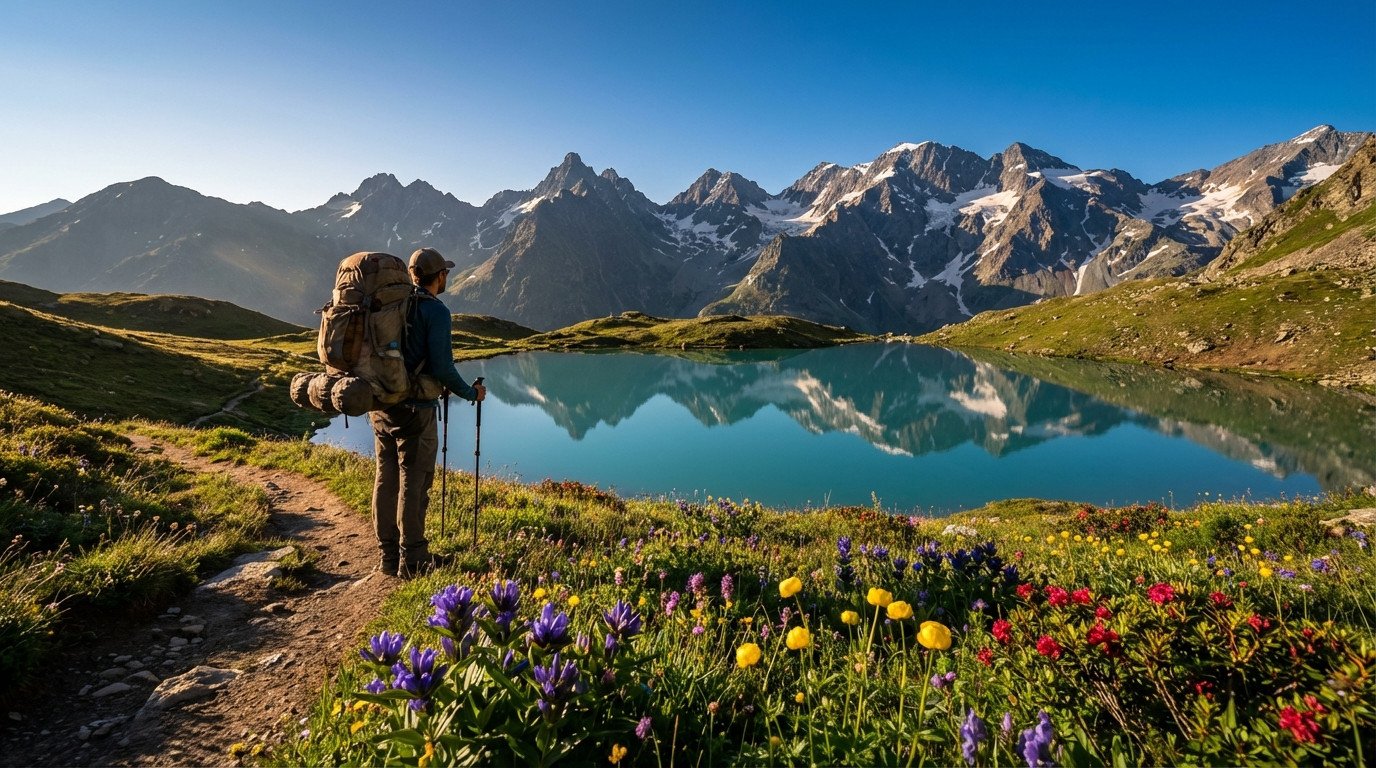
Switzerland has over 63,000 kilometers of marked hiking trails, more than any country in Europe per capita. The famous trails — Grindelwald to Bachalpsee, Rigi summit, the Eiger trail — cost nothing but the train to get there (and you can walk up instead of taking the cable car). The Swiss hiking network is so well-marked that getting lost is genuinely difficult.
Free hike highlights:
- Rheinfall (Rhine Falls) from Neuhausen — Europe’s largest waterfall, completely free to see from the town side
- Lake Geneva lakefront path — 40km of flat walking between Geneva and Montreux, free and spectacular
- Zurich Uetliberg — city mountain accessible by S10 train, stunning views, no entry fee
Swimming
Switzerland has 1,500 lakes. In summer, the Swiss swim in them — at designated “Badis” (outdoor public swimming areas) that typically charge CHF 5-8 for the facilities or are completely free if you find a public lake access point. Lake Zurich, Lake Geneva, Lake Thun — all swimmable and beautiful.
Urban Exploring
Bern’s UNESCO-listed medieval arcade streets (Lauben), Geneva’s Old Town, Basel’s Rhine bank, Zurich’s Niederdorf — all are free to walk, explore, and photograph. Swiss cities are exceptionally walkable and their historical centers don’t charge admission.
Museum Free Days
Many Swiss museums are free on specific days or permanently free:
- Museum Night (Museumsnacht) in Zurich and Basel — one annual evening where 40+ museums open for a single flat fee of CHF 15-18
- Swiss National Museum (Landesmuseum) Zurich: CHF 10, free for under-16s
- Several cantonal (regional) museums are free entry
Cheap Eats in Switzerland: Where Locals Actually Eat
Restaurant meals in Switzerland are expensive by any standard. But you can eat extremely well for very little if you follow the local playbook:
Migros and Coop Takeaway Counters
Switzerland’s two main supermarket chains (Migros and Coop) operate in-store restaurants and takeaway counters that serve hot meals from CHF 8-14. A typical Migros “Take Away” lunch — hot dish + salad + drink — costs CHF 12-15 and is genuinely good food. Locals eat here regularly. In Zurich’s central train station, both chains have large food counters open early and late.
University Canteens (Mensen)
Most Swiss universities operate Mensen (canteens) that serve hot lunches at subsidized prices. Some require student ID; many don’t. ETH Zurich’s Mensa, University of Geneva’s Restaurant Uni-Mail — meals run CHF 8-12 for a full hot lunch including a side. Find them by searching “[city] mensa” and showing up at lunchtime.
Denner and Lidl
Switzerland has budget supermarkets. Denner is the domestic discount chain; Lidl operates here too. Prices are 20-30% lower than Migros/Coop. For self-catering travelers, buying breakfast and lunch ingredients at Denner and having one restaurant dinner significantly cuts food costs.
Fondue at Home
Cheese fondue — the quintessential Swiss dish — costs CHF 35-55 per person at a tourist restaurant. Buy the pre-made Appenzeller fondue mix from any supermarket (CHF 8-10), a crusty bread, and a bottle of Fendant white wine (CHF 7-12), and make it yourself. The experience is arguably better.
Transport Hacks: Cracking Switzerland’s Rail System
Swiss trains are the best in the world — punctual, clean, scenic, and comprehensive. They’re also expensive if you buy individual tickets. The key is understanding the pass system:
Swiss Travel Pass
The Swiss Travel Pass gives unlimited access to trains, boats, and most city trams for a fixed price. For visitors doing multiple destinations, it usually pays off quickly:
- 3 days: CHF 244 (adult, 2nd class)
- 4 days: CHF 288
- 8 days: CHF 399
The pass also includes free entry to 500+ museums and 50% discount on mountain railways that aren’t covered by the main network.
Half-Fare Card for Longer Stays
If you’re staying in Switzerland for a week or longer, a Half-Fare Card (CHF 120 for 1 month) cuts all train, bus, and boat tickets in half. Combined with the SuperSaver ticket discounts (up to 70% off for advance booking), this is the savviest move for extended stays.
Night Trains and Buses
The PostBus network covers Swiss mountain villages that trains don’t reach. It’s included in the Swiss Travel Pass and represents extraordinary value for rural exploration. Also consider night buses in cities — in Zurich, the Nachtbus network runs Friday-Saturday until 4am, eliminating the need for expensive taxis.
Rigi vs. Jungfraujoch
The Jungfraujoch (“Top of Europe”) costs CHF 145-200+ per person. Magnificent, but budget-breaking. Mount Rigi is equally spectacular — 360° Alpine panorama — costs CHF 64 roundtrip, and is covered at 50% with the Swiss Travel Pass (CHF 32 net). For budget travelers, Rigi over Jungfraujoch every time.
Budget Accommodation Options
Switzerland has excellent hostels that are genuinely pleasant, not grim:
- Swiss Youth Hostels (SJH): The official hostel network runs 50+ hostels in scenic locations. Dorm beds CHF 30-45/night including kitchen access. The Lucerne, Zurich, and Interlaken hostels are particularly well-located.
- Camping: Switzerland has 400+ organized campsites. Many are in genuinely stunning locations (lakeside, mountain views). Pitches from CHF 15-25/night, tent included.
- Farm stays (Schlaf im Stroh): Over 200 Swiss farms offer “sleep in the straw” accommodation — literally sleeping in clean hay in a barn. CHF 20-35/person including breakfast. Unusual, fun, and authentically Swiss.
For transport and accommodation combinations, see our guide on Swiss transportation secrets — how locals travel for half the price. For the most beautiful budget hiking options, our first-time in Switzerland guide covers the essential experiences that don’t break the bank. And for planning the timing of your visit, our best time to visit Switzerland guide helps optimize for both weather and lower prices.
Frequently Asked Questions
What is the cheapest way to visit Switzerland?
Travel with a Swiss Travel Pass for unlimited transport, eat at supermarket canteens and picnic lunches, stay in SJH hostels or campsites, focus on free hiking and lake activities, and visit in shoulder season (May-June or September-October) when accommodation is 20-30% cheaper than peak season.
Is Switzerland cheaper than Paris or London?
No — Switzerland is more expensive than both cities on average. But the gap narrows significantly when you use the budget strategies above. A budget-conscious traveler can spend similarly to a midrange London trip while experiencing more natural beauty.
Can you visit Switzerland for a week on $1,000?
Yes, with discipline. CHF 1,000 (≈$1,100) for 7 days = CHF 143/day. Achievable with hostel accommodation (CHF 40), supermarket and canteen food (CHF 30), Swiss Travel Pass amortized (CHF 40), and free hiking/lake activities (CHF 0-15). Tighter than comfortable, but definitely doable.
What’s the cheapest Swiss city to base yourself?
Bern (the capital) is typically 15-20% cheaper than Zurich and Geneva for accommodation while offering excellent rail access to the rest of Switzerland. It’s also genuinely beautiful and chronically underrated.
Is Switzerland expensive even compared to other high-cost European countries?
Yes. Switzerland consistently ranks above Norway, Denmark, and Iceland on cost-of-living indices. The difference is most visible in restaurant meals (2-3x more expensive than Germany), supermarket prices (30-50% more than Austria), and accommodation (50-100% more than comparable cities elsewhere in Europe).