Swiss Travel Pass Worth It 2026 Review: Is It Really Good Value?
By Marc Keller | Updated April 4, 2026
Swiss Travel Pass Worth It 2026 Review
The Swiss Travel Pass is worth it in 2026 for most international tourists visiting Switzerland for 4+ days who plan to use public transport extensively — the math works clearly in your favor if you’re taking trains between cities, using mountain railways, and visiting national museums. For trips under 3 days, city-focused stays, or travelers doing primarily one region, point-to-point tickets often save money. This honest review runs the actual numbers so you can decide definitively before buying.
What the Swiss Travel Pass Actually Includes in 2026
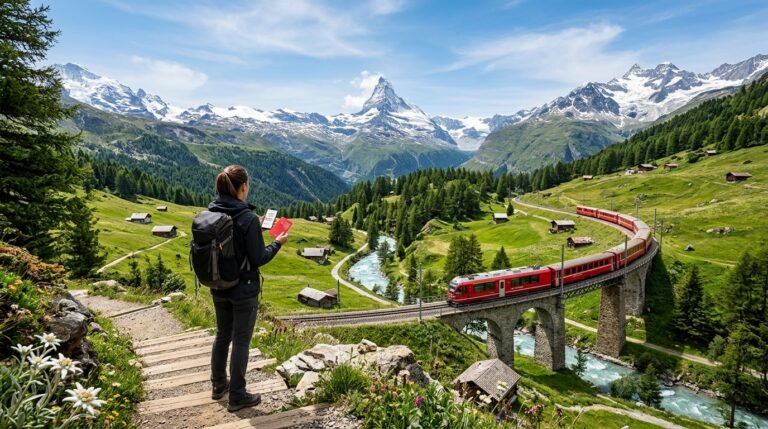
The Swiss Travel Pass provides unlimited travel on Switzerland’s national rail network (SBB), most lake steamers, postal buses, and regional bus networks. It also includes free access to 500+ museums. But the details matter:
What’s fully included (free):
- All SBB trains (ICE, InterCity, InterRegio, Regional trains) in 1st or 2nd class depending on pass class
- Most PostBus routes across the country
- Lake steamer services on the major Swiss lakes (Zurich, Geneva, Lucerne, Bern, Thun, Brienz)
- Metro/tram networks in Zurich, Basel, Lausanne, and other cities
- 500+ Swiss museums with free admission
- Luggage transport service (Send luggage ahead — use if hiking)
What requires a discount (25–50%), not free travel:
- Most famous mountain railways: Jungfraubahn, Schilthorn cable car, Pilatus, Titlis, Rigi, Matterhorn Glacier Paradise, Stanserhorn
- The Glacier Express (reservation fee required)
- The Bernina Express (reservation fee required)
- Private panoramic railways (Mont-Blanc Express, Golden Pass sections)
The 25–50% discount on mountain railways is significant — the Jungfraujoch excursion costs approximately CHF 215 regular price and CHF 108 with the Swiss Travel Pass discount. A single mountain railway excursion can justify a portion of the pass cost.
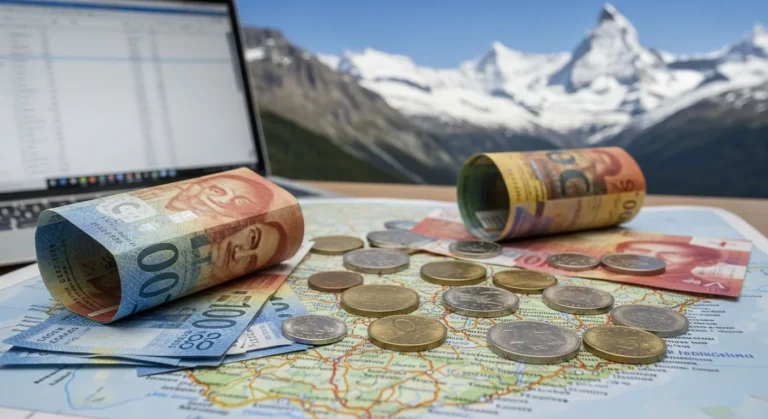
According to Swiss Federal Railways’ 2025 pricing data, a 4-day Adult 2nd class Swiss Travel Pass costs CHF 244 (approximately €258 / £215 / $275 USD). This is the most popular option for first-time visitors.
The Value Calculation: When the Swiss Travel Pass Pays Off
Let’s run a real calculation for a typical 6-day Switzerland itinerary:
Itinerary: Zurich → Lucerne → Interlaken → Grindelwald → Zermatt → Geneva
Individual ticket prices (point-to-point, no saver fares):
- Zurich → Lucerne: CHF 24
- Lucerne → Interlaken Ost: CHF 35
- Interlaken → Grindelwald (Berner Oberland Bahn): CHF 12
- Grindelwald → Zermatt (via Brig): CHF 65
- Zermatt → Geneva: CHF 68
- Daily Zurich city transit (if needed): CHF 9/day × 2 days = CHF 18
- Jungfraujoch excursion: CHF 215 (or CHF 108 with pass)
Without pass total: CHF 437 for trains + full Jungfraujoch = CHF 437
With 6-day Swiss Travel Pass: CHF 336 pass + CHF 108 Jungfraujoch discount = CHF 444 total
In this example, the Swiss Travel Pass saves very little (essentially break-even) because point-to-point fares on a linear itinerary aren’t that far above pass cost. But add a Glacier Express reservation (CHF 55 included in pass except reservation), additional city transit, and museum visits (three museums = approximately CHF 60 in admission), and the calculation shifts to approximately CHF 100 in savings with the pass.
The Swiss Travel Pass wins most clearly when you:
- Visit multiple mountain regions (each excursion’s 50% discount adds up quickly)
- Use public transport daily in cities (urban transit alone can cost CHF 15–20/day per person)
- Visit multiple paid museums (Zurich Kunsthaus: CHF 26; Swiss National Museum: CHF 15; Natural History Museum: CHF 10)
- Take regional scenic trains frequently
- Travel as a couple or family (individual savings multiply)
For travel booking and comparing flight options to Switzerland, Skyscanner tracks fares to Zurich (ZRH), Geneva (GVA), and Basel (BSL) — comparing all three arrival airports often reveals significant price differences for the same trip.
Swiss Travel Pass vs Swiss Half Fare Card: Which Is Better?
This is the comparison most visitors miss. The Swiss Half Fare Card (CHF 120 for 1 month) gives 50% off all SBB trains and participating services — but doesn’t include free travel, just a discount.
Half Fare Card wins when:
- Your trip is 3 days or less of travel
- You’re staying primarily in one region (e.g., just Geneva + Lake Geneva)
- You want to minimize upfront cost and pay as you go
- Your daily transport spend without discount would be under CHF 50
Swiss Travel Pass wins when:
- You’re traveling for 4+ days using multiple trains daily
- You’re visiting multiple regions and taking expensive intercity routes
- You want the simplicity of unlimited travel (no individual ticket purchases)
- Museum access is part of your plan
The Half Fare Card at CHF 120 provides 50% off essentially everything the Swiss Travel Pass covers plus mountain railways. On a CHF 437 total itinerary (the example above), the Half Fare Card would cut costs to approximately CHF 218 in rail fares + CHF 120 card = CHF 338 — cheaper than the CHF 336 pass with similar overall cost. For simpler itineraries, the Half Fare Card consistently wins on pure cost.
How to Buy the Swiss Travel Pass in 2026
Where to buy:
- SBB official website (sbb.ch): Book directly and receive the pass as a PDF or on the SBB app — the most straightforward method
- Rail Europe or Eurail: External booking platforms — convenient but occasionally slightly higher-priced
- Swiss tourism offices or major Swiss airport arrivals halls: Can purchase on arrival, though online booking is usually available 24/7
Validity options (2026 pricing, 2nd class adult):
- 3 days: CHF 208
- 4 days: CHF 244
- 6 days: CHF 279
- 8 days: CHF 315
- 15 days: CHF 375
Youth passes (ages 16–25) are discounted by approximately 30%. Children under 6 travel free. Children 6–16 with a parent’s Swiss Travel Pass travel free with a Child Card (CHF 30).
Important note on day selection: The Swiss Travel Pass is valid for consecutive days — not flexible days. If your visit is 10 days but you plan to drive 3 of those days, an 8-day pass (or even a 6-day pass + Half Fare Card for remaining travel) may be more economical than a full 10-day pass.
First-Time User Tips for Getting Maximum Value
A 2024 Switzerland Tourism visitor survey found that 28% of Swiss Travel Pass users felt they didn’t maximize their pass value — primarily because they didn’t know all the inclusions or failed to use urban transit.
Tips to extract maximum value:
- Use urban transit daily: Don’t take taxis or rideshares in Zurich, Geneva, or Basel when your pass covers all trams and buses. A single Zurich taxi from airport to city center costs CHF 60; the SBB train is CHF 0 with the pass.
- Take lake steamers: Included in the pass — the Lucerne-to-Interlaken steamer via Brienzersee is one of Switzerland’s most scenic journeys and is completely free with the pass.
- Visit museums intentionally: Swiss National Museum Zurich (CHF 15) + Museum of Art Basel (CHF 26) + Luzerner Kunstmuseum (CHF 22) = CHF 63 in free admission. That’s 26% of a 3-day pass cost covered in just three museum visits.
- Book mountain railway discounts early: The Jungfraujoch, Pilatus, and Titlis are expensive and require booking. Know your pass discount rate before arriving and factor into your itinerary planning.
For Swiss destination inspiration to combine with your pass, our guide to Bernina Express train Switzerland 2026 covers one of the most spectacular included train journeys — a direct reason to value the pass highly.
For accommodation along your Swiss rail route, Booking.com offers Swiss hotels and B&Bs across all price ranges — combining a Swiss Travel Pass with mid-range accommodation makes Switzerland significantly more budget-accessible than its reputation suggests.
Common Misconceptions About the Swiss Travel Pass
“The Swiss Travel Pass covers everything including mountain railways.”
False. Mountain railways (Jungfraubahn, Pilatus, Titlis, Matterhorn summit) receive discounts of 25–50%, not free travel. Always check the SBB website for the specific discount on each mountain railway before assuming it’s free.
“You can share one pass between travelers.”
False. Each pass is personalized with a name and requires ID to use. One pass per person.
“Buying at the airport is cheaper.”
False. Airport prices match online prices. No pricing advantage to waiting until arrival.
“Saver fares on SBB point-to-point are always cheaper than the pass.”
Not always true. Saver fares (early booking discounts on specific trains) can be very cheap but require booking 1–3 months in advance and are non-refundable. Flexibility travelers benefit from the pass’s no-reservation-required, change-anytime structure.
Frequently Asked Questions About the Swiss Travel Pass 2026
Is the Swiss Travel Pass worth it for a 3-day visit?
For a 3-day visit, the value depends heavily on your activities. If you’re visiting multiple cities AND doing at least one mountain excursion, it can pay off. For a purely city-focused 3-day trip (e.g., just Zurich), point-to-point tickets and a city transit card will likely be cheaper.
Does the Swiss Travel Pass include the Jungfraujoch?
No — but it provides a 25% discount on the Jungfraujoch round trip, reducing the cost from approximately CHF 215 to CHF 162 (2026 pricing). This discount alone can represent significant value toward the pass cost.
Can I buy the Swiss Travel Pass after arriving in Switzerland?
Yes. The pass can be purchased online anytime or at major Swiss train stations and airports. There’s no pricing penalty for buying on arrival — the price is the same regardless of when you purchase.
Is the Swiss Travel Pass better than Eurail for visiting Switzerland?
For visits exclusively in Switzerland, the Swiss Travel Pass covers more domestic services at a lower price than a Switzerland-inclusive Eurail pass. Eurail is better value only if you’re traveling to/from Switzerland across multiple European countries.
What is the youngest age children travel free with the Swiss Travel Pass?
Children under 6 travel free on all Swiss public transport without any documentation. Children ages 6–16 travel free on their parent’s Swiss Travel Pass when they have a Swiss Family Card or Junior Card (CHF 30) — the cost is negligible relative to the savings for a family trip.
Does the Swiss Travel Pass work in Liechtenstein?
Yes. The PostBus network serving Liechtenstein from Buchs and Feldkirch is included in the Swiss Travel Pass, allowing day trips to Vaduz without additional cost.
How is the Swiss Travel Pass activated?
Digital passes are activated on the first day of use through the SBB mobile app. Physical passes are validated on first use at a ticket machine or train station window. You choose your start date — it doesn’t begin until you first use it.