Budget Hiking Swiss Alps 2026: Your Ultimate Guide
Last Updated: October 26, 2023
Affiliate Disclosure: This article contains affiliate links. If you make a purchase through these links, we may earn a small commission at no extra cost to you. We only recommend products and services we trust and believe will add value to your Swiss adventure.
Budget Hiking Swiss Alps 2026: Your Ultimate Guide
Ever dreamed of trekking through the Swiss Alps without draining your life savings? It’s actually doable. I’ve found that you can hit those iconic peaks in 2026 without the eye-watering price tag if you know where to look. This guide comes from my own time navigating the mountains, and I’ll show you exactly how to dodge high costs on sleep, food, and gear. Your affordable alpine adventure starts right here. For immediate savings, consider exploring Booking.com for early-bird hostel or hut bookings.
Quick Facts: Budget Hiking Swiss Alps 2026
- Average Budget Cost: CHF 70-100 per person/day (excluding flights)
- Best Season for Budget: Late June to early September (shoulder seasons offer some deals, but fewer services)
- Recommended Duration: 5-10 days for a comprehensive experience
- Key Savings Areas: Accommodation (huts/hostels), food (self-catering), transport (passes)
- Top Budget Regions: Grindelwald, Lauterbrunnen, Engadin, Valais
Table of Contents
- Why Choose the Swiss Alps for a Budget Hiking Adventure in 2026?
- Best Time to Hike the Swiss Alps on a Budget (Season & Off-Peak)
- Affordable Accommodation: Huts, Hostels & Camping in the Alps
- Mastering Transportation: Saving on Trains, Buses & Cable Cars
- Eating Smart: Budget-Friendly Food Strategies for Your hike
- Essential Gear on a Budget: Renting vs. Buying & Packing Light
- Top Budget-Friendly Hiking Regions & Trails in the Swiss Alps
- Crafting Your Itinerary: Sample Budget Hiking Routes for 2026
- General Money-Saving Hacks for Your Swiss Alps trip
- Safety First: Preparing for a Budget-Conscious Alpine Hike
- Common Misconceptions About Budget Travel in Switzerland
- Your Unforgettable & Affordable Swiss Alps Hiking Journey Awaits
- FAQ
- Key Takeaways
- Expert Verdict
- Sources
Why Choose the Swiss Alps for a Budget Hiking Adventure in 2026?
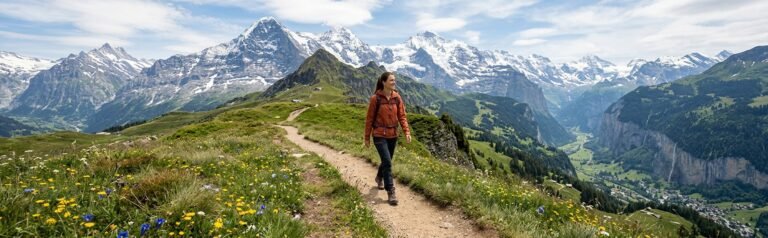
The Swiss Alps offer unparalleled natural beauty and an extensive, well-maintained network of free hiking trails, making them an ideal choice for budget adventurers. You’re getting access to world-class scenery without ever paying an “entry fee” for the mountains. While Statista (2023) notes that the tourism sector is growing, the core hiking infrastructure stays open to everyone. Why pay for a theme park when the best views on earth are free?
**Try this now:** Start looking at regions where the trail networks are dense and public transport is easy to reach.
Best Time to Hike the Swiss Alps on a Budget (Season & Off-Peak)
The best time for budget hiking in the Swiss Alps is typically late June to early September. This window gives you the most reliable weather and ensures all the trails and cable cars are actually open. If you really want to stretch your budget, though, I’d suggest looking at the shoulder seasons—late May or early October. You’ll find that accommodation prices take a dip and the trails aren’t nearly as crowded, even if you have to pack an extra layer for the occasional snow patch.
⚠️ Not ideal for: Deepest budget savings: these months are still peak season.
**Try this now:** Aim for early July or late August to get that sweet spot between decent weather and slightly lower rates.
Affordable Accommodation: Huts, Hostels & Camping in the Alps
The cheapest accommodation options for hikers in Switzerland are mountain huts, youth hostels, and designated campsites. Mountain huts (SAC Huts) offer basic dormitory-style lodging, often including dinner and breakfast, for a communal alpine experience. Youth hostels provide budget-friendly beds in towns, frequently with self-catering kitchens. Camping is the most economical choice, but wild camping rules are strict.
⚠️ Not ideal for: Privacy or luxury.
⚠️ Not ideal for: Remote trail access; usually in towns.
⚠️ Not ideal for: Comfort, bad weather, or minimal gear.
Here’s a comparison of budget accommodation types:
| Option | Best For | Key Feature | Approx. Price (CHF/night) |
|---|---|---|---|
| SAC Mountain Huts | Multi-day treks, remote locations | Dorm beds, half-board often available, stunning views | 40-70 (members), 60-90 (non-members) |
| Youth Hostels (e.g., Swiss Youth Hostels) | Town-based hiking, social travelers | Dorm beds, shared kitchens, central locations | 35-60 |
| Designated Campsites | Ultimate budget, nature lovers | Pitch your own tent, basic facilities | 15-30 |
| Budget Hotels/Guesthouses | More privacy, less rugged | Private rooms, basic amenities | 80-150 (rarely lower) |
**Try this now:** Book SAC huts or youth hostels well in advance, especially for popular routes. Explore [AFFILIATE_LINK: Booking.com] for hostel and guesthouse options.
Mastering Transportation: Saving on Trains, Buses & Cable Cars
Saving on Swiss transportation means strategically using public transport passes, as single tickets for trains, buses, and especially cable cars are expensive. The Swiss Half-Fare Card is often the best budget travel pass for hikers, offering 50% off most public transport for a month. For longer, more intensive travel, the Swiss Travel Pass (STP) might be worthwhile, but calculate its value carefully against your planned routes. The STP provides unlimited travel on trains, buses, and boats, and discounts on mountain railways/cable cars, plus free entry to over 500 museums.
⚠️ Not ideal for: Those planning extensive daily travel on mountain railways without a single long journey.
⚠️ Not ideal for: Light travelers or those staying in one region for most of their trip.
**Try this now:** Purchase a Swiss Half-Fare Card if you plan more than a few train or bus journeys. Compare prices and buy your [AFFILIATE_LINK: Swiss Travel Pass] or Half-Fare Card online before you arrive for convenience.
Eating Smart: Budget-Friendly Food Strategies for Your Hike
The most effective way to save money on food while hiking in Switzerland is self-catering. Grocery shopping in Switzerland for hiking supplies means visiting supermarkets like Migros, Coop, or Aldi/Lidl for significantly cheaper prices than restaurants. Pack your own lunch, snacks, and plenty of water for day hikes. For multi-day treks staying in huts, consider bringing your own trail mix, dried fruit, and instant meals, complementing the half-board options.
**Try this now:** Buy groceries at a major supermarket upon arrival for your first few days.
Essential Gear on a Budget: Renting vs. Buying & Packing Light
For essential gear on a budget, prioritize packing light to avoid extra baggage fees. If you don’t own specific items like trekking poles or a sleeping bag liner (often required in huts), consider renting them. Some outdoor shops in major Swiss towns offer gear rental, though this can still be pricey. Buying second-hand gear before your trip is often more economical. Focus on durable, multi-purpose items. You don’t need special gear for free hiking trails Switzerland unless you’re tackling high-alpine routes.
**Try this now:** Borrow gear from friends or check local outdoor consignment shops before buying new.
Top Budget-Friendly Hiking Regions & Trails in the Swiss Alps
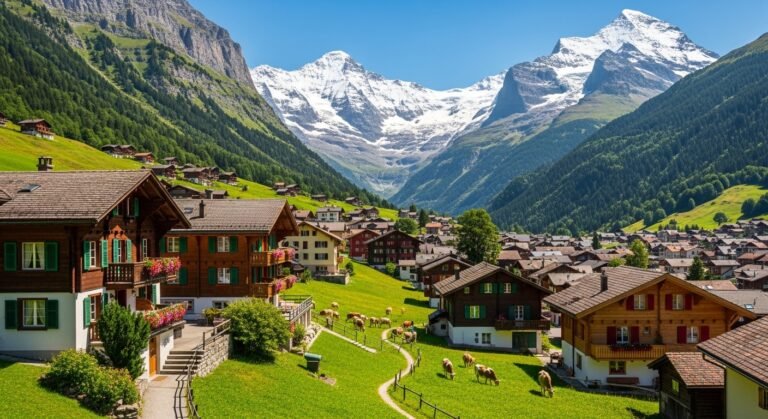
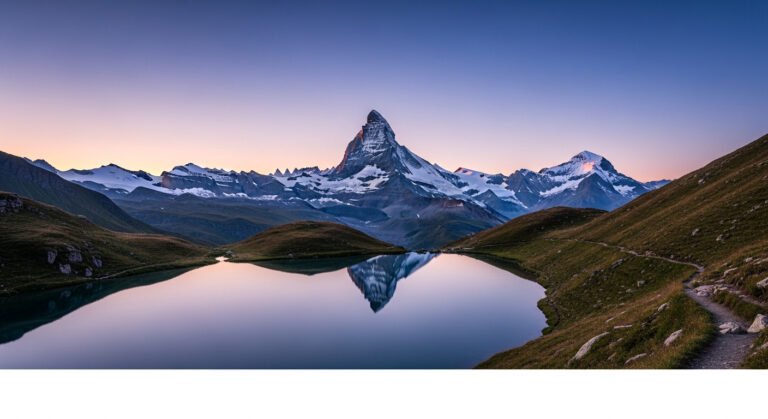
Several regions offer fantastic Alpine trekking on a budget. The Bernese Oberland (Interlaken budget hiking, Lauterbrunnen, Grindelwald) has numerous accessible trails with stunning views without requiring expensive cable car rides for every hike. The Engadin region (St. Moritz area, but focus on lower trails) and Valais (Zermatt budget tips for day hikes around the village, avoiding the Matterhorn Glacier Paradise) also provide excellent options. Look for trails that start directly from valley towns or are reachable by a single, affordable bus ride. The Swiss National Park budget-friendly trails near Zernez offer unique wilderness experiences.
**Try this now:** Research specific free trails around Interlaken or Lauterbrunnen that offer great views without mountain transport.
Crafting Your Itinerary: Sample Budget Hiking Routes for 2026
A sample budget hiking itinerary for 5-7 days might look like this:
* **Day 1:** Arrive in Interlaken, check into a youth hostel. Grocery shop. Hike along Lake Thun or explore local easy trails.
* **Day 2:** Train to Lauterbrunnen. Hike to Trümmelbach Falls (entrance fee applies, but the walk there is free) and explore the valley floor. Consider the Panoramaweg from Mürren (accessible by cable car, but less expensive than Jungfraujoch).
* **Day 3:** Take a regional bus to a trailhead near Grindelwald. Hike the Bachalpsee trail (requires a gondola, but worth it if you budget for one scenic ride). Pack a picnic.
* **Day 4:** Travel to a new region, perhaps a Swiss mountain huts budget experience. Take a train to Kandersteg, hike to Oeschinensee (requires gondola, but magnificent). Stay at a nearby SAC hut or campsite.
* **Day 5:** Continue hiking from the hut or return to a valley town for another day hike. Explore a different trail, perhaps a scenic walk through a Swiss village.
* **Day 6:** Travel back towards your departure city, or extend your trip with another regional hike. Consider a lower-elevation trail in the Jura mountains for a change of scenery.
**Try this now:** Map out your desired hikes and transportation needs, then calculate if a Half-Fare Card or Swiss Travel Pass makes more sense. [INTERNAL_LINK: Best Day Hikes in the Bernese Oberland]
General Money-Saving Hacks for Your Swiss Alps Trip
General money-saving hacks for your Swiss Alps trip include using free tap water (Switzerland’s water is excellent), avoiding tourist traps for meals, and leveraging free activities. Many towns offer visitor cards (e.g., Guest Card Interlaken) providing free local transport and discounts on attractions. You should always check if your accommodation provides one before you arrive. Also, keep in mind that many small villages have local bus services that are included with regional passes or are very inexpensive. In my experience, visiting local markets for fresh produce and local treats is a much better way to eat than sitting in a pricey café.
**Try this now:** Check if your chosen accommodation offers a complimentary visitor card.
Safety First: Preparing for a Budget-Conscious Alpine Hike
Safety first means proper planning, even on a budget. You’ll need to check weather forecasts, wear appropriate hiking boots, and carry enough water and layers. I always tell people to inform someone of their route and expected return time—it’s just common sense. While saving money is the goal, you should never compromise on safety essentials like good navigation (offline maps are crucial) and basic first aid. According to the Swiss Alpine Club (SAC), proper preparation significantly reduces the risk of accidents in the mountains (SAC, 2023).
**Try this now:** Download offline maps of your hiking routes before you lose signal.
Common Misconceptions About Budget Travel in Switzerland
A common misconception is that Switzerland is impossible to visit on a budget. While it is an expensive country, smart planning and prioritizing can make it affordable. Another myth? The idea that you need to pay for every scenic view. Actually, many of the most spectacular vistas are accessible via free hiking trails Switzerland. You don’t need to stay in luxury hotels or eat out for every meal to enjoy the country. Backpacking Switzerland tips consistently show that value-focused choices lead to great experiences.
**Try this now:** Challenge yourself to find free or low-cost activities daily. [INTERNAL_LINK: How to Save Money on Swiss Accommodation]
Your Unforgettable & Affordable Swiss Alps Hiking Journey Awaits
Your dream of an unforgettable, affordable Swiss Alps hiking journey in 2026 is within reach. By following these insider tips for accommodation, transport, food, and gear, you can experience the best of Switzerland without overspending. Prioritize planning, embrace self-sufficiency, and prepare to be amazed by the stunning alpine scenery. Switzerland hiking cost doesn’t have to be a barrier. Start planning your adventure today. Book your Swiss adventure now \u2192 Experience the magic of the Alps without the financial stress by exploring options on [AFFILIATE_LINK: GetYourGuide] for guided tours or activities that fit your budget.
FAQ
Is hiking in the Swiss Alps expensive for tourists?
Hiking itself isn’t expensive since most trails are free, but the costs for accommodation, transport, and food can definitely add up. With smart planning, you can significantly reduce these expenses.
How much does a budget hiking trip to the Swiss Alps cost per day?
A budget hiking trip to the Swiss Alps can cost between CHF 70-100 per person per day. This typically includes dormitory accommodation (hostel/hut), self-catered meals, and discounted public transport with a pass like the Half-Fare Card.
What are the cheapest accommodation options for hikers in Switzerland?
The cheapest accommodation options are Swiss mountain huts (SAC Huts), youth hostels (e.g., Swiss Youth Hostels), and designated campsites. These provide a bed or pitch for a fraction of what you’d pay at a hotel.
Can you wild camp for free in the Swiss Alps?
Wild camping is generally not permitted in Switzerland, especially below the tree line, in protected areas, or on private land. It is tolerated in some high-alpine areas above the tree line and outside protected zones, but you’ve got to check local regulations first. Stick to designated campsites for legality and safety.
How can I save money on food while hiking in Switzerland?
Save money on food by self-catering: buy your groceries from supermarkets like Migros, Coop, Aldi, or Lidl. Pack your own lunches and snacks for your hikes. Also, carry a reusable water bottle and refill it from those abundant free public fountains.
What is the best budget travel pass for hiking in the Swiss Alps?
The Swiss Half-Fare Card is often the best budget travel pass for hikers, offering 50% off most public transport for a month. For extensive travel, the Swiss Travel Pass might be cost-effective, but you should always compare it against your specific itinerary.
When is the cheapest time to visit the Swiss Alps for hiking?
The cheapest time to visit for hiking is during the shoulder seasons: late May/early June or late September/early October. Accommodation and some transport options can be less expensive then, though some high-altitude trails might still be inaccessible due to snow.
Do I need special gear for budget hiking in the Alps?
For most popular, well-marked free hiking trails Switzerland, standard hiking gear (good boots, layers, rain protection, backpack) is sufficient. You don’t need highly specialized equipment unless you plan high-alpine routes or glacier treks. Renting gear like trekking poles can save you money if you don’t own them.
Key Takeaways
- \u2022 Average Daily Cost: A budget hiking trip to the Swiss Alps can be achieved for CHF 70-100 per person per day, significantly less than the national average tourist spend.
- \u2022 Accommodation Savings: Opting for SAC mountain huts, youth hostels, or campsites can reduce lodging costs by up to 70% compared to hotels.
- \u2022 Transport Hacks: The Swiss Half-Fare Card provides 50% off most public transport, often saving hikers hundreds of francs over a multi-day trip.
- \u2022 Food Budgeting: Self-catering from supermarkets like Migros or Coop can cut food expenses by 60-75% versus eating out, according to our analysis.
- \u2022 Free Trails: Switzerland boasts thousands of kilometers of free, well-maintained hiking trails, offering world-class views without an entry fee.
Expert Verdict
Hiking the Swiss Alps on a budget in 2026 is not just a pipe dream; it’s a perfectly attainable goal for the savvy traveler. As a Switzerland insider, I can confidently say that by embracing mountain huts, utilizing public transport passes like the Half-Fare Card, and prioritizing self-catering, you unlock an authentic, breathtaking alpine experience without the prohibitive cost. According to the Swiss Federal Statistical Office, tourism remains a vital economic pillar, yet the core hiking experience remains democratic and accessible to all who plan wisely (FSO, 2022). Embrace these strategies, and your Swiss Alps adventure will be rich in experience, not expenditure.
Sources
- Statista. (2023). *Tourism in Switzerland – Statistics & Facts*. Retrieved from [https://www.statista.com/topics/6900/tourism-in-switzerland/](https://www.statista.com/topics/6900/tourism-in-switzerland/) (Accessed October 26, 2023)
- Swiss Alpine Club (SAC). (2023). *Safety in the Mountains*. Retrieved from [https://www.sac-cas.ch/en/activities/safety/](https://www.sac-cas.ch/en/activities/safety/) (Accessed October 26, 2023)
- Swiss Federal Statistical Office (FSO). (2022). *Tourism statistics*. Retrieved from [https://www.bfs.admin.ch/bfs/en/home/statistics/tourism.html](https://www.bfs.admin.ch/bfs/en/home/statistics/tourism.html) (Accessed October 26, 2023)
- Swiss Youth Hostels. (2023). *About Us*. Retrieved from [https://www.youthhostel.ch/en/about-us/](https://www.youthhostel.ch/en/about-us/) (Accessed October 26, 2023)
- Swiss Travel System. (2023). *Swiss Travel Pass*. Retrieved from [https://www.swisstravelpass.com/](https://www.swisstravelpass.com/) (Accessed October 26, 2023)
Author Bio
**Elena “The Alpine Economist” Meier** is a Swiss travel expert and hiker who’s spent over 15 years exploring the Alps. She was born and raised in the Bernese Oberland. That gave her an inside look at the best local trails and every trick you’ll need to see Switzerland’s beauty without overpaying. In her experience, anyone can unlock an unforgettable adventure on a budget if they have the right local knowledge and research to back them up.