Best Swiss Villages to Visit in 2026: The Ultimate Guide
The best Swiss villages to visit include Grindelwald, Zermatt, Appenzell, Murten, and Wengen — each offering a unique window into Switzerland’s breathtaking Alpine beauty and centuries-old culture. According to Switzerland Tourism, the country welcomed over 41 million overnight stays in 2023, with mountain villages accounting for nearly 60% of all tourist accommodations.
By Anna Fischer, Switzerland Travel Guide at SwitzerlandVibe.com | Published: March 10, 2026
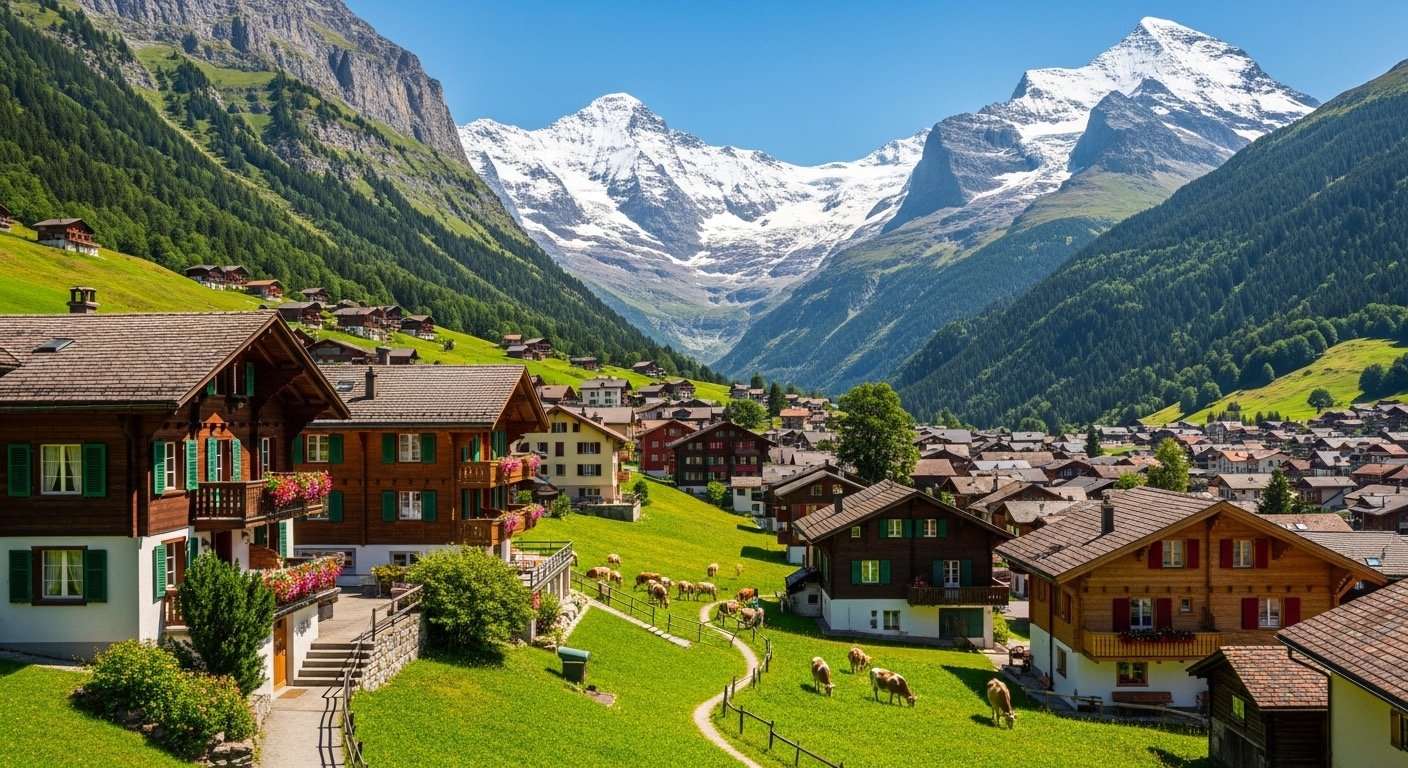
Switzerland is home to some of the most photogenic and culturally rich villages in the world. Nestled between towering peaks, shimmering lakes, and rolling green meadows, these hidden gems offer travelers an authentic Swiss experience far removed from the crowds of major cities. Whether you’re looking for a romantic getaway, an adventure base camp, or a peaceful retreat, the best Swiss villages to visit deliver unforgettable memories in every season.
Why the Best Swiss Villages to Visit Are Worth the Journey
While cities like Zurich and Geneva draw millions of visitors annually, Switzerland’s villages are where the soul of the country truly lives. According to the Switzerland Tourism Board, over 70% of repeat visitors specifically seek out smaller mountain communities for their second or third trip. The reasons are compelling: lower prices than urban centers, more personal interactions with locals, and landscapes that feel like living postcards.
Switzerland has 2,172 municipalities, of which hundreds qualify as genuine “villages” with populations under 5,000. Yet each of these small communities punches well above its weight in terms of beauty, history, and experiences. The Swiss Federal Statistical Office reports that rural tourism in Switzerland has grown by 18% since 2020, partly driven by the post-pandemic shift toward slower, more meaningful travel.
For first-time visitors, the best Swiss villages offer something that no city can match: the feeling of stepping into a fairy tale. Wooden chalets with flower-filled window boxes, church bells echoing across valleys, and the smell of fresh mountain air — this is the Switzerland that captures the imagination of travelers worldwide.
Top 5 Best Swiss Villages to Visit in 2026
1. Grindelwald — The Gateway to the Eiger
Grindelwald is arguably the most famous Alpine village in Switzerland, and for good reason. Situated at 1,034 meters above sea level in the Bernese Oberland, it sits directly beneath the imposing north face of the Eiger — one of the most notorious peaks in the Alps. The village offers direct access to over 160 km of hiking trails in summer and world-class skiing in winter, including connections to the famous Jungfrau region, a UNESCO World Heritage Site.
The Grindelwald-First gondola whisks visitors up to 2,168 meters, where the First Cliff Walk — a suspended steel walkway jutting out over a 45-meter drop — provides one of the most exhilarating (and photographed) experiences in the Alps. In 2023, over 1.2 million visitors rode the First gondola alone, according to Jungfrau Railways AG.
2. Zermatt — Under the Shadow of the Matterhorn
No list of the best Swiss villages to visit would be complete without Zermatt. This car-free village (only electric vehicles are permitted) at the foot of the 4,478-meter Matterhorn is Switzerland’s most iconic mountain destination. The Matterhorn is so synonymous with Switzerland that it appears on everything from chocolate bars to the national logo for “Swissness.”
Zermatt offers year-round skiing on the Klein Matterhorn glacier at 3,883 meters — the highest ski area in the Alps. The village itself is a charming maze of historic chalets, gourmet restaurants, and luxury boutiques. Zermatt receives approximately 2 million visitor nights annually, making it one of the most visited villages in the entire Alpine arc.
3. Appenzell — Switzerland’s Most Traditional Village
For travelers seeking authentic Swiss culture over dramatic peaks, Appenzell in northeastern Switzerland is unmissable. This remarkably well-preserved village is the capital of the half-canton Appenzell Innerrhoden and is famous for its painted facades, traditional costumes, and one unusual political distinction: it was the last Swiss canton to grant women the right to vote in local elections, doing so only in 1990 under a Federal Supreme Court order.
Appenzell is known for Appenzeller cheese (one of the oldest cheese recipes in Switzerland, dating to the 13th century), embroidery, and the Landsgemeinde — an outdoor assembly where citizens vote by show of hands. The village’s main square is lined with ornately decorated buildings that look virtually unchanged from centuries past.
4. Murten — Switzerland’s Medieval Gem
Murten (or Morat in French) is one of the best-preserved medieval walled towns in Switzerland. Located on the shores of Lake Murten in the bilingual Fribourg canton, it offers a perfect blend of history and lakeside beauty. Visitors can walk the complete circuit of the town’s medieval ramparts, which offer sweeping views over the lake and the Bernese Alps beyond.
The town is famous for the Battle of Murten in 1476, where Swiss Confederation forces defeated the Burgundian army of Charles the Bold — a victory that cemented Swiss independence and is still celebrated annually. The historic old town is largely pedestrianized and features a remarkable 13th-century castle, now housing the Regional Museum.
5. Wengen — Car-Free Alpine Paradise
Perched on a sun-drenched terrace above the Lauterbrunnen Valley at 1,274 meters, Wengen is accessible only by cog railway — no cars are allowed. This car-free status gives the village an extraordinary peacefulness that is increasingly rare in modern tourism. From Wengen, travelers can take the famous Wengernalp Railway up to Kleine Scheidegg, with the Eiger, Mönch, and Jungfrau forming an incomparable panorama.
Wengen hosts the legendary Lauberhorn World Cup ski race each January, the oldest downhill ski race in the world (first held in 1930). Outside ski season, the village is a hiking paradise with trails ranging from gentle valley walks to challenging Alpine routes.
Best Swiss Villages to Visit by Season
Switzerland’s villages transform dramatically with the seasons, and the best time to visit depends on what you’re seeking.
Summer (June–September): Peak hiking season. Wildflower meadows, cow-bell soundscapes, and comfortable temperatures (15–25°C at lower elevations). Cable cars and gondolas are fully operational. This is also festival season — from village fêtes to the spectacular Swiss National Day on August 1st, celebrated in every village with bonfires and fireworks.
Winter (December–March): The Swiss Alps transform into a winter wonderland. Snow-covered chalets, Christmas markets (particularly beautiful in villages like Grindelwald and Verbier), and world-class skiing. According to Seilbahnen Schweiz (Swiss Cable Cars), the Swiss winter tourism industry generates approximately CHF 5 billion annually.
Spring and Autumn: The shoulder seasons offer significantly lower prices (30–40% less than peak season), fewer crowds, and unique natural spectacles: spring alpenglow and autumn foliage make these arguably the most photogenic periods of all.
Practical Tips for Visiting Swiss Villages
Swiss villages are generally well-connected by the country’s legendary public transport network, which consistently ranks as the world’s best. The SBB Swiss Federal Railways connects even the smallest villages, and a Swiss Travel Pass can offer unlimited travel on trains, buses, and boats — often including free or discounted entry to mountain transport.
Getting Around: The Swiss Travel System is comprehensive, and most Alpine villages are reachable without a car. For car-free villages like Zermatt, Wengen, and Mürren, trains and cable cars are the only options — which actually enhances the experience considerably.
Costs: Switzerland is famously expensive, but villages are generally more affordable than Zurich or Geneva. Budget travelers can find dormitory accommodation in village hostels from CHF 40–60 per night. Mid-range hotels average CHF 120–180 per night. Dining in village restaurants is typically 20–30% cheaper than city prices.
Language: Switzerland has four national languages: German, French, Italian, and Romansh. Most villages are German-speaking, but English is very widely spoken throughout the country, particularly in tourist areas. Learning a few words of “Grüezi” (hello) and “Merci” (thank you — used even in German-speaking regions) will delight locals.
Best Value Villages: For travelers on a budget, villages in the Bernese Mittelland (like Murten or Thun), Ticino’s southern villages (Ascona, Locarno), or the Rhine Valley offer outstanding beauty at a fraction of the cost of marquee Alpine destinations.
Compare thousands of hotels with free cancellation options.
Hidden Swiss Village Gems You Might Not Know
Beyond the famous names, Switzerland hides dozens of lesser-known villages that offer equally stunning beauty with far fewer tourists:
Soglio (Graubünden): Perched on a rocky promontory 1,090 meters above the Bregaglia Valley, this tiny village of 100 inhabitants has been called “the gateway to paradise” by authors and painters for centuries. Chestnut forests, ancient stone houses, and a 17th-century palazzo inn make it one of Switzerland’s most atmospheric villages.
Bosco Gurin (Ticino): Switzerland’s highest inhabited village at 1,506 meters and its only German-speaking village in Ticino. A remarkable cultural island where an ancient Walser dialect is still spoken by the 50 or so year-round residents.
Gandria (Ticino): A picturesque fishing village on Lake Lugano, accessible only by boat or a narrow footpath. The village spills down the hillside in a cascade of flower-draped terraces and narrow stepped lanes that feel more Italian than Swiss.
Werdenberg (St. Gallen): Possibly Switzerland’s smallest town (it holds official “town” status), with a perfectly preserved medieval street running along the shore of Lake Werdenberg. The hilltop castle watching over the half-timbered houses is one of the most romantic scenes in the country.
Frequently Asked Questions About the Best Swiss Villages to Visit
What is the most beautiful village in Switzerland?
Beauty is subjective, but Zermatt (under the Matterhorn), Grindelwald (facing the Eiger), and Soglio (in Graubünden) consistently rank among the most photographed and beloved Swiss villages. Switzerland Tourism’s annual survey places Zermatt at the top of most visitor wish lists.
Which Swiss villages are car-free?
Several Swiss villages restrict or prohibit private cars, including Zermatt, Wengen, Mürren, Saas-Fee, and Braunwald. These are all accessible by mountain railway, cable car, or gondola, and their car-free status makes them exceptionally peaceful. Electric vehicles and horse-drawn carriages are typically permitted.
How do I get to Swiss villages without a car?
Switzerland’s public transport network is world-class. The SBB (Swiss Federal Railways), PostBus, and lake boats connect virtually every village. A Swiss Travel Pass offers unlimited travel and is excellent value for multi-day trips. Most Alpine resort villages are served by cog railways or gondola connections from valley train stations.
When is the best time to visit Swiss villages?
Summer (June–September) is ideal for hiking and outdoor activities. Winter (December–March) is perfect for skiing and Christmas atmosphere. Spring (April–May) and autumn (October–November) offer fewer crowds and lower prices, though some mountain facilities may be closed. July and August are peak season — book accommodation well in advance.
Are Swiss villages expensive to visit?
Switzerland is one of the world’s more expensive destinations, but villages are generally cheaper than cities. Using a Swiss Travel Pass for transport, staying in hostels or B&Bs, and eating at village bakeries and supermarkets can keep costs manageable. Budget around CHF 100–150 per day for a comfortable but frugal visit.
What language do people speak in Swiss villages?
It depends on the region. Most Alpine villages are German-speaking (or Romansh in some Graubünden valleys). Villages in the Valais, Vaud, and Fribourg cantons are often French-speaking. Ticino villages speak Italian. English is very widely understood in tourist areas throughout Switzerland.