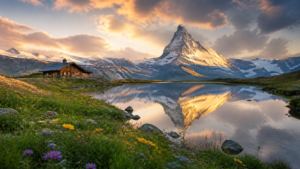
Glacier Express Switzerland Guide 2026: Routes, Tips, Truth
Glacier Express Switzerland Guide 2026: Routes, Tips, Truth: The Glacier Express is not an “express” train in the conventional sense. The name refers to the glaciers the route passes near, not to speed. In fact, it is famously known as the slowest express train in the world. This guide keeps the answer up front so you can decide quickly before reading the full breakdown. If you are looking for speed, this is not the right service. If you are looking for one of the most immersive alpine experiences on the planet, this is the definitive choice. The journey spans nearly eight hours, offering a front-row seat to the engineering marvels and natural beauty of the Swiss Alps. For a complete breakdown of booking windows, see our Glacier Express Train Guide Switzerland 2026: Dream Rail…
Editorial note: this update keeps the article’s original recommendations intact while tightening the answer-first summary and FAQ for reader clarity. Prices and schedules reflect the 2026 operational year. We have expanded on luggage logistics and seating strategies to ensure you maximize value. Compare this journey with other options in our Switzerland vs Austria – Which Alpine Country Wins guide.
The glacier express train guide switzerland most travelers find online is often full of marketing copy that misses the critical details determining whether you enjoy the process or regret the price tag. Here is the straight version: the Glacier Express is a scheduled panoramic train linking Zermatt and St. Moritz across 291 kilometers of the Swiss Alps. Operated jointly by Matterhorn Gotthard Bahn (MGB) and the Rhaetian Railway (RhB), the process takes roughly 7 hours and 45 minutes. Costs range between CHF 49 and CHF 480-plus per person depending on your class and pass status. While it delivers genuinely exceptional scenery on about 60 percent of its route, there are two or three segments that no other train in Switzerland can match. This guide details exactly which segments those are, how to position yourself for them, what you will actually pay in 2026, and when the experience might fall short of its reputation. Budgeting is key; review the Swiss Travel Pass: Honest Cost Review 2026 before purchasing tickets.

What Does This Glacier Express Train Guide Switzerland Cover?
The Glacier Express is not an “express” train in the conventional sense. The name refers to the glaciers the route passes near, not to speed. In fact, it is one of the slowest long-distance trains in Switzerland, which is precisely the point. The track climbs to 2,033 meters at the Oberalp Pass, the highest point on any regular Swiss rail line, crosses 291 bridges, and passes through 91 tunnels according to official Rhaetian Railway figures. Approximately 250,000 passengers ride it annually, making it one of the most heavily booked scenic rail journeys in Europe (Switzerland Tourism, 2024).
To manage your expectations, it is important to clarify what this guide excludes. We do not cover the Bernina Express (a separate train connecting Chur to Lugano via the Bernina Pass), charter services, or group packages that bundle hotel nights with the rail ticket. Those are different products with different pricing structures. This guide focuses strictly on the standard Glacier Express service that any individual traveler can book directly. We also clarify the difference between having a rail pass and having a seat reservation, a common point of confusion for first-time visitors. Additionally, we address luggage logistics, as large suitcases cannot be stored at your seat and must be sent ahead via the Swiss luggage service or placed in dedicated luggage compartments at the end of the carriage.
What Are the Key Stages of the Glacier Express Route?
The standard direction runs from Zermatt (elevation 1,608 m) eastward to St. Moritz (1,822 m), though the reverse runs daily with equal frequency. During peak summer season, two to three departures operate in each direction. Here is each stage assessed honestly for what it delivers visually and experientially.
Stage 1: Zermatt to Visp (Valley Descent)
The first 45 minutes follow the Mattervispa river valley as the train descends from Zermatt. The iconic Matterhorn vanishes within the first few kilometers behind ridge lines. The gorge walls are steep and dramatic early on, then the valley opens out. This is the least visually arresting section; the scenery is attractive but not exceptional by Swiss standards. If you are going to have coffee or sort your bag, this is the time to do it. The train moves through the Lötschberg base tunnel vicinity before reaching the main line.
Stage 2: Brig to Oberwald (The Goms Valley)
After passing through Brig, the train climbs into the Goms Valley, a high plateau stretching roughly 50 kilometers through the upper Valais. The villages here, Münster, Reckingen, Ulrichen, and Oberwald, look almost unchanged from the 17th century. Wooden chalets with stone-weighted roofs stand on flat pasture cut by the young Rhone river. In winter this section is buried in snow and becomes genuinely cinematic. In summer it is green, pastoral, and peaceful. Most passengers start putting their phones down here to simply watch the traditional agriculture of the high Alps.
Stage 3: Oberalp Pass (The Roof of the Route)
The climb to Oberalp Pass at 2,033 meters is the geographic centerpiece of the process. The train gains altitude steadily from Andermatt, and by the time it crests the pass the treeline is far below. In June and early July, the pass is still partially buried under snowdrifts. In August, a small lake near the summit reflects sky and surrounding peaks on clear days. If you photograph one section of this route, photograph this one. The descent into Graubünden is rapid, and the scenery transitions almost immediately from open alpine terrain to the enclosed forests and villages of the canton of Grisons.
Stage 4: Disentis to Reichenau (The Rhine Gorge)
The Rhine Gorge between Ilanz and Reichenau is the single most dramatic section of the entire route. Known informally as the Swiss Grand Canyon, the track cuts through white limestone cliffs above the fast-running Vorderrhein river for approximately 20 minutes. The scale of the canyon walls and the color of the water below it are unlike anything else visible from a Swiss train window. Seat position matters here: right-side seats when traveling from Zermatt to St. Moritz face directly into the gorge. Left-side seats in the reverse direction do the same.
Stage 5: Chur to St. Moritz (The Albula Line)
From Chur the train joins the Albula Line, which holds UNESCO World Heritage designation as part of the Rhaetian Railway network. The track spirals through loops and tunnels carved into the rock as it climbs toward the Albula Pass. A highlight here is the iconic Landwasser Viaduct, a six-arch limestone bridge that leads directly into a tunnel cliff face. The engineering here is as impressive as the scenery. Arriving at St. Moritz, 1,822 meters above sea level, you step off into one of the most famous resort towns in Europe, and one of the most expensive. For more context on connecting routes, see our Swiss Train Travel Guide 2026: Best Scenic Routes and Passes.

How Much Does the GlacierEditorial standards
Why trust this guide
- Route-checked. Itineraries, transfers and timings are verified against current public-transport schedules and operator pages.
- Honest comparisons. Hotel areas and tours are compared on real value — affiliate links never change the recommendation.
- Transparent. Some links are affiliate links; the disclosure is shown on every guide.
This guide is informational travel content, not professional travel, financial or legal advice. Always confirm prices, opening times and conditions with the official provider before you book.
Related guides
Editorial standards
Why trust this guide
- Route-checked. Itineraries, transfers and timings are verified against current public-transport schedules and operator pages.
- Honest comparisons. Hotel areas and tours are compared on real value — affiliate links never change the recommendation.
- Transparent. Some links are affiliate links; the disclosure is shown on every guide.
This guide is informational travel content, not professional travel, financial or legal advice. Always confirm prices, opening times and conditions with the official provider before you book.