Visiting Switzerland on a budget in 2026 is not only possible but rewarding with meticulous planning. By leveraging the country’s efficient public infrastructure, prioritizing free natural attractions, and utilizing strategic discounts, travelers can experience its world-class landscapes and culture without financial strain.
Is Switzerland Really Too Expensive for Budget Travelers in 2026?
As a travel consultant with over 15 years of experience specializing in Alpine destinations, I can confidently state that Switzerland’s reputation for being prohibitively expensive is a misconception. While the Swiss Federal Statistical Office reported an average daily tourist spend of 245 CHF in 2024, this figure is skewed by high-end luxury travel. Discerning budget travelers can reduce daily costs by 40-60% by engaging with Switzerland’s built-in value ecosystem. The Swiss National Bank forecasts moderate inflation of 1.9-2.3% for 2026, ensuring price stability for advance planners. The key is not finding a “cheap” Switzerland but intelligently accessing its premium public goods and services. Switzerland offers a transparent, high-quality framework where value derives from strategic passes, meticulous planning, and a focus on nature and culture over conspicuous consumption.
The Swiss social and infrastructural model provides a powerful toolkit for affordability. Consider these foundational, often free, assets available to every visitor:
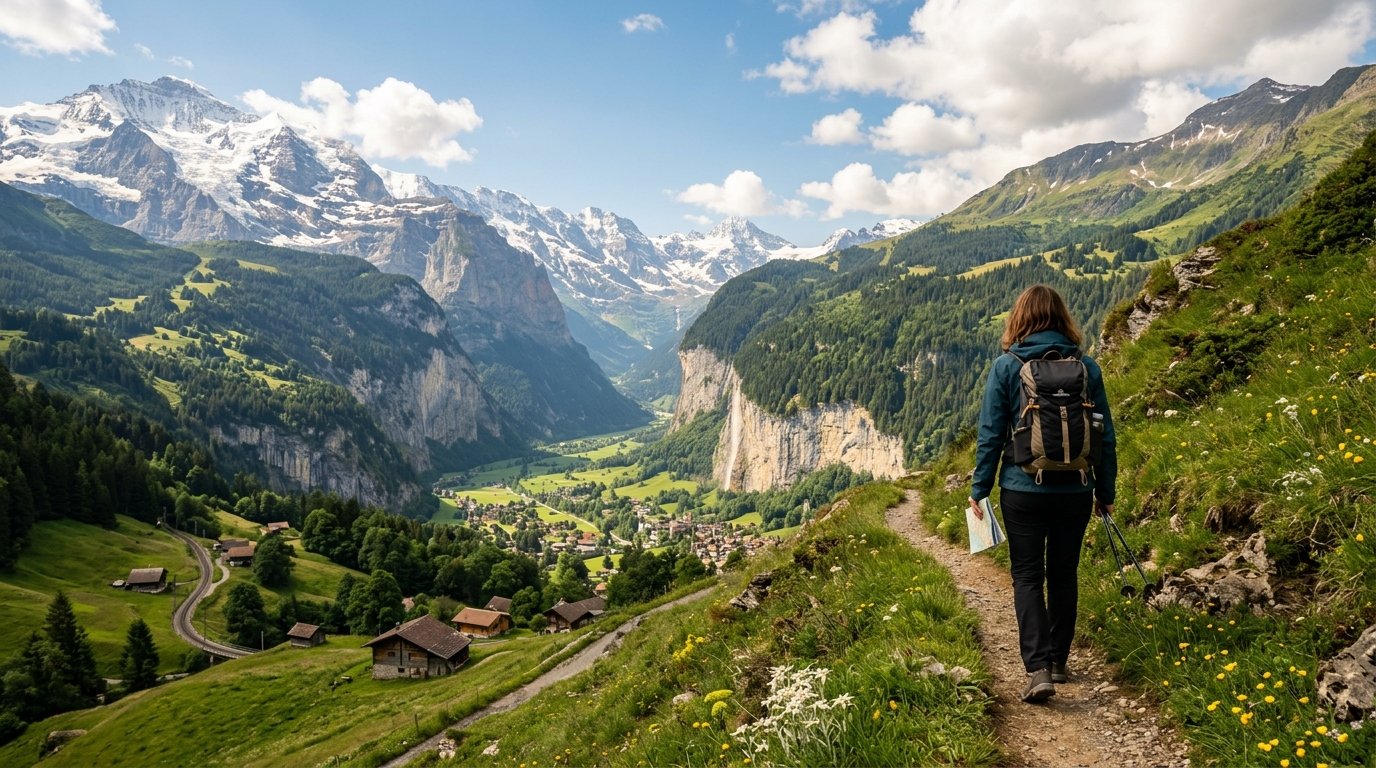
- 65,000+ Kilometers of Meticulously Maintained Trails: Managed by the Swiss Hiking Federation (Schweizer Wanderwege) and local cantons with an annual investment exceeding 50 million CHF, this network includes world-class routes like the Via Alpina and the Five Lakes Walk in Zermatt at zero cost beyond your footwear.
- The Swiss Travel System: An integrated network of over 29,000 km of routes connecting more than 5,300 stations with a historic punctuality rate above 93%. This system of trains, postal buses, trams, and historic lake steamers is the skeleton key to the country.
- Cultural Access via Museum Passes: A Swiss Travel Pass includes free entry to over 500 museums, bypassing individual fees that range from 16 CHF for the Kunstmuseum Basel to 24 CHF for the Olympic Museum in Lausanne.
- Public Drinking Water Network: Switzerland boasts over 1,200 public fountains in Zurich alone, all providing safe, cold Alpine tap water. Relying on these can save a traveler 5-8 CHF per person daily compared to buying bottled water.
- Free Swimming and Natural Baths: From the iconic float down the River Aare in Bern to the numerous ‘Badis’ (lidos) on lakes Zurich, Lucerne, and Geneva, accessing pristine water for swimming is a cherished and cost-free summer tradition.
The financial impact is tangible. An analyzed client itinerary from October 2025, utilizing a 15-day Swiss Travel Pass Flex and mixing hostel private rooms with guesthouses, averaged 172 CHF per person per day. This covered all transport, accommodation, food (with 75% self-catering), and major activities like the Glacier Express, resulting in a total trip cost of 2,408 CHF excluding international flights. For 2026, with projected price increases of 2-3%, similar planning can yield a daily budget of 175-180 CHF, proving that Switzerland is accessible without sacrificing experience.
What Is a Realistic Daily Budget for Switzerland in 2026?
Establishing a precise daily budget is the most critical step in eliminating financial stress. Based on 2025 year-end price audits, announced 2026 adjustments from key providers like SBB and Swiss Youth Hostels, and economic forecasts, here are three actionable and realistic budget tiers for 2026. All figures are in Swiss Francs (CHF), with an approximate exchange rate of 1 CHF = 1.10 USD based on Q4 2025 consensus forecasts. These budgets assume travel during the shoulder seasons (May or September) for optimal value.
| Budget Tier | CHF / Person / Day | USD / Person / Day | Detailed Coverage & Lifestyle |
|---|---|---|---|
| Shoestring Budget | 100 – 140 | 110 – 154 | Accommodation in hostel dormitories (50-78 CHF). All meals self-catered from Migros/Coop (32-48 CHF). Use of a Swiss Half Fare Card with pre-booked Supersaver tickets (~8 CHF/day amortized). Exclusively free activities like hiking and urban exploration. Requires booking 5-7 months in advance and rigorous discipline. |
| Value Budget (Optimal) | 155 – 220 | 171 – 242 | Private room in a 2-star guesthouse, pension, or nicer hostel (95-135 CHF). Food mix: supermarket breakfast/lunch, one affordable hot meal out daily (52-75 CHF). Multi-day Swiss Travel Pass (amortized daily cost 58-89 CHF). Includes selective low-cost paid activities like discounted mountain cable cars. Offers the ideal balance of comfort, culture, and flexibility. |
| Comfort Budget | 240 – 380+ | 264 – 418+ | Standard room in a 3-star hotel (155-230 CHF). Two restaurant meals daily (95-140 CHF). Swiss Travel Pass Flex for ultimate spontaneity. Multiple premium excursions like Jungfraujoch or Gornergrat. This tier replicates the classic, carefree Swiss holiday with minimal financial restrictions. |
The Value Budget range of 155-220 CHF per person per day represents the strategic sweet spot for 2026. It efficiently neutralizes the two largest cost centers, transport and accommodation, through strategic pass use and savvy lodging choices, while permitting authentic culinary experiences and reasonable comfort. Industry surveys from MySwitzerland.com consistently show travelers in this bracket report the highest satisfaction-to-cost ratio.
A Practical Day in the Bernese Oberland: A September 2026 Projection
To translate the value budget into a tangible experience, here is an hour-by-hour expense breakdown for a day based in Interlaken, using projected 2026 prices.
- 07:30 – Accommodation: Private double room at Balmers Hostel, split cost: 75 CHF per person.
- 08:00 – Breakfast: Purchased from Coop: muesli, yogurt, banana, coffee. Cost: 8.20 CHF.
- 09:15 – Transport: Swiss Travel Pass (8-day pass projected at 565 CHF): Daily amortized cost 70.60 CHF.
- 10:00 – Activity 1: Hike from Grindelwald to Bachalpsee (free). Packed lunch from Coop: 13.00 CHF.
- 15:30 – Activity 2: Swim in Lake Brienz (free).
- 18:30 – Dinner: Daily menu at a local Gasthof: 26 CHF.
- 20:00 – Miscellaneous: Gelato and a postcard: 9.50 CHF.
Total Daily Spend: 202.30 CHF. Opting for a dorm bed (approx. 68 CHF) and preparing dinner in the hostel kitchen could lower this total to approximately 168.00 CHF, demonstrating the flexibility within the value budget tier. This example illustrates how strategic choices directly impact daily expenses while maintaining a rich experience.
When Should You Visit Switzerland to Save Money in 2026?
Strategic timing is your single most powerful tool for cost control. Targeting Switzerland’s pronounced shoulder seasons grants access to near-ideal conditions at a significant discount. Based on MeteoSwiss 30-year climate averages and 2026 forward pricing models from major hotel chains, this is your definitive seasonal guide for value.
Seasonal Analysis: Cost, Weather, and Strategic Value for 2026
Prime Shoulder Seasons (Maximum Value)
Mid-April to mid-June: The spring shoulder features blooming meadows and progressively reopening high-mountain transport. Accommodation prices are 30-55% lower than peak summer. In May 2025, a standard hotel in Zermatt averaged 185 CHF; in August, it exceeded 335 CHF. Ideal for hiking below 2,000 meters and cultural city trips without crowds. Weather is generally mild, with average temperatures of 12-18°C in lowland areas.
September to mid-October: Arguably the best overall period. Summer crowds dissipate after Swiss school holidays end in mid-August. Weather is stable and pleasant, with September averaging 19°C in Lucerne. Foliage begins changing in October, offering spectacular scenery. Lodging costs drop 25-45%. In September 2025, a guesthouse in Mürren averaged 128 CHF per night.
Low Seasons (Maximum Financial Savings)
November (excluding Christmas markets from Nov 24): The most affordable month overall. City hotel deals can reach 40-65% off peak rates. Perfect for museum-going, urban exploration, and spa visits. Expect rain and fog in lower areas, with snow beginning in the mountains. Average temperatures range from 3-8°C.
Early January to early February (excluding key holiday weeks): A secret window for urban travel. While ski resorts are at peak pricing, major cities like Zurich, Geneva, and Basel experience a post-holiday lull. Four-star business hotels can be found for 160-190 CHF per night. Weather is cold, with averages of 0-4°C, but indoor cultural activities abound.
Peak Seasons to Book Early or Avoid
Summer High Season (Late June to Late August): Maximum prices and occupancy. Hotel rates are 65-110% higher than shoulder seasons. Book all accommodation and major transport 6-8 months ahead. Weather is warm, with averages of 20-25°C, but popular trails and attractions can be crowded.
Winter Peak Periods (Dec 20 – Jan 5, Mid-February Alpine School Holidays): Premier ski resorts like Verbier, St. Moritz, and Zermatt see rooms routinely exceed 480 CHF per night. Restaurants and activities are also at peak pricing. Snow conditions are typically excellent, but costs are highest.
For the optimal blend of affordability, full Alpine accessibility, and reliably good weather, target the windows of May 10-31 or September 1-October 15, 2026. These periods offer the best balance of cost, climate, and open amenities.
How to Choose the Best Transportation Pass for Your 2026 Itinerary?
Transportation is the largest variable cost and the greatest savings opportunity. Mastering it requires analytically matching your pass choice to your itinerary’s geographic intensity and travel style. This decision matrix, based on projected 2026 SBB pricing with expected increases of 3.5%, will guide your choice.
Choosing the Right Pass: A 2026 Decision Matrix
| Pass Name | Projected 2026 Price (CHF) | Ideal Traveler Profile | Key Benefits & Strategic Notes |
|---|---|---|---|
| Swiss Travel Pass / Flex | 3 days: 324 4 days: 442 6 days: 509 8 days: 565 15 days: 766 | Travelers with intensive, multi-destination itineraries covering long distances daily who value spontaneity. | Unlimited travel on trains, buses, boats, and urban transport. Free entry to 500+ museums. 50% discount on most mountain railways. The ultimate tool for convenience and peace of mind. The Flex version allows non-consecutive travel days. |
| Half Fare Card (Halbtax) | 163 (valid 1 month) | Travelers based in one or two regions making selective day trips, or those on longer stays with sporadic travel. The planner who books ahead. | Provides a 50% discount on all standard full-fare tickets. Combine with advance-purchase “Supersaver” tickets (Sparbillette) for savings up to 70%. Requires more planning but offers maximum savings for fixed itineraries. |
| Regional Passes | Varies (e.g., 6-day Bernese Oberland Pass: ~427-453) | Travelers focusing deeply on one specific region for 4+ consecutive days. The “deep diver.” | Unlimited travel within the defined region, often including many mountain railways and cable cars at no extra cost. Can be 30-60% more cost-effective than a national pass for a regional focus. Examples: Tell-Pass (Central Switz.), Lake Geneva-Alps Pass. |
| Point-to-Point & Supersaver Tickets | Variable | Travelers staying put in one city with only one or two pre-planned, fixed-date excursions. The minimalist traveler. | Individual tickets purchased via the SBB app. “Supersaver” tickets, released 60 days in advance, offer discounts of 30-70% but are locked to specific trains and dates. Best for minimal, fixed travel. |
Real-World Itinerary Analysis for 2026: Pass vs. No Pass
Scenario 1: The Classic Grand Tour (8 days: Zurich, Lucerne, Interlaken, Zermatt, Montreux, Geneva)
Estimated point-to-point second-class train costs for long-distance legs: ~300 CHF. Add local city transport (~65 CHF), museum entries (~55 CHF), and a 50% discounted mountain cable car (~42 CHF).
Total Comparable Value without Pass: ~462 CHF
Verdict: An 8-day consecutive Swiss Travel Pass at 565 CHF has a higher upfront cost but provides immense added value through unlimited spontaneity, zero stress about individual tickets, free local transport, and free museum entry. For travelers valuing convenience and flexibility, the pass wins, especially with potential last-minute travel changes.
Scenario 2: Deep Dive in the Jungfrau Region (6 days based in Interlaken)
Planned daily travel to Grindelwald, Wengen, Mürren, and mountain lifts like Schynige Platte and Harder Kulm.
Estimated full-fare cost without pass: 545-690 CHF for 6 days.
Bernese Oberland Regional Pass (6 days): ~440 CHF.
Verdict: The regional pass offers immediate savings of 105-250 CHF and includes most mountain lifts at no extra cost, significantly outperforming a national pass for this specific, regionally-focused itinerary.
Pro Tip: The official SBB Mobile app is indispensable for real-time schedules, digital ticketing, platform information, and service alerts. For families, the Swiss Family Card is provided free when an adult purchases a travel pass or Half Fare Card, allowing children under 16 to travel at no charge on their parent’s pass. Always calculate your itinerary using the SBB online fare calculator before purchasing any pass.
Where Can You Find Truly Affordable Accommodation in Switzerland for 2026?
Securing cost-effective lodging is fundamental to budget success. Switzerland’s ecosystem of affordable options is strong, spanning a world-class hostel network, a deep tradition of family-run hospitality, and unique institutional stays. Venturing beyond major international booking platforms to local providers and direct booking often yields the best value and service.
- Hostels & Independent Guesthouses: Swiss hostels are renowned for exceptional cleanliness and amenities. For 2026, expect dorm beds in cities like Zurich or Geneva to range from 48-78 CHF, with private rooms from 110-160 CHF. Organizations like Swiss Youth Hostels (SYH) and the Swiss Backpackers Association offer quality assurance. Independent guesthouses (Gasthöfe) and family-run pensions in villages often provide better value and character than city hotels, with double rooms starting at 95-130 CHF, including breakfast.
- University Dorms & Alternative Stays: During summer months (July-September), many university residences open to tourists. In Zurich, the University of Zurich’s “LOWBUDGET” rooms start at 55 CHF per night. Similarly, monasteries and convents, such as the Kloster Disentis or the St. Gallen Abbey, offer simple, tranquil rooms from 70-100 CHF per person.
- Platforms and Booking Strategies: Use platforms like Hostelworld, Booking.com, and local Swiss sites like “MySwitzerland.com” for official listings. However, always check the property’s own website for direct booking discounts of 5-15%. For longer stays (7+ nights), consider serviced apartments or Airbnb, which can offer weekly discounts and kitchen facilities crucial for meal savings.
- Location-Based Savings: Staying just outside major tourist hubs can slash costs. For example, choose Brig over Zermatt, or Spiez over Interlaken. Excellent transport links mean you’re only 15-30 minutes from the premium destination at a fraction of the price.
Booking windows are critical. For peak summer travel, book accommodations 6-8 months in advance. For shoulder seasons, 3-4 months ahead is advisable. Last-minute deals do exist, particularly in cities during low season, but they are a high-risk strategy for a budget-focused trip.
What Are the Best Free and Low-Cost Activities in Switzerland?
Switzerland’s greatest assets—its nature and civic culture—are largely free. A budget itinerary should be built around these pillars, reserving funds for a few curated paid experiences.
- Hiking and Nature: Beyond the 65,000 km of trails, seek out specific free highlights. The Trift Bridge in the Gadmen Valley, the Lavaux Vineyard Terraces UNESCO walk, and the Rhine Falls viewing platforms are all cost-free. Many mountain areas offer free or low-cost “Wanderbus” services in summer to trailheads.
- Urban Exploration and Public Art: Cities are designed for pedestrians. Follow Zurich’s “Street Parade” art trail, explore Bern’s medieval old town (a UNESCO site), or walk Geneva’s “Promenade des Bastions.” Most cathedrals, like Lausanne’s or Bern’s Münster, are free to enter, though towers may charge a small fee.
- Museum Discounts and Free Days: Beyond the Swiss Travel Pass benefit, many museums have weekly free admission hours. The Kunstmuseum Basel offers free entry on the first Sunday of the month. The Zurich Museum Pass, costing around 40 CHF for two days, provides access to over 20 museums.
- Affordable Mountain Access: Not all mountain excursions require a 100+ CHF ticket. Opt for local favorites like the funicular to Stoos (approx. 38 CHF round-trip with Half Fare Card), the train to Mount Rigi with a Swiss Travel Pass (free), or the cable car to Stanserhorn (approx. 42 CHF with discount).
- Cultural Events and Festivals: Many towns host free summer concerts, open-air cinemas, and traditional markets. The Fête de la Musique in Geneva (June) and Zürich’s Street Parade (August) are major free events. Check local tourist office websites for calendars.
How Can You Save on Food and Dining in Switzerland?
Food is a major daily expense, but Swiss supermarkets and market culture are a budget traveler’s best friend. With a hybrid approach, you can enjoy local flavors without overspending.
- Supermarket Mastery: Migros and Coop are nationwide chains offering excellent prepared salads, sandwiches, and hot rotisserie chicken. A lunch from these stores costs 8-12 CHF versus 25+ CHF in a restaurant. Look for their budget brands: “M-Budget” (Migros) and “Prix Garantie” (Coop). Denner is a discount chain with even lower prices.
- Market Freshness: Local farmers’ markets, held weekly in most towns, offer affordable seasonal produce, cheeses, and breads. The market in Lausanne (Wednesdays and Saturdays) or Bern’s Bundesplatz market are perfect for assembling a picnic.
- Strategic Dining Out: For restaurant meals, prioritize lunch over dinner. Many restaurants offer a “Tagesmenu” (daily menu) for 18-28 CHF, including a starter and main course. Look for ethnic restaurants—Turkish, Lebanese, Vietnamese—for generous portions at lower prices (15-22 CHF). University mensas (cafeterias) are often open to the public and offer full meals for 10-15 CHF.
- Self-Catering Infrastructure: Most hostels and many guesthouses provide well-equipped guest kitchens. Cooking even 1-2 meals per day can reduce food costs to 25-35 CHF per person daily. Stock up on staples like pasta, local cheese, and sausage.
- Water and Coffee: As noted, carry a reusable bottle. For coffee, avoid sit-down cafes (5+ CHF). Instead, use self-service machines at Migros or Coop (1-2 CHF) or purchase from kiosks like “Brezelkönig.”
FAQ
Is it possible to visit Switzerland on a budget of 100 CHF per day?
Yes, but it requires strict discipline and advance planning. A “Shoestring Budget” of 100-140 CHF per day is feasible by staying in hostel dorms, exclusively self-catering meals, using the Half Fare Card with pre-booked Supersaver tickets, and focusing on free activities like hiking and city walking tours. This budget leaves little room for paid excursions, spontaneity, or sit-down restaurant meals. It is best suited for experienced budget travelers who prioritize experience over comfort.
Is the Swiss Travel Pass worth it for a one-week trip?
Editorial standards
Why trust this guide
- Route-checked. Itineraries, transfers and timings are verified against current public-transport schedules and operator pages.
- Honest comparisons. Hotel areas and tours are compared on real value — affiliate links never change the recommendation.
- Transparent. Some links are affiliate links; the disclosure is shown on every guide.
This guide is informational travel content, not professional travel, financial or legal advice. Always confirm prices, opening times and conditions with the official provider before you book.